
"Belgium"
1115 article(s) found

Burundian coffee beans hand-brewed coffee extraction time, powder-water ratio, grinding degree and water temperature are recommended.
Professional coffee knowledge exchange more coffee bean information please follow the coffee workshop (Wechat official account cafe_style) to boil Burundian coffee beans with V60 filter cup, 15g powder 30g water stew for 35 seconds, 89-90 degrees water temperature extraction, 1:15, medium and fine grinding small Fuji 4, the second water injection into 140ml cut off water, wait for the water to drop and then slowly inject water, the speed is uniform, the water level should not be too high, water injection again

Average Coffee consumption in all regions of the World Coffee Culture Annual Coffee consumption
This is a list of annual per capita coffee consumption in each country, with the latest data for 2009. [1]. Ranked countries per capita Coffee consumption 1 Finland 12.0 kg 2 Norway 9.9 kg 3 Iceland 9.0 kg (2006 data) 4 Denmark 8.7 kg 5 Netherlands 8.4 kg 6 Sweden 8.2 kg 7 Switzerland 7.9 kg 8 Belgium Luxembourg 6.8 kg 9 Posny

Nestle Coffee Project? Development of Yunnan Pu'er Coffee Industry?
Professional coffee knowledge exchange more coffee bean information Please follow the coffee workshop (Wechat official account cafe_style) after more than 20 years of hard work, Nestle's coffee planting activities in Yunnan have had a profound impact on the region's economy. Yunnan Pu'er has gradually developed into a coffee bean producing area with high output, high quality and has attracted the attention of the global coffee industry. Nestle Corp.

Burundi coffee detailed explanation and future development
Pay close attention to the coffee comment (Weixin Official Accounts vdailycom ) and find that the beautiful coffee shop opens its own small shop. Burundi coffee summary: coffee varieties and varieties: 96% Arabica varieties, most of which are Jackson Bourbon and Mibirisi. Flavor spectrum: mellow, sour and bright, moderate sweetness. Main appellations: Bukfactor, Kilmiro, Namilwa. Altitude: 1000-200

Nestle Coffee plans Yunnan Pu'er Coffee Industry Development how about coffee beans in Yunnan?
Nestle Coffee Plan after more than 20 years of painstaking efforts, Nestle's coffee planting activities in Yunnan have had a profound impact on the economy of the region. Yunnan Pu'er has gradually developed into a coffee bean producing area with high output, high quality and has attracted the attention of the global coffee industry. The purpose of Nestl é in helping Yunnan to develop coffee bean production is to ensure that the public
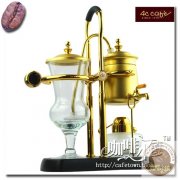
Coffee utensils 4C Top Belgian Royal Coffee Pot Gold
1. The design of the outer packing box is written by a famous painter in Taiwan. this is a special pattern for the top pot. 4ccafe is a professional LOGO, the intellectual property of the company and is protected by law. two。 Compared with the embarrassment that it is difficult to take out other coffee pots, we designed a portable grip according to the consideration of human nature, which can directly lift the pot from the outer box, which is very consistent with human aesthetics.
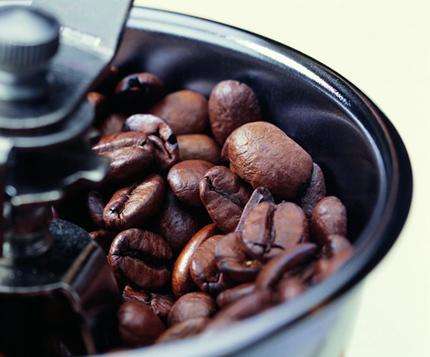
Where did the Rwandan coffee come from?
Following Cafe (official Wechat account vdailycom) found out how the coffee from Kenya was brought to Rwanda by German missionaries in 1904, but it was not until 1917 that the coffee production in Rwanda was large enough for export. After the first World War, the Trusteeship of the League of Nations (the League of Nations Mandate) was withdrawn.
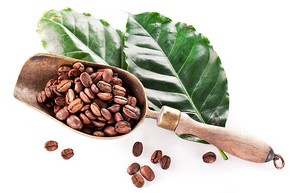
Tanzania Coffee Annual report 2017
According to the forecast of FAS/ Dar es Salaam, the coffee production in Tanzania will increase from 1.05 million bags last year to 1.15 million bags in 2017 and 2018, mainly due to the biennial production cycle. Inventory is expected to decrease by 32000 bags compared with the previous year. The Tanzanian government (GOT) will continue to implement its coffee strategic plan to reach production by 2021

Ethiopian boutique coffee beans planting situation, geographical location, climate, altitude
Ethiopian people are addicted to coffee. In 2003, domestic consumption accounted for 42.3% of the total output, with a per capita consumption of 3 kg. But more than half of the coffee produced each year is used for export to earn foreign exchange. The main exporters include the United States, Italy, the United Kingdom, Sweden, Norway, Greece, France, Belgium, Germany and Australia. Before 1974, the right to produce, process and trade coffee
A brief introduction to the treatment method of grinding degree and baking degree of Yega Snow Fine Coffee beans in Ethiopia
Ethiopian people are addicted to coffee. In 2003, domestic consumption accounted for 42.3% of the total output, with a per capita consumption of 3 kg. But more than half of the coffee produced each year is used for export to earn foreign exchange. The main exporters include the United States, Italy, the United Kingdom, Sweden, Norway, Greece, France, Belgium, Germany and Australia. Before 1974, the right to produce, process and trade coffee

Nestle Hute: discovery of Coffee "New World" in Yunnan
Hua Honglin, a man from Ninger, has taken the lead in growing coffee for 15 years. Wu, a million Belgian, has been working all the year round: driving a dark green Beijing Gyibug with license plate number Yun J25151, hovering on the mountain road in Pu'er area of Yunnan Province. The airtight car is filled with hot tides peculiar to the tropical mountain monsoon climate, and it usually takes two hours to get to the nearest village, and lonely, repetitive trips are common.
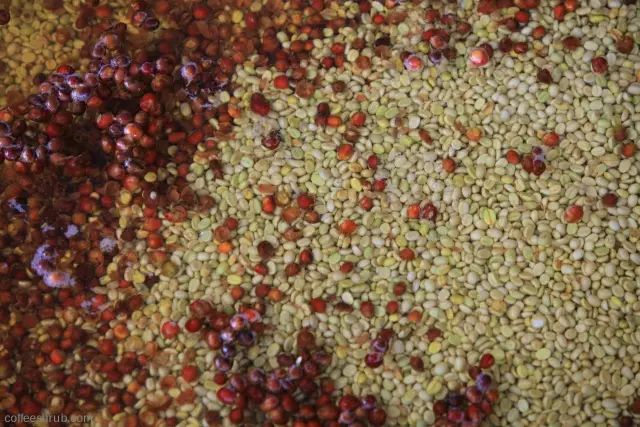
Heart of Africa Burundian Coffee | small and beautiful inland produced world-famous washed coffee
Professional coffee knowledge exchange more coffee bean information please follow Coffee Workshop (Wechat official account cafe_style) Burundi Rutana Burundian Heart of Africa country: Burundi Burundi producing area: Reuters Town Rutana altitude: 1400-1700 m treatment method: washing variety: bourbon species 01 | production area profile of Burundi, the heart of Africa.

A brief introduction to the description of the flavor, taste and aroma characteristics of high-quality coffee beans in Kimmel Manor
The first problem for Malaba coffee farmers is to set up a cleaning station. The coffee fruit must be transported to the cleaning station to wash the sugar under the skin of the coffee bean within 12 hours after picking, otherwise the flavor of the coffee will be greatly damaged. In July 2001, with UNR, the Ministry of Culture and Industry of Rwanda (Office des Cultures Industrielles du Rwanda,OCIR-Caf), ACD

How do you drink Burundian coffee? How much is the Burundian coffee bean by hand?
Professional coffee knowledge exchange more coffee bean information please follow the coffee workshop (Wechat official account cafe_style) brief introduction of Burundian coffee bean producing areas Burundi, the heart of Africa. According to the statistics of the World Bank in 2011, about 600000-800000 families in Burundi depend on coffee for a living, and coffee is the core of Burundi. Bloom

A brief introduction to the cultivation of boutique coffee beans in Chimeier Manor with a long aftertaste, geographical location, climate and altitude
Rwanda's economy is dominated by agriculture. The population engaged in agriculture and animal husbandry accounts for 92% of the country's population. The main cash crops are coffee, tea and cotton. Because it is an agricultural and animal husbandry country, coupled with the loss of many young workers caused by the genocide in 1994, it is a huge blow to a country that is not already rich, and Rwanda is still a backward country. Luwang after the Civil War
Coffee can also be used as a paint.
The "Coffee Tour" exhibition held in China and Hong Kong City a few days ago is a unique exhibition that brings together the creative art of coffee. The exhibition area is divided into three parts: "Coffee Art painting", "Global Coffee making tools" and "Coffee vessels". In the part of "Coffee Art painting", the painter uses coffee as watercolor paint, with rich layers of composition and delicate lines, so that people can "look at" coffee with their eyes.
Coffee acreage in Madagascar continues to decline
Due to the continuous decline in coffee prices in the international market, the planting area of Malagasy coffee continues to decrease. The latest statistics from the Malaysian Ministry of Agriculture show that the planting area of Malagasy coffee is 190000 hectares, nearly 30,000 hectares less than 20 years ago. At present, coffee is still an important export product for horses. Malaysia produces an average of 67000 tons of coffee a year, with nearly 40000 tons for export. An important export of Malaysian coffee
Vietnam's coffee exports increased sharply from January to May
Vietnam exported 154000 tons of coffee in May, with an export value of US $336 million, the Ministry of Agriculture and Rural Development reported on its website on June 3. From January to May, Vietnam exported 966000 tons of coffee, an increase of 36.7 percent over the same period last year, and exports of US $1.96 billion, an increase of 29 percent over the same period last year.
Italy and Germany become Cameroon's largest coffee exporters
During the coffee harvest year 2012/2013, Cameroon exported 4662 tons of Robusta coffee beans to Italy, accounting for 31.6% of the total production of Robusta coffee beans; Portugal followed closely, importing a total of 3745 tons of Robusta coffee beans from Cameroon, accounting for 25.4% of the total production of Robusta coffee beans.
Vietnam exported 966000 tons of coffee from January to May 2014.
In May 2014, Viet Nam exported 154000 tons of coffee with an export value of US $336 million. From January to May, Vietnam exported 966000 tons of coffee, an increase of 36.7 percent over the same period last year, and exports of US $1.96 billion, an increase of 29 percent over the same period last year. The average export price of Vietnamese coffee is US $2001 per ton. Germany and the United States are still the top two export markets of Vietnamese coffee, accounting for respectively.