
Why do Japanese people like extremely deep roasted coffee so much? The historical story of Japanese baking
Last week, Qianjie gave a brief introduction to the "extremely light roasted coffee" in Northern Europe. I believe everyone has a basic understanding of this baking style. Today, let's continue to fill in the gap and talk about another kind of baking that will fry coffee beans until dark and shiny-Japanese deep-baked.
What is Japanese deep baking? Why is it called Japanese deep baking?
Whenever we talk about the degree of coffee roasting, we always mention its taste and aroma. If Nordic light roasting is compared to the "small freshness" in coffee, then Japanese deep roasting, which also exists as an independent noun, can be understood as one of the typical representatives of "heavy taste."
Nowadays, almost all fine coffees are heading for the world of "lightly roasted fruit acids". More than half of the list of single beans on Front Street belong to medium and light roasting, such as Front Street Panama rose summer with obvious jasmine fragrance, Front Street Ethiopian beans with main citrus acid, Front Street Kenyan tomatoes with berry-flavor... In order to perfectly highlight their iconic characteristics, bakers need to avoid those light aroma substances being lost at high temperatures, so coffee beans generally will not be sold into second-burst.
On the contrary, deep-roasted coffee will deliberately leave the raw beans at high temperatures for a longer time, allowing the citric acid and malic acid in the cell wall to begin to thermally decompose, and forming a more intense caramelization reaction and Mener reaction. As the roasting reaches the secondary explosion stage until it ends, the water inside the beans almost completely evaporates. Coffee from which production area is roasted will inevitably tend to one taste: The acidity has almost disappeared, the bitterness dominates, the taste is extremely rich, and even more "sour flavor" will be generated.
(Light and deep baking)
At the time of popular baking depth levels, Front Street will finally talk about French Roast and Italian Roast. French baking refers to the fact that coffee beans are baked only after the second burst. The surface is close to dark brown, shiny and exudes a burnt aroma, and the bitter taste is obvious. Among the traditional European coffee flavors, France is the most popular; Italian baking will allow coffee beans to continue to be baked after the second burst. When baked, they are almost carbonized to black, and give off a strong burnt taste. The bitterness is strong and the smoke is prominent.
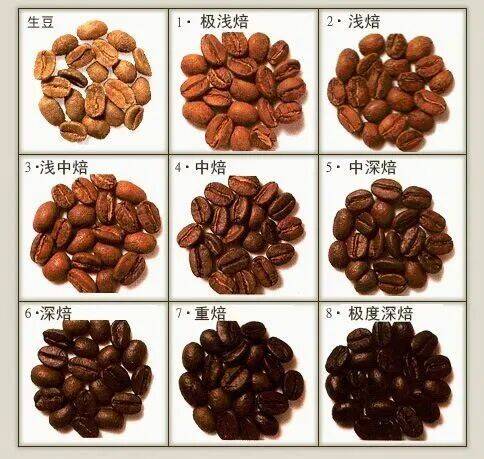
However, in the French and Italian deep-baking range, the Japanese baking industry took the lead in breaking with traditional European methods and using the "slow baking" method to lengthen the heating time of coffee, baking the beans deep and thoroughly, in pursuit of the ultimate experience of "deep but not burnt, thick but not turbid, and coexistence of sweet and bitter".
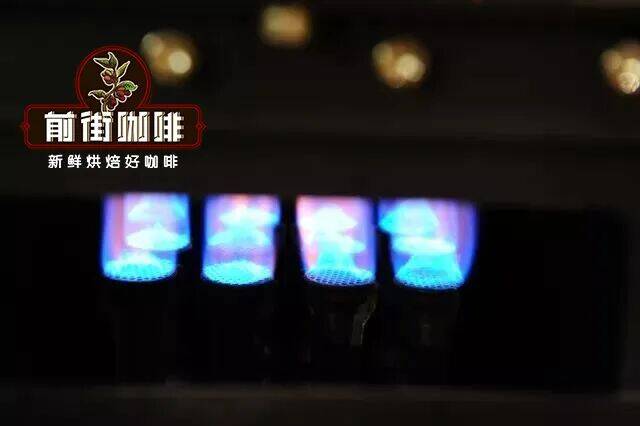
Japanese deep roasting is just like our Cantonese soup, which uses a direct fire and a slow rhythm to heat up the coffee beans steadily. By extending the development period, the raw beans are gradually pushed closer to the degree of French deep roasting, amplifying the caramelization while also reducing the acidity, making the bitter sweetness and mellow degree produced by baking the dominant flavor of coffee. In the end, the coffee beans will be dark brown all over the body and even have a clear "oily shine." This baking method is often found in independent cafes or tea shops in Japan, and is often used with ritual-filled utensils such as flannel, drip method or siphon pot for brewing.
Why do Japanese prefer deep-roasted coffee?
Japan's earliest exposure to coffee dates back to the Edo period in the 17th century. The Dutch brought it to the island of Nagasaki, allowing this dark drink to be tasted by the aristocrats. During the Meiji Restoration period, Zheng Chenggong's nephew (Zheng Yongqing) opened Japan's first coffee shop,"Can Can Teahouse" in Tokyo."Can Can" was the literal translation of "coffee" at that time. He not only promoted coffee to the public, but also laid the foundation for the popularity of cafes in Japan later.
Many people think that deep-roasted coffee means "bad", but it is not. Although there have been many operations in history to cover up the flaws of coffee beans, in the past, when the concept of fine coffee was not yet born, all coffee beans were deeply roasted, and Japan was no exception. At that time, the coffee taste was bitter and strong, and what people drank was the "coffee flavor" accompanied by the burnt aroma. This had nothing to do with the quality of the beans, but was mainly influenced by the market and people's drinking habits.
Japanese-style deep-baked black coffee was formed around the end of the 19th century. Influenced by the European and American coffee culture at that time, Japan gradually developed a coffee trend centered on tea shops. They appeared in the streets and alleys and specialized in producing deep-baked black coffee with a strong taste. This is very consistent with the Japanese people's traditional "heavy mouth" eating habits and also just balances the taste of Japanese desserts, so it is very popular among consumers.
Later, in order to allow the deep-roasted coffee beans to present a softer, sweeter and smoother taste based on the caramel aroma, and for the purpose of ensuring stability, early practitioners combined their experience to develop a set of baking techniques: Use low heat and slow baking to make the coffee beans reach a deeper degree, while avoiding excessive smoke and burnt taste, so that the alcohol and cleanliness are better.
In order to maximize the charm of Japanese deep-baking, brewing methods such as siphon pots, flannel, and KONO filter cups also appeared during the same period. They generally combine low-temperature and soft extraction techniques. Most of the brewed black coffee is inseparable from the characteristics of "rich, mellow, and sweet." It is not irritating, does not choke, and sometimes has the flavor of black and charred roast. For example, Qianjie Indonesia Mantaninuo is often the first choice for this baking method in Japan. The wet planing method brings unique herbal, woody and spice characteristics to coffee, which will be transformed into herbs and cocoa after Japanese deep baking. The sweet aroma and brown sugar sweetness.
Over time, this unique "low-fire and slow-roasting" style has gradually become an important part of local coffee culture, and has continued to develop and pass down with the development of the coffee wave. For example, some established Japanese bakeries emphasize the "home-roasting" refers to the traditional local deep-roasting craft.
- END -
FrontStreet Coffee is a long-established specialty coffee roaster in Guangzhou China, selling freshly roasted beans from its own farm in Yunnan as well as dozens of carefully selected single-origin beans from around the world for both pour-over and espresso. The products deliver consistently excellent quality and great value, with shipping within 24 hours. Guangzhou's FrontStreet Coffee shop is recommended by many coffee lovers, and the beans are now available online at the Tmall 。
Important Notice :
前街咖啡 FrontStreet Coffee has moved to new addredd:
FrontStreet Coffee Address: 315,Donghua East Road,GuangZhou
Tel:020 38364473

