
"ICAFE"
1289 article(s) found

Introduction to the origin of Costa Rican coffee
Costa Rican coffee has full particles, ideal acidity and unique strong flavor. Costa Rica's coffee industry, originally controlled by the Costa Rican Coffee Industry Company (InstitutodelCafdeCostaRica, ICAFE), has been taken over by the official Coffee Committee (OficinadelCaf). In the coffee exported, those products that are considered to be of substandard quality use blue.

Costa Rican coffee beans, coffee beans
Costa Rica's high latitudes produce coffee beans famous in the world, rich, mild taste, but extremely sour, coffee beans here are carefully processed, it is because of this, only high-quality coffee. Tarasu, south of San Jos, Costa Rica's capital, is one of the country's most prized coffee plantations. Tarrazu in the World
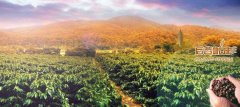
High altitude extra-hard beans St. Roman estate fine coffee beans grinding degree roasting degree processing method brief introduction
One of the most famous is Mountain Costa Coffee, which tastes mellow and neutral. It can be boiled directly or mixed with other kinds of coffee beans. It is also a good choice. Other types of Brazilian coffee, such as Rio, Parana, etc., can be produced in large quantities without too much care. Although the taste is rough, it is a kind of inexpensive coffee.

The Sweet Goddess Manor of Costa Rica, the cultivation of boutique coffee beans, geographical location, climate and sea
Therefore, it is recommended that you taste Costa Rican coffee with only a small amount of sugar and cream, so that you can enjoy its girlish flavor. Other coffee worth mentioning are: JuanVinas,PR, H.Tournon, Windmill,SHB, Montebello and SsntaRosa. First-class coffee

Acidity Ideal St. Roman Estate Fine Coffee Bean Origin Development History Culture Introduction
Other types of Brazilian coffee, such as Rio, Parana, etc., can be produced in large quantities without too much care. Although the taste is rough, it is a kind of inexpensive coffee. Due to its distribution throughout the country, the solid quality varies, and it has its own standard (NO.2 NO.8 according to the amount of impurities, NO.13 NO.19 according to the size of beans, divided into six grades according to taste).
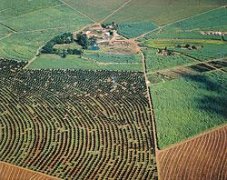
High altitude extra hard beans St. Roman Manor Fine Coffee Bean cultivation Geographic location Climate elevation brief introduction
The higher the altitude, the better the coffee beans, not only because the higher altitude can increase the acidity of the coffee beans and thus increase the flavor, but also because the night temperature at the higher altitude is lower, which can make the trees grow slowly, thus the flavor of the coffee beans is stronger. In addition, due to the high altitude drop caused by sufficient rainfall, it is very beneficial to the growth of coffee trees. However, its negative effect is to increase

Brief introduction of planting Market Price of Fine Coffee Bean varieties in St. Roman Manor with mild acidity
Excellent Costa Rican coffee is called extra hard beans, and this kind of coffee can grow at an altitude of more than 1500 meters. Altitude has always been a problem for coffee growers. The higher the altitude, the better the coffee beans, not only because the higher altitude can increase the acidity of the coffee beans and thus increase the flavor, but also because the night temperature at the higher altitude is lower, which can make the trees grow slowly.

A brief introduction to the description of the flavor, taste and aroma of Costa Rican boutique coffee beans
Costa Rican coffee has full particles, ideal acidity and unique strong flavor. Costa Rica's coffee industry, originally controlled by the Costa Rican Coffee Industry Company (InstitutodelCafdeCostaRica, ICAFE), has been taken over by the official Coffee Committee (OficinadelCaf). In exported coffee, those products that are considered to be of substandard quality are used in blue.

A brief introduction to the planting Market Price of St. Roman's Fine Coffee Bean varieties with the scent of Grass
Excellent Costa Rican coffee is called extra hard beans, and this kind of coffee can grow at an altitude of more than 1500 meters. Altitude has always been a problem for coffee growers. The higher the altitude, the better the coffee beans, not only because the higher altitude can increase the acidity of the coffee beans and thus increase the flavor, but also because the night temperature at the higher altitude is lower, which can make the trees grow slowly.

A brief introduction to the treatment method of grinding degree and baking degree of fine coffee beans in St. Roman Manor with ideal acidity
Brazilian coffee fruit, a coffee producer, accounts for 1/3 of the world's coffee consumption and occupies a place in the global coffee market, although Costa Rica faces several times more natural disasters than other regions. but its acreage is enough to make up for it. There are many kinds of coffee here, but its industrial policy is abundant and cheap, so it is excellent.
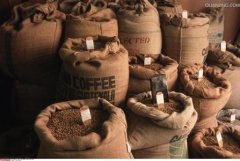
Unique fragrance of Costa Rican Diamond Hill boutique coffee beans grind degree baking degree treatment method simple
Costa Rican coffee has full particles, ideal acidity and unique strong flavor. Costa Rica's coffee industry, originally controlled by the Costa Rican Coffee Industry Company (InstitutodelCafdeCostaRica, ICAFE), has been taken over by the official Coffee Committee (OficinadelCaf). In exported coffee, those products that are considered to be of substandard quality are used in blue.

A brief introduction to the Market Price of Fine Coffee Bean varieties in St. Roman Manor
There are many kinds of coffee here, but its industrial policy is large and cheap, so there is not much premium coffee, but it is a good choice for mixing other coffees. Other kinds of Brazilian coffee, such as Rio and Parana, can be produced in large quantities because they do not need too much care. Although they taste rough, they can be regarded as a kind of coffee with good quality and low price.
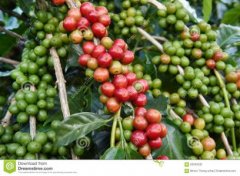
A brief introduction to the cultivation of Costa Rican boutique coffee beans with unique fragrance, geographical location, climate and altitude
Costa Rican coffee has full particles, ideal acidity and unique strong flavor. Costa Rica's coffee industry, originally controlled by the Costa Rican Coffee Industry Company (InstitutodelCafdeCostaRica, ICAFE), has been taken over by the official Coffee Committee (OficinadelCaf). In exported coffee, those products that are considered to be of substandard quality are used in blue.

Development status and derivation of Robusta coffee beans
Https://baike.baidu.com/item/ Robusta / 4878176?fr=aladdin Robusta species (Latin name Coffee Robusta Linden), one of the most important coffee tree varieties in the world. The leaf rust-resistant varieties found in Congo in Africa have stronger disease resistance than Arabica. Different growth environments: coffee beans grown in Arabica

Brief introduction of planting Market Price of Fine Coffee Bean varieties in St. Roman Manor with ideal acidity
The research center, located about 30 kilometers northeast of the Costa Rican capital San Jose, belongs to the Costa Rican Coffee Association and is a research institution for villa sarchi planting, breeding and quality inspection newly developed by Costa Rica's national coffee breeds. in addition, it also has 10 hectares of experimental plots, planting a number of excellent varieties. Coffee is the main agricultural product in Costa Rica, with an annual output of more than 2 million bags

A brief introduction to the description of flavor and aroma characteristics of Costa Rican Diamond Hill boutique coffee beans
Costa Rican coffee has full particles, ideal acidity and unique strong flavor. Costa Rica's coffee industry, originally controlled by the Costa Rican Coffee Industry Company (InstitutodelCafdeCostaRica, ICAFE), has been taken over by the official Coffee Committee (OficinadelCaf). In exported coffee, those products that are considered to be of substandard quality are used in blue.

A brief introduction to the Origin, Development, History and Culture of Fine Coffee beans in St. Roman Manor
All the coffee trees planted in Costa Rica are Arabica coffee trees. through improvement, the quality of coffee beans is better and more stable. in order to facilitate picking, coffee trees are kept at a height of about 2 meters through continuous pruning. The coffee that people eat is the taste of the seeds in the fruit that are brewed in water. After picking raw coffee beans, the peel, pulp, seed film and sun exposure must be removed.
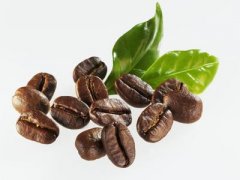
A brief introduction to the Origin, Development, History and Culture of Fine Coffee beans in St. Roman Manor
The research center, located about 30 kilometers northeast of the Costa Rican capital San Jose, belongs to the Costa Rican Coffee Association and is a research institution for villa sarchi planting, breeding and quality inspection newly developed by Costa Rica's national coffee breeds. in addition, it also has 10 hectares of experimental plots, planting a number of excellent varieties. Coffee is the main agricultural product in Costa Rica, with an annual output of more than 2 million bags

A brief introduction to the cultivation of St. Roman's boutique coffee beans with the scent of grass, geography, climate and altitude
Brazilian coffee fruit, a coffee producer, accounts for 1/3 of the world's coffee consumption and occupies a place in the global coffee market, although Costa Rica faces several times more natural disasters than other regions. but its acreage is enough to make up for it. There are many kinds of coffee here, but its industrial policy is abundant and cheap, so it is excellent.
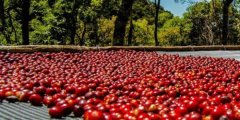
A brief introduction to the cultivation of boutique coffee beans in St. Roman Manor, geographical location, climate and altitude
Other kinds of Brazilian coffee, such as Rio and Parana, can be produced in large quantities because they do not require too much care. Although the taste is rough, it is a kind of high-quality and inexpensive coffee, which has its own standards because it is distributed all over the country and its solid quality varies (NO.2NO.8 according to the number of sundries, NO.13NO.19 according to the size of beans, six grades according to taste).