
"LaMinita"
687 article(s) found

Guatemala Antigua Flower God single bean coffee beans taste good? flavor description variety planting information
For professional baristas, please follow the coffee workshop (official Wechat account cafe_style) Why is the coffee in Antigua, Guatemala so delicious? Because Guatemala has a unique volcanic terrain and high altitude, where the topography and soil environment uniquely create the unique flavor of coffee beans, Antigua is surrounded by three volcanoes. Why is the coffee bean of Flower God so

A brief introduction to the description of the flavor, taste and aroma of Costa Rican boutique coffee beans
Costa Rican coffee has full particles, ideal acidity and unique strong flavor. Costa Rica's coffee industry, originally controlled by the Costa Rican Coffee Industry Company (InstitutodelCafdeCostaRica, ICAFE), has been taken over by the official Coffee Committee (OficinadelCaf). In exported coffee, those products that are considered to be of substandard quality are used in blue.
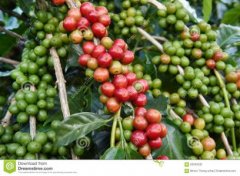
A brief introduction to the cultivation of Costa Rican boutique coffee beans with unique fragrance, geographical location, climate and altitude
Costa Rican coffee has full particles, ideal acidity and unique strong flavor. Costa Rica's coffee industry, originally controlled by the Costa Rican Coffee Industry Company (InstitutodelCafdeCostaRica, ICAFE), has been taken over by the official Coffee Committee (OficinadelCaf). In exported coffee, those products that are considered to be of substandard quality are used in blue.

A brief introduction to the market price of light and pure Costa Rican boutique coffee beans
Coffee is an important economic source of Costa Rica. It was introduced in 1808 and has been cultivated for 200 years. Costa Rica has 1x3 population invested in coffee-related industries. Colombians say that coffee has changed the country and enjoyed a rich environment, and coffee has indeed made an outstanding contribution. Although Costa Rica ranks third from the bottom in terms of land area in Central America, its economic environment is better than that of Central America.

A brief introduction to the planting market price of Costa Rican boutique coffee beans with unique flavor
Coffee consumed in China (dyed blue or not dyed) accounts for about 10% of the total output. Local per capita coffee consumption is twice that of Italy or the United States. Other kinds of Brazilian coffee, such as Rio and Parana, can be produced in large quantities because they do not require too much care. Although the taste is rough, it is a kind of good and cheap coffee, because it is distributed all over the country and has solid quality.

A brief introduction to the description of the flavor, taste and aroma characteristics of Costa Rican boutique coffee beans
In 2002 and 2003, Colombia produced 3 million packets of coffee (60 kg each) and exported 1.87 million packets of coffee. 40% of the exported coffee is high-quality refined coffee, which is known internationally as GOURMET coffee. In the international market, refined coffee costs an average of US $93.61 per bag (46kg) (FOB), which is US $19.56 higher than that of ordinary coffee. I also have a kind of refined coffee, each bag.

A brief introduction to the market price of high-quality Costa Rican coffee beans with strong acidity
Coffee consumed in China (dyed blue or not dyed) accounts for about 10% of the total output. Local per capita coffee consumption is twice that of Italy or the United States. Other kinds of Brazilian coffee, such as Rio and Parana, can be produced in large quantities because they do not require too much care. Although the taste is rough, it is a kind of good and cheap coffee, because it is distributed all over the country and has solid quality.
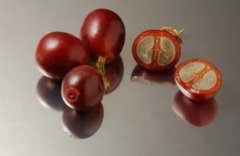
A brief introduction to the flavor and aroma characteristics of Costa Rican boutique coffee beans with fruit flavor
High-quality Costa Rican coffee is called extra hard beans, and this kind of coffee can grow at an altitude of more than 1500 meters. Altitude has always been a problem for coffee growers. The higher the altitude, the better the coffee beans, not only because the higher altitude can increase the acidity of the coffee beans and thus increase the flavor, but also because the night temperature at the higher altitude is lower, which can make the trees grow slowly.

A brief introduction to the flavor, taste and aroma characteristics of highly acidic Costa Rican boutique coffee beans
Coffee consumed in China (dyed blue or not dyed) accounts for about 10% of the total output. Local per capita coffee consumption is twice that of Italy or the United States. Other kinds of Brazilian coffee, such as Rio and Parana, can be produced in large quantities because they do not require too much care. Although the taste is rough, it is a kind of good and cheap coffee, because it is distributed all over the country and has solid quality.

Flavor characteristics, producing areas and brewing parameters of single bean of Costa Rican coffee
For the exchange of professional baristas, please pay attention to the coffee workshop (Wechat official account cafe_style) Costa Rican coffee single bean flavor characteristics, production areas and brewing parameters Coffee Farmers will classify coffee, some will retain less pectin layer, so they can be exposed faster, while others will retain more pectin layer, which requires longer exposure time. Yellow honey (about 25% of the pectin layer) in
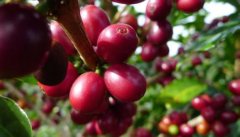
A Brief Introduction to the Treatment Method of Grinding Degree and Roasting Degree of Costa Rican Fine Coffee Beans with Strong Acid
Coffee has changed the country, Costa Ricans say, and coffee has made an outstanding contribution to its rich environment.Although Costa Rica ranks third from the bottom in terms of land area in Central America, its economic environment is better than half of that of other countries.Because of its rich people and stable society, Costa Rica has more than 30 national parks. 1729

A brief introduction to the cultivation of fruit-scented Costa Rican boutique coffee beans, geographical location, climate and altitude
Coffee was introduced into Costa Rica from Cuba in 1729. Today, its coffee industry is one of the well-organized industries in the world, with a yield of 1700 kg per hectare. Costa Rica has only 3.5 million people but 400m coffee trees, and coffee exports account for 25 per cent of the country's total exports. The volcanic soil of Costa Rica is very fertile and well drained, especially in the central part.

A brief introduction to the cultivation of highly acidic Costa Rican boutique coffee beans, geographical location, climate and altitude
In the coffee-related industry, Colombians say that coffee has changed the country and enjoyed a rich environment, and coffee has indeed made an outstanding contribution. Although the land area of Colombia ranks third from the bottom of Central America, its economic environment is better than that of half of the countries. due to the affluence of the people, social stability, and spare capacity to care about environmental issues, there are more than 30 national parks in Colombia. 1729

A brief introduction to the altitude environment of the flavor and taste producing area of the stable quality San Roman Coffee Manor in Costa Rica
Tarasu, located in the south of the country's capital, SanJos, is one of the most valued coffee growers in the country. LaMinitaTarrazu coffee is a famous local product, but its production is limited, about 72600 kilograms a year. It is grown on a piece of land called LaMinita, which is close to the McAlpine family in the UK.

A brief introduction to the treatment method of grinding degree and baking degree of Costa Rican boutique coffee beans with unique flavor
High-quality Costa Rican coffee is called extra hard beans, and this kind of coffee can grow at an altitude of more than 1500 meters. Altitude has always been a problem for coffee growers. The higher the altitude, the better the coffee beans, not only because the higher altitude can increase the acidity of the coffee beans and thus increase the flavor, but also because the night temperature at the higher altitude is lower, which can make the trees grow slowly.

A brief introduction to the history and culture of the origin and development of Costa Rican boutique coffee beans
Second, vigorously develop high-quality coffee, increase the added value of coffee exports, and make up for the losses caused by the fall in coffee prices. Its main approach is to focus on the cultivation of high-quality coffee from 1000 meters to 1500 meters above sea level, prohibit the collection of immature coffee beans, strengthen the screening of coffee beans, and pay attention to the environmental protection ingredients during planting and processing. In 2002 and 2003, the output of coffee in Colombia was 3 million packets (60 per pack).

A brief introduction to the history and culture of the origin and development of Costa Rican boutique coffee beans with fruit flavor
Coffee was introduced into Costa Rica from Cuba in 1729. Today, its coffee industry is one of the well-organized industries in the world, with a yield of 1700 kg per hectare. Costa Rica has only 3.5 million people but 400m coffee trees, and coffee exports account for 25 per cent of the country's total exports. The volcanic soil of Costa Rica is very fertile and well drained, especially in the central part.

Coffee and roasting in Latin America
In 1721, French naval officer Gabriel Mathieu de Clieu went through difficulties and obstacles to bring the first coffee sapling from Africa to the Latin American island of Martinique, which was the origin of coffee cultivation in Latin America.
Introduction to Latin American Coffee
In 1721, French naval officer Gabriel Mathieu de Clieu went through difficulties and obstacles to bring the first coffee sapling from Africa to the Latin American island of Martinique, which was the origin of coffee cultivation in Latin America.

A detailed description of the taste and flavor of Latin American coffee
Following Cafe (official Wechat account vdailycom) found that the Beautiful Cafe opened a small shop of its own. In 1721, French naval officer Gabriel Mathieu de Clieu brought the first coffee sapling from Africa to the Latin American island of Martinique, all of which was the origin of coffee cultivation in Latin America. Because France at that time was in