
"Republic"
5141 article(s) found

Introduction to the characteristics of Santa Cruz Manor
Ecuador, formerly part of the Inca empire. It was colonized by Spain in 1532. Independence was declared on August 10, 1809, but it was still occupied by the Spanish colonial army. It was completely freed from Spanish colonial rule in 1822. Joined the Republic of Greater Columbia in 1825. After the disintegration of Great Colombia in 1830, the Republic of Ecuador was proclaimed. Since the founding of the people's Republic of China, the political situation of Ecuador has been in turmoil.

Introduction to the origin of Dominican coffee, Dominican coffee varieties
Following Cafe (Wechat official account vdailycom) found that Beautiful Cafe opened a small shop of its own the Dominican Republic is located in the east of the Central Haitian Island in the West Indies, the Republic of Haiti is bordered by the Republic of Haiti to the west, the Atlantic Ocean to the north and the Caribbean Sea to the south. With an area of about 49000 square kilometers and a population of 7.1 million, the Dominican Republic and the Republic of Haiti coexist on an island bordering Haiti.

Introduction to the characteristics of high-quality coffee beans with flavor and taste in Dominica coffee producing areas
Coffee in Dominica is grown in highlands and lowlands, and its taste is slightly different. The upland is sour, but the taste is rich; the lowland is less sour and tastes smoother. Boutique coffee has become popular in recent years. High-quality coffee beans produced by some Dominican estates have a rich aroma, mellow taste and moderately bright sour taste, and have been bought with the more famous Puerto Rico beans or teeth.
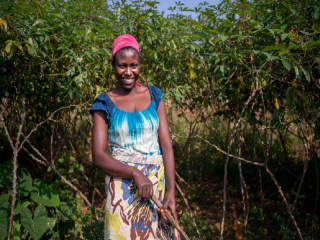
Congolese Coffee | History of Coffee cultivation in the Democratic Republic of the Congo _ introduction to the producing areas of Congolese coffee beans
Coffee from the Democratic Republic of the Congo was introduced from Liberia in 1881. When the Congo officially began to grow coffee in 1898, because of the Belgian colonial invasion, the Belgian colonists discovered a new coffee tree species native to the Democratic Republic of the Congo. It was so strong that it was named Robusta.

Taste characteristics of Dominica Dominica flavor
Following Cafe Review (official Wechat account vdailycom) found that Beautiful Cafe opened a small shop of its own Dominica: Santo Domingo coffee flavor and taste characteristics: fresh and elegant, full-bodied, excellent acidity, pleasant flavor. The Dominican Republic is located in the east of the island of Haiti in the West Indies, bordering the Republic of Haiti to the west, the Atlantic Ocean to the north and the Caribbean Sea to the south.

Introduction to the flavor and taste characteristics of boutique coffee beans in Dominica coffee producing areas
After Santo Domingo returned to Spanish rule, the local people gradually formed a consensus on independent statehood. On November 30th, 1821, the former Governor of Santo Domingo, General Jos Nez de Cceres, proclaimed the founding of the country, named Haiti, Spain, and expected to merge under the Greater Colombian State led by President Bolivar of South America. [3] but in February 1822, nine weeks later, Haiti's

Introduction to the quality of the method of describing the taste and flavor of coffee beans in Uganda
The Republic of Dominica (Dominican Republic) is adjacent to Haiti, and both own the island of Hispaniola (Hispaniola). Like its neighbours, the Dominican Republic had a history of revolution and poverty, but now it has democratic elections and the country is relatively stable. In the early 18th century, coffee was grown in the Dominican Republic, the best production.

Fresh and elegant Dominican coffee region boutique coffee beans Flavor description Taste introduction
Unlike coffee grown in Haiti, coffee grown in the Dominican Republic is mostly washed, a sign of high quality. Miniga Coffee uses water washing to treat coffee beans, so that the quality of treated coffee beans is more guaranteed. Coffee beans treated with water washing method retain more original flavor than drying method, and the aroma is pure and soft. carefully selected and made in such a way

How many types of Dominican coffee are there?
Pay close attention to coffee reviews (Weixin Official Accounts vdailycom ) and find that a beautiful coffee shop opens its own small shop Dominican coffee has two characteristics, which vary according to the production area and variety. Tibica coffee, produced in Barahona, has a soft taste and light aroma characteristic of the Caribbean Sea; highland coffee from Siwao, a central mountain, has a strong taste

Information on coffee producing areas in Congo people evacuated from coffee growing areas during volcanic eruptions in Congo
Professional coffee knowledge exchange more coffee bean information Please follow the coffee workshop (Wechat official account cafe_style) We may not be familiar with the country of production of the Democratic Republic of the Congo (DRC). The coffee from this country is thick and mellow, with dark berry tonality and a hint of citrus and spice flavor. Unexpectedly, the Democratic Republic of the Congo (DRC) has recently been known for this matter. May 22nd, bit
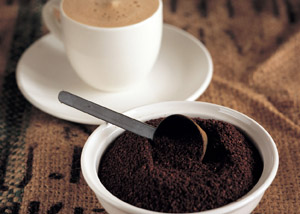
Pure and soft Dominica coffee Santo Domingo coffee
The Dominican Republic also had a history of revolution and poverty, but now it has implemented democratic elections and the country is relatively stable. In the early 18th century, coffee was introduced to Domiga from Martinique, and fine coffee was produced in the north represented by Hibao and in the south, including Okayabani Santo Domingo. Among them, coffee from Santo Domingo and Barney

Introduction of Dominica Coffee Flavor Manor
Coffee in Dominica is grown in highlands and lowlands, and its taste is slightly different. The upland is sour, but the taste is rich; the lowland is less sour and tastes smoother. Boutique coffee has become popular in recent years. High-quality coffee beans produced by some Dominican estates have a rich aroma, mellow taste and moderately bright sour taste, and have been bought with the more famous Puerto Rico beans or teeth.

Coffee from the Republic of Guatemala was really introduced into Guatemala in 1750.
The Republic of Guatemala (Spanish: Repblica de Guatemala), translated by Taiwan as Guatemala, is a country in Central America, located in the south of the North American continent. It borders the Pacific Ocean to the west, the Caribbean Sea to the east, Mexico to the north, Belize to the northeast, and Honduras and El Salvador to the southeast. Guatemala produces about 3.5 million bags of coffee every year.

Santo Domingo coffee
Santo Domingo is a city with a history of 500 years. Coffee produced by Santo Domingo and Barney, which is almost synonymous with Domiga coffee, is a world-famous high-quality coffee. Its flavor and taste characteristics: fresh and elegant, full particles, excellent acidity, pleasant aroma. The Dominican Republic is located in the east of the island of Haiti in the West Indies, bordering the Republic of Haiti in the west and the Atlantic Ocean in the north.

Flavor description of Dominican Santo Domingo Coffee with lingering aftertaste introduction to the taste characteristics of boutique coffee
Coffee in Dominica has two main characteristics, which vary according to the region and variety of coffee produced. Tibica coffee, produced in the main producing area of Baraona, has the soft taste and light aroma peculiar to the Caribbean, while the highland coffee in Siwao in the central mountain area has a strong taste. The two producing areas have their own characteristics, which are located in the Jarabacoa area near Sivao.

Introduction to the Flavor and Taste of Fine Coffee beans in Dominica Coffee producing area
Santo Domingo is a city with a history of 500 years. Coffee produced by Santo Domingo and Barney, which is almost synonymous with Domiga coffee, is a world-famous high-quality coffee. Its flavor and taste characteristics: fresh and elegant, full particles, excellent acidity, pleasant aroma. The Dominican Republic is located in the east of the island of Haiti in the West Indies, bordering the Republic of Haiti in the west and the Atlantic Ocean in the north.

Introduction to the flavor and taste quality of Dominica boutique coffee
Dominica coffee beans (Caribbean) Dominica coffee is grown in highlands and lowlands, and its taste is slightly different. The upland is sour, but the taste is rich; the lowland is less sour and tastes smoother. Boutique coffee has become popular in recent years. The high-quality coffee beans produced by some Dominican estates have a rich aroma, mellow taste and moderately bright sour taste.

Santo Domingo, Dominican Republic Coffee Processing Method Production Area Grinding Scale Introduction
Dominican coffee is grown in upland and lowlands and tastes slightly different. Highland plants are sour, but rich in taste; lowland plants are less sour and smoother in taste. In recent years, specialty coffee has become popular. Some Dominican estates produce high-quality coffee beans with rich aroma and rich taste, with a moderately bright acidity. They have been compared with the more famous Puerto Rico beans or teeth.

Santo Domingo coffee
Santo Domingo is a city with a history of 500 years. Coffee produced by Santo Domingo and Barney, which is almost synonymous with Domiga coffee, is a world-famous high-quality coffee. Its flavor and taste characteristics: fresh and elegant, full particles, excellent acidity, pleasant aroma. The Dominican Republic is located in the east of the island of Haiti in the West Indies, bordering the Republic of Haiti in the west and the Atlantic Ocean in the north.

Santo Domingo Coffee introduction
Santo Domingo is a city with a history of 500 years. Coffee produced by Santo Domingo and Barney, which is almost synonymous with Domiga coffee, is a world-famous high-quality coffee. Its flavor and taste characteristics: fresh and elegant, full particles, excellent acidity, pleasant aroma. The Dominican Republic is located in the east of the island of Haiti in the West Indies, bordering the Republic of Haiti in the west and the Atlantic Ocean in the north.