
"irregular"
2447 article(s) found

Introduction to the characteristics of coffee grindability treatment in Fenghuang Manor, Costa Rica
Other kinds of Brazilian coffee, such as Rio and Parana, can be produced in large quantities because they do not need too much care. Although the taste is rough, it is a kind of good and cheap coffee. It has its own standard because it is distributed all over the country and its solid quality varies. It has its own standard (NO.2~NO.8 according to the number of sundries, NO.13~NO.19 according to the size of beans, and six grades according to taste).

Electric mill small common sense big Pegasus electric coffee grinder performance how to disassemble and adjust the scale brand recommendation
Pegasus electric coffee grinder performance how to disassemble and adjust the scale Brand recommended introduction [Electric Mill]: 1. A bean grinder composed of two circular serrated blades, this serrated blade tears the beans instead of whirlwind, which can not only grind the coffee powder of very soft and uniform size, but also powder into porous irregular particles in the shape of cake chips, so that hot water can be evenly and thoroughly.

Introduction to the Flavor and Taste of Costa Rica Coffee Manor; introduction to the planting environment of Fenghuang Manor
Other kinds of Brazilian coffee, such as Rio and Parana, can be produced in large quantities because they do not need too much care. Although the taste is rough, it is a kind of good and cheap coffee. It has its own standard because it is distributed all over the country and its solid quality varies. It has its own standard (NO.2~NO.8 according to the number of sundries, NO.13~NO.19 according to the size of beans, and six grades according to taste).

A brief introduction to the types and producing areas of Coffee beans the main components and functions of Coffee
Professional coffee knowledge exchange more coffee bean information please follow the coffee workshop (Wechat official account cafe_style) front street-Arabica coffee beans, ingredients introduction Coffee tree is the Rubiaceae coffee genus flowering plants, there are about 120 species, ranging from small shrubs to 18 meters tall trees. Wild coffee species grow irregularly in the tropics, and people continue to send them.

Flavor and taste characteristics of Costa Rican coffee manor producing area introduction of fine coffee beans
One of the most famous is Mountain Costa Rica Coffee, which tastes mellow and neutral. It can be boiled directly or mixed with other kinds of coffee beans to form a mixed coffee. It is also a good choice. Other kinds of Brazilian coffee, such as Rio and Parana, can be produced in large quantities because they do not need too much care. Although they taste rough, they can be regarded as a kind of coffee with good quality and low price.

Flavor description of Costa Rican coffee beans introduction to regional varieties produced by taste treatment
Other kinds of Brazilian coffee, such as Rio and Parana, can be produced in large quantities because they do not need too much care. Although the taste is rough, it is a kind of good and cheap coffee. It has its own standard because it is distributed all over the country and its solid quality varies. It has its own standard (NO.2~NO.8 according to the number of sundries, NO.13~NO.19 according to the size of beans, and six grades according to taste).

Costa Rica San Romain Estate Coffee Grind Characteristics Variety Producing Area Taste Flavor Description
Costa Rica's coffee industry, formerly controlled by the Instituto del Café de Costa Rica (ICAFE), has been taken over by the Official Coffee Council (Oficina del Caf). Among coffee exports, those deemed substandard are colored with blue vegetable dye before being recycled for domestic sale. Coffee consumed domestically

How do you drink Yemeni coffee? What are the characteristics of Yemeni coffee beans? Yemeni boutique coffee beans
Professional coffee knowledge exchange more coffee bean information please follow the coffee workshop (Wechat official account cafe_style) according to the World Coffee Research Institute, the first archaeological evidence of beverage coffee consumption has been found in the city of Zabid in Yemen. In the 15th century, coffee was grown in Yemen to meet local needs. In 1450, Islamic Sufi people in Yemen first prayed late at night.

Costa Rican coffee-quality origin
Tarrazu in Costa Rica is one of the major coffee producing areas in the world. The coffee produced is light and pure in flavor and pleasant in aroma. Costa Rica, with its fertile volcanic soil and good drainage, is the first country in Central America to grow coffee and bananas for commercial value. Coffee and bananas are the country's main exports. In 1729, coffee was introduced from Cuba to Goth.
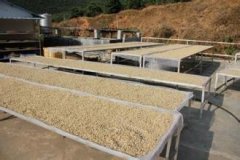
Cultivation of high-quality boutique coffee beans in Saint Roman, Costa Rica, geographical location, climate, altitude
Costa Rican Coffee-Tarrazu in Costa Rica is one of the major coffee producers in the world, with a light and pleasant flavor. Costa Rica, with its fertile volcanic soil and good drainage, is the first country in Central America to grow coffee and bananas for commercial value. Coffee and bananas are the country's main exports. 1729

The flavor of Costa Rican coffee beans the characteristics of the manor producing area of Costa Rica
One of the most famous is Mountain Costa Rica Coffee, which tastes mellow and neutral. It can be boiled directly or mixed with other kinds of coffee beans to form a mixed coffee. It is also a good choice. Other kinds of Brazilian coffee, such as Rio and Parana, can be produced in large quantities because they do not need too much care. Although they taste rough, they can be regarded as a kind of coffee with good quality and low price.

Introduction of Costa Rican Yerzaro Coffee Flavor description Grinding Calibration method
Other kinds of Brazilian coffee, such as Rio and Parana, can be produced in large quantities because they do not need too much care. Although the taste is rough, it is a kind of good and cheap coffee. It has its own standard because it is distributed all over the country and its solid quality varies. It has its own standard (NO.2~NO.8 according to the number of sundries, NO.13~NO.19 according to the size of beans, and six grades according to taste).

Introduction to the origin of the grinding scale for the flavor of Costa Rican Diamond Mountain Coffee with clear flavor
All the coffee trees planted in Costa Rica are Arabica coffee trees. through improvement, the quality of coffee beans is better and more stable. in order to facilitate picking, coffee trees are kept at a height of about 2 meters through continuous pruning. The coffee that people eat is the taste of the seeds in the fruit that are brewed in water. After picking raw coffee beans, the peel, pulp, seed film and sun exposure must be removed.

Costa Rican Coffee with stronger Flavor description of Grinding degree and Taste characteristics of Fine Coffee
High-quality Costa Rican coffee is called extra hard beans, and this kind of coffee can grow at an altitude of more than 1500 meters. Altitude has always been a problem for coffee growers. The higher the altitude, the better the coffee beans, not only because the higher altitude can increase the acidity of the coffee beans and thus increase the flavor, but also because the night temperature at the higher altitude is lower, which can make the trees grow slowly.

Pure flavor of Costa Rican Saint Roman boutique coffee beans grinding degree treatment method of roasting degree
Costa Rican Coffee-Tarrazu in Costa Rica is one of the major coffee producers in the world, with a light and pleasant flavor. Costa Rica, with its fertile volcanic soil and good drainage, is the first country in Central America to grow coffee and bananas for commercial value. Coffee and bananas are the country's main exports. 1729

Flavor characteristics of Costa Rican Coffee Manor introduction of Saint Roman Manor Brand
Costa Rican coffee has full particles, ideal acidity and unique strong flavor. Costa Rica's coffee industry, originally controlled by the Costa Rican Coffee Industry Company (InstitutodelCafdeCostaRica, ICAFE), has been taken over by the official Coffee Committee (OficinadelCaf). In the coffee exported, those products that are considered to be of substandard quality use blue.

Introduction of taste treatment method for grinding scale varieties of diamond mountain coffee beans in Costa Rica
The research center, located about 30 kilometers northeast of the Costa Rican capital San Jose, belongs to the Costa Rican Coffee Association and is a research institution for villa sarchi planting, breeding and quality inspection newly developed by Costa Rica's national coffee breeds. in addition, it also has 10 hectares of experimental plots, planting a number of excellent varieties. Coffee is the main agricultural product in Costa Rica, with an annual output of more than 2 million bags

Introduction to the producing area of Diamond Mountain Coffee Flavor description and Grinding scale in Costa Rica
Other kinds of Brazilian coffee, such as Rio and Parana, can be produced in large quantities because they do not need too much care. Although the taste is rough, it is a kind of good and cheap coffee. It has its own standard because it is distributed all over the country and its solid quality varies. It has its own standard (NO.2~NO.8 according to the number of sundries, NO.13~NO.19 according to the size of beans, and six grades according to taste).

An introduction to the flavor and taste of the rich and mild Costa Rican San Roman Coffee Manor.
High-quality Costa Rican coffee is called extra hard beans, and this kind of coffee can grow at an altitude of more than 1500 meters. Altitude has always been a problem for coffee growers. The higher the altitude, the better the coffee beans, not only because the higher altitude can increase the acidity of the coffee beans and thus increase the flavor, but also because the night temperature at the higher altitude is lower, which can make the trees grow slowly.

Introduction to the Central Mountain area of Costa Rica Coffee producing area-Western Valley
Brazilian coffee fruit, a coffee producer, accounts for 1/3 of the world's coffee consumption and occupies a place in the global coffee market, although Costa Rica faces several times more natural disasters than other regions. but its acreage is enough to make up for it. There are many kinds of coffee here, but its industrial policy is abundant and cheap, so it is excellent.