
"rita"
404 article(s) found

A brief introduction to the cultivation of sweet boutique coffee beans in Santa Rita Manor, geographical location, climate and altitude
At present, the coffee production of Vietnam in Asia has exceeded that of Colombia. In addition, Indonesia has also developed into the fourth largest coffee producer in the world. In 1721, French naval officer Gabriel Mathieu de Clieu went through difficulties and obstacles to bring the first coffee sapling from Africa to Martinique in Latin America.

A brief introduction to the description of the flavor, taste and aroma characteristics of fine coffee beans in Santa Rita Manor
A special combination of factors, latitude, altitude, soil, plant origin of species and varieties of coffee making in Colombia, rain patterns produced by the climate and tropical convergence of coffee growing areas, changing topography, luminosity, favorable temperature range throughout the year, moderate and Rain Water distribution, including selective logging.

A brief introduction to the Origin, Development, History and Culture of Fine Coffee beans in Santa Rita Manor
The suitable climate in Colombia provides a real natural pasture for coffee. Coffee trees in Colombia are mainly cultivated in the Andes, on steep slopes about 1300 meters above sea level, where the annual temperature is about 18 degrees Celsius, annual rainfall is 2000 to 3000 millimeters, latitude 1-11 15 north, longitude 72-78 west, and the specific range of elevation can exceed 2.000 meters.

A brief introduction to the history and culture of the origin and development of boutique coffee beans in Santa Rita Manor
A special combination of factors, latitude, altitude, soil, plant origin of species and varieties of coffee making in Colombia, rain patterns produced by the climate and tropical convergence of coffee growing areas, changing topography, luminosity, favorable temperature range throughout the year, moderate and Rain Water distribution, including selective logging.

A brief introduction to the cultivation of boutique coffee beans in Santa Rita Manor, geographical location, climate and altitude
The suitable climate in Colombia provides a real natural pasture for coffee. Coffee trees in Colombia are mainly cultivated in the Andes, on steep slopes about 1300 meters above sea level, where the annual temperature is about 18 degrees Celsius, annual rainfall is 2000 to 3000 millimeters, latitude 1-11 15 north, longitude 72-78 west, and the specific range of elevation can exceed 2.000 meters.
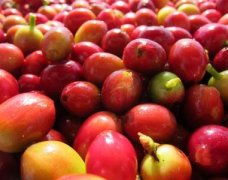
A brief introduction to the market price of boutique coffee beans in Santa Rita Manor with rich taste and endless aftertaste.
At present, the coffee production of Vietnam in Asia has exceeded that of Colombia. In addition, Indonesia has also developed into the fourth largest coffee producer in the world. In 1721, French naval officer Gabriel Mathieu de Clieu went through difficulties and obstacles to bring the first coffee sapling from Africa to Martinique in Latin America.

Description of Coffee Flavor of Columbia Santa Rita Manor with strong acidity introduction of fine coffee in producing area
No matter in terms of yield or texture, Colombian coffee is first produced by Medellin, which is characterized by full granules, rich nutrition, moderate acidity, good balance, rich aroma and soft taste. In addition to Medellin, the provincial capitals of two neighboring provinces in the south, Armenia and Manizales, are also famous coffee producers

A brief introduction to the history and culture of the origin and development of boutique coffee beans in Santa Rita Manor.
The suitable climate in Colombia provides a real natural pasture for coffee. Coffee trees in Colombia are mainly cultivated in the Andes, on steep slopes about 1300 meters above sea level, where the annual temperature is about 18 degrees Celsius, annual rainfall is 2000 to 3000 millimeters, latitude 1-11 15 north, longitude 72-78 west, and the specific range of elevation can exceed 2.000 meters.

A brief introduction to the treatment method of grinding degree and baking degree of fine coffee beans in Santa Rita Manor
Growing coffee also requires daylight and proper shade, which is most suitable for planting on fertile soil or volcanic ash soil. Therefore, the origin of coffee is widely distributed in South America, Central America, the West Indies, Asia, Africa, Arabia, the South Pacific and Oceania. Such as Ethiopia and Tanzania in Africa, Brazil, Colombia, Jamaica, Guatemala and Mexico in Central and South America.

The treatment method of grinding degree and baking degree of fine coffee beans in Santa Rita Manor with rich taste and endless aftertaste
At present, the coffee production of Vietnam in Asia has exceeded that of Colombia. In addition, Indonesia has also developed into the fourth largest coffee producer in the world. In 1721, French naval officer Gabriel Mathieu de Clieu went through difficulties and obstacles to bring the first coffee sapling from Africa to Martinique in Latin America.

Introduction of Coffee Flavor description and treatment method in Santa Rita Manor, Colombia
The main varieties of Colombian coffee are Arabica coffee (coffea arabica), that is, small fruit coffee (small grain coffee). Relatively speaking, large fruit coffee (coffea robusta) is mostly grown in Africa of origin, such as the famous Madagascar coffee. There are several varieties of small fruit coffee. Brazilian coffee, which has the highest yield in the world, has large seeds, strong adaptability and high fruit yield.

A brief introduction to the coffee bean flavor and taste of Santa Rita Manor, Colombia.
Colombia is fortunate to have Atlantic and Pacific ports, which helps to reduce the cost of transporting coffee. In South America, she is the only country with this condition. The National Coffee Management Association of Colombia, like the National Management Association of Kenya, is a model of coffee organization. Compared with other producing countries, Colombia is more concerned with developing products and promoting production. That's exactly what it is.

A brief introduction to the description of the flavor, taste and aroma characteristics of boutique coffee beans in Santa Rita Manor.
The main varieties of Colombian coffee are small grains of coffee. Plants are small trees or large shrubs, 5-8 m tall, usually much branched at base; old branches gray-white, nodes dilated, young branches glabrous, compressed. Leaves thinly leathery, ovate-lanceolate or lanceolate, 6-14 cm long and 3.5-5 cm wide, tip long acuminate, acuminate part 10-15 mm long, base cuneate or slightly obtuse, rarely rounded, entire or

A brief introduction to the History and Culture of the Origin and Development of Fine Coffee beans in Santa Rita Manor
The main varieties of Colombian coffee are small grains of coffee. Plants are small trees or large shrubs, 5-8 m tall, usually much branched at base; old branches gray-white, nodes dilated, young branches glabrous, compressed. Leaves thinly leathery, ovate-lanceolate or lanceolate, 6-14 cm long and 3.5-5 cm wide, tip long acuminate, acuminate part 10-15 mm long, base cuneate or slightly obtuse, rarely rounded, entire or

Colombia Santa Rita Coffee Bean Flavor Description Grind Scale Treatment Quality Introduction
Colombia coffee beans introduced Colombia's first national constitution. The Constitution provided for a centralized republic and a series of decrees proclaiming the abolition of slavery, the emancipation of slaves and their children, the prohibition of slave trade, equal rights for citizens and freedom of speech and of the press. The Conference elected the Bolivarian Republic as the first President and Santander as Vice-President. 1822

Introduction to the Variety treatment method for describing the Flavor of Coffee in Santa Rita Manor, Colombia
Coffee workers go up the mountain to pick coffee beans (also known as coffee cherries) by hand, so they can pick carefully and pick the most ripe and full fruits. The vast majority of Colombian coffee beans are water-washed and moderately roasted with a light, silky and sometimes sour taste, which is not as strong as Brazilian coffee and Italian Expresso and is known as green.

A brief introduction to the Variety treatment method for describing the Flavor of Coffee in Santa Rita Manor, Colombia
Coffee workers go up the mountain to pick coffee beans (also known as coffee cherries) by hand, so they can pick carefully and pick the most ripe and full fruits. The vast majority of Colombian coffee beans are water-washed and moderately roasted with a light, silky and sometimes sour taste, which is not as strong as Brazilian coffee and Italian Expresso and is known as green.

Description of Coffee Flavor in Santa Rita Manor, Colombia, introduction to the characteristics of Grinding degree and planting Environment
The pure taste of Colombian coffee, in addition to the natural environment with the most favorable conditions for coffee growth, is inseparable from the hard work of local growers. In Colombia, coffee cultivation has reached 1.07 million hectares, there are about 302000 coffee plantations in the country, and 30 to 40 per cent of the rural population depends directly on coffee production. There are many farms in Colombia, but

Micro-producing areas of high quality imported raw beans in the Andes, Santa Rita, Colombia
Boutique coffee is fresh coffee. Whether it's food or drink, of course, the fresh the better, and so is boutique coffee. High-quality coffee should keep the coffee beans fresh before making, including the preservation of baked beans, and grind the coffee beans into powder before making, which is also to retain its original and best flavor. And the way of making hand-made coffee is such a way to make high-quality coffee.

Colombian Coffee with a balanced and Pure aftertaste the flavor and aroma characteristics of Santa Rita Manor.
Huila is located in southern Colombia, one of the well-known special coffee producing areas, about 1200 to 2020 meters above sea level, planting area of more than 1.3 million hectares, the average temperature between 17 and 23C. Because of its outstanding flavor and aroma, it has become a world-famous special coffee. Medium acidity and moderate mellow, with charming sweetness and lemon wine acid, a balanced and pure aftertaste