
"white-hot"
30 article(s) found

Japanese coffee has a long history, but now Japanese prefer convenience store coffee.
As a daily drink, coffee has successfully penetrated into the people and integrated with the eating habits of the Japanese in the past 30 years. AGF is the leader of bar coffee. Since the launch of the BLENDY brand in 2002, it is reported that the market size of coffee has reached 33 billion as a daily drink. In the past 30 years, it has successfully penetrated into the people and integrated with the eating habits of the Japanese.
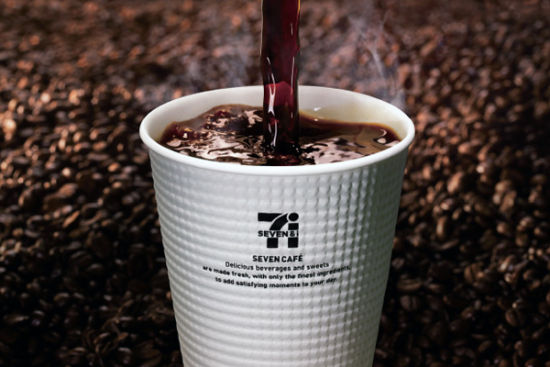
Coffee Prospect | current situation of coffee development in Japan Japanese people prefer convenience store coffee now
Japan's economic recession, we can only in the limited market space, with either you die or I die mentality, to a dying struggle. The first to stand out should be the convenience store coffee market, canned coffee and bar coffee are also doing well. The Japanese now prefer convenience store coffee as a daily drink, which has been successfully developed in the past 30 years.

Convenience of location is a major consideration for consumers in coffee chain market research
Facing the intense competition in coffee industry, and the media constantly hyping and consumer pursuing popular mentality, many new brands are constantly entering, and at the same time driving the popularity of new culture, and the differences between brands are becoming smaller and smaller, in such a competitive market, how to shape their own style is necessary, so this group adopts case study method, aiming at seven chain coffee operators to do in-depth interview

All kinds of giants have aimed at the coffee market in mainland China
The hometown of tea is currently setting off a lively battle for the coffee market. The protagonists involved in the wrestling are business tycoons from all over the world. Recently, Amazon has targeted the coffee market in mainland China and launched online cafes. In fact, since last year, various enterprises have invariably set their sights on the coffee market in mainland China.
The hometown of tea is setting off a lively battle for the coffee market.
Guide to Jiaxiang: since last year, all kinds of enterprises have set their sights on the coffee market in mainland China.

Business giants compete to enter: "tea" countries set off a battle for coffee market
In January 2014, Tianjin Goubuli Group announced that it had officially obtained the permanent use right of Australia's largest coffee chain brand, Gloria, in China, and the Chinese time-honored Baozi Shop officially crossed the coffee field. In February 2014, Coca-Cola spent 1.25 billion yuan to acquire China Green Mountain Coffee; in September, Coca-Cola officially entered China's ready-to-drink coffee by releasing its first espresso drink, Qiaoya. people's daily online, Beijing

"always in second place" COSTA bet on the full capitalization of the Chinese market in an attempt to check and balance with Starbucks
The exchange of professional baristas Please follow the Coffee Workshop (Wechat official account cafe_style) following the implementation of the wholly-owned direct operation of COSTA in the Chinese market, Starbucks has also put full ownership on the agenda. In the latest news, Whitbread Group, the parent company of British coffee brand COSTA, announced the acquisition of Yueda Ka Shijia (Shanghai) Catering Management Co., Ltd. (hereinafter referred to as Yueda Ka Shijia) for 310 million yuan.

How much does Coffee Wings need to join Coffee Wings? is Coffee Wing going out of business?
= "Coffee Wing official website" = = Professional coffee knowledge exchange more coffee bean information please follow the coffee workshop (Wechat official account cafe_style) Coffee Wing was officially listed on the new third board on March 24, 2017. What attracts more attention is the list of Coffee Wing shareholders, Immortal Sister Yin Feng, entertainment mogul he Jiao, Jumei founder Chen ou, 58.com Chairman Yao

Starbucks Diaoguang Man Coffee: the tripod is dominated by or.
China's current per capita annual coffee consumption is 5 cups, which is far lower than the annual per capita level of about 300 cups in Japan and South Korea, and the world average is about 240 cups. However, China's coffee consumption continues to grow at an annual rate of 15% to 20%, and is becoming the most potential coffee consumer in the world. At present, there are local, European, American and Korean departments in the Chinese market.

Exploding the three factions of Chinese cafes
At present, China's per capita coffee consumption is 5 cups per year, which is far lower than that of Japan and South Korea, with an average of about 300 cups per person per year. However, coffee consumption in China continues to grow at an annual rate of 15% to 20%, making it the world's most potential coffee consumer. In the current Chinese market, there are three forces active in China, Europe and the United States, and they are using