
Coffee Arabica
Latest articles, industry insights and brewing guides

Flores Coffee Beans: What Makes Indonesian Arabica Special
Flores Island produces small batches of high-quality Arabica coffee with caramel sweetness, full body, and lasting finish. Here’s what makes it unique.

What Is Java Coffee? Small-Lot Arabica Explained
Java refers to a historic Indonesian coffee region — and also to a style of small-bean Arabica. Here’s what makes it distinct.

How Coffee Beans Are Grown: Arabica vs Robusta Basics
Learn which coffee species dominate the market, how they’re grown, and what affects the flavor of your beans.

What Makes an Arabica Coffee a Specialty Bean?
Only certain Arabica varieties qualify as specialty coffee. Learn which classic cultivars define quality and flavor — and why.
ICE Arabica Coffee Falls to Five-Month Low
ICE March Arabica coffee hit a five-month low of $1.6975 per lb on Wednesday, down 0.5% for the day amid technical selling.
Tahiti Arabica: The Rare Coffee from Paradise
Tahiti Arabica is an extremely rare coffee from Tahiti, known for its elegant flavors and smooth body, offering a one-of-a-kind tasting experience.
Where Bourbon Arabica Coffee Originated: Réunion Island
Réunion Island, once called Bourbon, was the birthplace of Bourbon Arabica coffee in the 1700s—but today almost none is grown there.
Uganda’s Arabica Coffee: Small Crop, Big Potential
Arabica makes up just 10% of Uganda’s coffee output, but its highland-grown beans from Elgon, Bugisu, and Rwenzori show strong promise.
São Tomé and Príncipe: Small Producer of Smooth Arabica
São Tomé and Príncipe grows just 1,000 bags annually—nearly all high-quality Arabica with a soft, well-rounded profile.
Madagascar Coffee: Arabica Potential in a Robusta-Dominated Island
Madagascar mainly grows Robusta, but aims to boost Arabica production. Learn how this island nation could become a source of high-quality beans.
What Is Arabica Coffee? Specialty Basics Explained
Arabica is the dominant coffee species known for its complex flavors. Learn how it compares to Robusta in origin, taste, and quality.
Brazil Coffee Output Rise Pushes Arabica Futures Down
Arabica coffee futures dropped over 3% to five-month lows after Volcafe forecast higher Brazilian production for 2024.
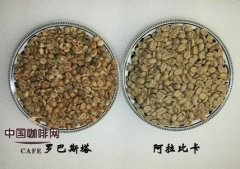
Arabica vs Robusta Coffee Beans: What’s the Difference?
Arabica and Robusta beans differ clearly in shape, color, and flavor. Here’s how to tell them apart and why those differences matter.
How to Freeze-Store Arabica Coffee Seeds for Long-Term Preservation
French researchers developed a four-step freezing method to preserve Arabica coffee seeds in liquid nitrogen, ensuring long-term viability.
Arabica vs Robusta: Key Differences in Specialty Coffee Beans
Learn how Arabica and Robusta differ in flavor, growing altitude, caffeine, price and bean shape—key facts for specialty coffee lovers.
Arabica Coffee and Brazilian Real Both Fall on Market
Arabica coffee futures dropped on December 16 due to a weaker Brazilian real, while sugar futures also declined on falling oil prices.
Coffee Tree Varieties: Arabica vs Robusta Basics
Learn the key differences between Arabica and Robusta coffee trees, including growing conditions, bean shape, and flavor profiles.
Arabica vs Robusta: Types of Specialty Coffee Beans
Learn the core differences between Arabica and Robusta coffee beans—origins, flavors, caffeine, cultivation and processing that shape specialty coffee.
Arabica vs Robusta: What Really Makes Them Different
Arabica and Robusta are the two main coffee species. Discover their key differences in growing, flavor, caffeine, and market use.
Arabica vs Robusta Coffee Beans: What's the Difference?
Arabica beans have higher acidity and complexity but lower caffeine, while Robusta offers more bitterness and body. Here’s what sets them apart.