
"1535"
374 article(s) found

Introduction to Santa Cruz Manor in Ecuador Coffee producing area with unique Natural Geography
The best Ecuadorian coffee from the hometown of the giant tortoise is grown on St. Cristobal Island in the Galapagos Islands, which has the natural geographical conditions unique to giving birth to the best quality coffee in the world. A cup of Galapagos coffee, like the beautiful scenery of the Galapagos Islands, is sure to impress you. In the mid-15th century, in western South America

Introduction to the characteristics of Ecuadorian Coffee Grinding degree of Coffee in producing areas
The best Ecuadorian coffee is grown on St. Cristobal Island in the Galapagos Islands, which has the unique natural geographical conditions for giving birth to the best quality coffee in the world. A cup of Galapagos coffee, like the beautiful scenery of the Galapagos Islands, is sure to impress you. In the mid-15th century, fishermen fishing in the western Pacific Ocean of South America were in the middle stream.
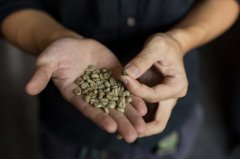
A brief introduction to the description characteristics of flavor, taste and aroma in the producing area of Hassanda Coffee Manor in Ecuador
St. Cristobal is a larger island in the Galapagos archipelago. At 410m above sea level, there is a small lake called El.Junco, which forms streams along the rocks and volcanic rocks on the southern slope of the island. Mineral-rich fresh water moistens the land of St. Cristobal, keeping the soil moist and fertile. For here.

A very balanced and refreshing coffee from Santa Cruz in the Galapagos Islands of Ecuador
Although the coffee in Ecuador is not well known, it tastes very balanced and refreshing, and it has a unique aroma. It mainly produces Arabica coffee and Robbins coffee. Try the local coffee, which will surprise you. The Arabian Coffee Tree was first introduced to Ecuador (Ecuador) in 1952 and its coffee is of good quality, especially the coffee harvested in early June.

Introduction to the fragrant Ecuadorian Coffee Variety and characteristics of Fine Coffee
The Arabian Coffee Tree was first introduced to Ecuador in 1952 and its coffee is of good quality, especially the coffee harvested in early June. Ecuadorian coffee beans can be divided into two varieties: Galapagos and Gigante, both of which have the characteristics of large granules and heavy weight. Ecuadorian coffee can be divided into first class (No.1) and super excellent (Extra Superior) according to its quality.

Introduction to the description of the Flavor of Coffee varieties in Santa Cruz Manor, Ecuador
The best Ecuadorian coffee is grown on St. Cristobal Island in the Galapagos Islands, which has the unique natural geographical conditions for giving birth to the best quality coffee in the world. A cup of Galapagos coffee, like the beautiful scenery of the Galapagos Islands, is sure to impress you. In the mid-15th century, fishermen fishing in the western Pacific Ocean of South America were in the middle stream.

Balanced acidity Ecuadorian Coffee Flavor and palate characteristics of Santa Cruz Manor
Flavor: balanced acidity, aromatic fragrance recommended roasting methods: medium to deep roasting, can be made into high-quality mixed coffee, suitable for multi-use evaluation: general Ecuadorian giant turtle island coffee beans from the hometown of giant turtles coffee treasures the best Ecuadorian coffee is grown on St. Cristobal Island in the Galapagos Islands, where it has the best quality coffee in the world.

Coffee producing countries of Ecuador introduce San Cristobal Hasunda Coffee Garden
In the mid-15th century, there were legends about enchanted mysterious islands among fishermen fishing in the western Pacific Ocean of South America. It is said that the islands can sometimes be seen clearly from a distance, but when the ship approaches, it disappears again; sometimes it looks like a galleon, sometimes it shows the shape of a witch. The fishermen called these islands Magic Island and thought it was there.

Flavor and taste of Ecuadorian boutique coffee beans Galapagos Coffee
Ecuador is the highest Arabian coffee plantation in the world. Since the coffee tree was first introduced into Ecuador in 1875, the quality of its coffee has remained unchanged for 100 years, especially the coffee harvested in early June every year, which is known as the best coffee in the world. Ecuadorian coffee beans are divided into Galapagos and Segante, both of which have large granules and large quantities.

Coffee boutique Columbia Santa Rita Manor Coffee Flavor and taste description A brief introduction to the planting situation
Originally under the jurisdiction of the Governor of Peru, the Spanish royal family established the Governor of New Granada in Bogota in 1718 and was directly ruled by the Governor. Under the Spanish colonial rule, the Indians were brutally exploited and the native whites were squeezed. Indians continue to revolt, and native-born whites revolt in 1781. Colombia, in northwest South America, is a beautiful country.

The taste of Ecuadorian coffee is very balanced and refreshing. The taste of the manor is characterized by the introduction of boutique coffee.
The best Ecuadorian coffee is grown on St. Cristobal Island in the Galapagos Islands, which has the unique natural geographical conditions for giving birth to the best quality coffee in the world. A cup of Galapagos coffee, like the beautiful scenery of the Galapagos Islands, is sure to impress you. In the mid-15th century, fishermen fishing in the western Pacific Ocean of South America were in the middle stream.

Ecuador's Giant Turtle Island Coffee beans with balanced acidity and fragrant flavor
Flavor: balanced acidity, aromatic fragrance recommended roasting methods: medium to deep roasting, can be made into high-quality mixed coffee, suitable for multi-use evaluation: general Ecuadorian giant turtle island coffee beans from the hometown of giant turtles coffee treasures the best Ecuadorian coffee is grown on St. Cristobal Island in the Galapagos Islands, where it has the best quality coffee in the world.

Ecuadorian Coffee Manor with unique Natural Geographical conditions the Origin and Development History of Santa Cruz Manor
When Thomas and the crew landed on the island, they were frantically looking for water and were so thirsty that they squeezed juice from the fat leaves of the cactus to drink. At last a source of water was found in a rocky gully. Thomas attributed it to the gift of God, because it was good Friday, and they had piously celebrated mass before they set out in search of water. But Thomas will never

Introduction of coffee producing areas and types in Ecuador Galapagos coffee in San Cristobal
In the mid-15th century, there were legends about enchanted mysterious islands among fishermen fishing in the western Pacific Ocean of South America. It is said that the islands can sometimes be seen clearly from a distance, but when the ship approaches, it disappears again; sometimes it looks like a galleon, sometimes it shows the shape of a witch. The fishermen called these islands Magic Island and thought it was there.

Introduction to the flavor description of Ecuadorian coffee beans produced by grinding scale
In 1875, 340 years after Freitoma de Belanga discovered the island, an indigenous man named Kovos came to St. Cristobal Island, where he established the Hasunda Coffee Garden and planted about 100 hectares of Arabian bourbon coffee trees. Since the plantation is located between 140m and 275m above sea level, the climate is equivalent to that of 915m ~ 1830 m in the interior.

Grinding scale treatment of Ecuadorian Coffee introduction to manors in varieties producing areas
In the mid-15th century, there were legends about enchanted mysterious islands among fishermen fishing in the western Pacific Ocean of South America. It is said that the islands can sometimes be seen clearly from a distance, but when the ship approaches, it disappears again; sometimes it looks like a galleon, sometimes it shows the shape of a witch. The fishermen called these islands Magic Island and thought it was there.

Introduction to the flavor and taste of Ecuadorian coffee manor the characteristics of Ecuadorian coffee Hasunda Coffee Garden
The best Ecuadorian coffee is grown on St. Cristobal Island in the Galapagos Islands, which has the unique natural geographical conditions for giving birth to the best quality coffee in the world. A cup of Galapagos coffee, like the beautiful scenery of the Galapagos Islands, is sure to impress you. In the mid-15th century, fishermen fishing in the western Pacific Ocean of South America were in the middle stream.

Introduction to the flavor description of Ecuadorian coffee varieties with fresh and unique taste
When it comes to Ecuadorian coffee, we have to mention the organic coffee in the Galapagos Islands of Ecuador. The Galapagos Islands, a famous tourist attraction, has been declared a World Natural Heritage site by the United Nations Educational, Scientific and Cultural Organization (UNESCO). It is extremely rich in products, and organic coffee is one of the unique ones. The local fertile volcanic soil, micro-climate and other unique ecological environment, coupled with its lack of

How to drink Ecuadorian organic coffee roasted coffee? Introduction to Manor with Flavor characteristics
Introduction to Ecuadorian Coffee beans in the mid-15th century, there were legends about enchanted mysterious islands among fishermen fishing in the Pacific Ocean in western South America. It is said that the islands can sometimes be seen clearly from a distance, but when the ship approaches, it disappears again; sometimes it looks like a galleon, sometimes it shows the shape of a witch. The fishermen call these islands

Introduction to the flavor and taste characteristics of coffee in Santa Rita Manor, Colombia, which can be called the boutique coffee.
About 1000 BC, there was a hunter-gatherer society near Bogota today. Around 1000 AD, the American Indians created a political system. It is a pyramid-shaped structure with the top of the tower as the leader. In today's Colombia, two civilizations have adopted this complex system. One is Tayronas in the Caribbean region, and the other is Bogota