
"60kg"
1000 article(s) found

The process of making Cuban coffee, the production of Cuban coffee
Following Cafe Review (Wechat official account vdailycom) found that the production process of Cuban coffee that Beautiful Caf é opens a small shop of its own is to brew Crystal Mountain Coffee, preferably with a hand brewer or American coffee machine, the water temperature is below 85 ℃, the match style cooking method should not have too much firepower and do not take too long. When tasting coffee, because it is mellow, you can put more milk, but less sugar.

A list of the main producing areas of Ethiopian Coffee not only Yega Xuefei
Professional coffee knowledge exchange more coffee bean information please follow the coffee workshop (Wechat official account cafe_style) Ethiopia is known as the birthplace of coffee, it is a local custom, no matter how poor people's homes, they must have a coffee pot and a charcoal stove, why? Because coffee is something that local people think they have to make every day.

Honduras, which caught fire on the island, is expected to export 2% less coffee this year than in previous years.
Coffee sales are expected to decline according to a Reuters report on Oct. 1, an official at the Honduran Coffee Institute (IHCAFE) said on Friday that Honduras is expected to export about 5.7 million bags of 60kg coffee between 2021 and 2022, down 2 per cent from the previous season. Honduras is the largest exporter of coffee in Central America. According to preliminary data from IHCAFE, the 2020-2021 coffee season

Unique fragrant Ethiopian Coffee Manor Flavor and Taste characteristics of Fine Coffee beans
In addition, it should be mentioned that most of them are produced by state-owned institutions, but the quantity is small and is not well known to the world. Teppi and Bebeka;Teppi, which are lightly described here, grow at an altitude of 3600-6200 feet, with an annual yield of about 50000 bagsamp60kg. Bebeka grows between 3000 and 3900 feet above sea level, with an annual output of about 30000bags/60kg, both of which are located in the lower parts of southwest Ethiopia.

Flavor description of Coffee from Xidamo Chiso producing area of Ethiopia
Ethiopia has unique and different flavors, providing customers all over the world with a wide range of taste choices. In the highlands of southwestern Ethiopia, the Kaffa, Sheka, Gera, Limu and Yayu Senri coffee ecosystems are considered to be Arabica coffee.

The Origin of Coffee in the World an introduction to the coffee bean producing areas in Ethiopia
Ethiopia is the hometown of Arabica coffee, and it is in the forests of Kaffa that you can see wild Arabica coffee. In Ethiopian, coffee is called Bun or Buna, and coffee beans (coffeebean) may be translated from Kaffa Bun. Arabica coffee was discovered early in the Harar area and is likely to come.

Ethiopian coffee brands recommend Ethiopian coffee beans how to buy Ethiopian coffee prices
Professional coffee knowledge exchange more coffee bean information please follow the coffee workshop (Wechat official account cafe_style) Ethiopia is known as the birthplace of coffee, it is a local custom, no matter how poor people's homes, they must have a coffee pot and a charcoal stove, why? Because coffee is something that local people think they have to make every day.

An introduction to Sumatra Coffee Manor, a boutique coffee bean producing area in Ethiopia
Growing in western Ethiopia, 4900-5900 feet (Wollega province) plateau, north of Jima, mostly wild, annual output is about 500000bags/60kg, export is mostly G5/G4, bean body is larger and longer than Longberry, a little brown in green, taste similar to less jasmine tea, more bitter, lack of rising Hara, slightly sour, slightly fruity and wine aroma, but slightly inferior to Hara.

Introduction to the characteristics of the flavor and taste manor in the coffee producing area of Xidamo Shaqisuo, which is longer in Huigan.
Gima, which accounts for about 50 per cent of Ethiopia's annual output, grows between 4400 and 6000 feet above sea level in the country's southwestern highlands (the border between Kaffa and Illubabor provinces) and is usually exported to G5/G4. However, in recent years, about 10% or 20% of Gima has been used to make up for the lack of taste of coffee, but its quality has gradually declined to its own level, but for the purchase of

Lemon and Citrus Charchesot Fine Coffee Bean Grind Roast Degree Treatment Method
Limu Coffee This coffee is grown in areas ranging from 1400 to 2000 meters above sea level. This coffee is wet processed and has a strong aroma; the fruit is full and the pH is moderate; the quality is excellent and the spicy flavor is attractive. It is estimated that the average annual production of this coffee is 29000 tons (equivalent to 480,000 bags of 60 kg coffee) out of 49000 hectares of cultivated area.

Introduction to the flavor and taste of Ethiopian coffee beans grade classification of Ethiopian Sidamo coffee beans
Ethiopia has unique natural conditions suitable for growing all imaginable varieties of coffee. As a upland crop, Ethiopian coffee beans are mainly grown in areas between 1100 and 2300 meters above sea level, roughly distributed in southern Ethiopia. Deep soil, row
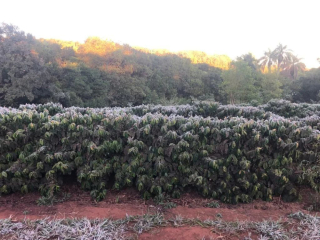
Coffee beans are expensive? Coffee Exchange is ready to sell 2 years old beans!
Professional coffee knowledge exchange More coffee bean information Please pay attention to coffee workshop (Weixin Official Accounts cafe_style) More fine coffee beans Please add private WeChat Qianjie coffee, WeChat signal: qjcoffeex Brazil, the world's largest coffee bean producer, has been experiencing extreme days such as drought and frost since last year
Exquisite Ethiopian coffee beans Starbucks Ethiopian coffee
Ethiopia has unique natural conditions suitable for growing all imaginable varieties of coffee. As a upland crop, Ethiopian coffee beans are mainly grown in areas between 1100 and 2300 meters above sea level, roughly distributed in southern Ethiopia. Deep soil, well drained soil, weakly acidic soil, laterite and soil are soft and contain

A brief introduction to the planting Market Price of Fine Coffee Bean varieties in the unique and mellow Shaqisuo producing area
Sidamo Coffee this coffee grows in areas ranging from 1400 to 2200 meters above sea level on the shoulder slopes of the Rift Valley in East Africa. Natural (sun-cured) and washed coffee are of unique quality, moderate pH and good quality. It is estimated that out of 61000 hectares of cultivated area, the average annual production of this coffee is 37000 tons (equivalent to 620000 bags of 60 kg coffee). Harald

A brief introduction to the Market Price of Fine Coffee Bean varieties in Cedamo Shachiso producing area with Lemon and Citrus flavor
It has unique fruit aromas of citrus and lemon, with aromas of jasmine, sour taste similar to wine, clean and unmixed taste, just like freshly boiled citrus fruit tea with a long finish. Full of floral and citrus aromas, the performance is exciting, moderate baking has a soft sour taste, deep baking gives off a strong aroma, rich and uniform taste
Make ESP entry-level machine elegant series coffee machine
Elf Voltage: 220V-240V Frequency: 50-60Hz Power: 9501100W Water Tank capacity: 1.2L pump pressure: 15bar Accessories: handle, single or double cup powder bowl trough, pressure / powder measuring spoon products elegant EM-18 semi-automatic coffee machine voltage / frequency 220/240V~50/60HZ net weight 10kg tank capacity 3L inch 280mm 260mm 340 (mm) pump pressure 15ba

A brief introduction to the cultivation of fine coffee beans in the unique mellow Shaqisuo producing area, geographical location, climate and altitude
Sidamo Coffee this coffee grows in areas ranging from 1400 to 2200 meters above sea level on the shoulder slopes of the Rift Valley in East Africa. Natural (sun-cured) and washed coffee are of unique quality, moderate pH and good quality. It is estimated that out of 61000 hectares of cultivated area, the average annual production of this coffee is 37000 tons (equivalent to 620000 bags of 60 kg coffee). Harald

Ethiopian coffee flavor Ethiopian coffee characteristics Ethiopian coffee taste
Ethiopia has unique natural conditions suitable for growing all imaginable varieties of coffee. As a upland crop, Ethiopian coffee beans are mainly grown in areas between 1100 and 2300 meters above sea level, roughly distributed in southern Ethiopia. Deep soil, well drained soil, weakly acidic soil, laterite and soil are soft and contain
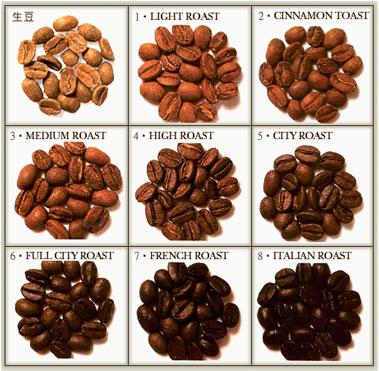
Natural fermented Ethiopian coffee flavor, characteristics, taste and estate
Ethiopia is blessed with natural conditions for growing all conceivable varieties of coffee. Ethiopia's coffee beans are mainly grown as highland crops in areas with altitudes of 1100-2300 meters above sea level, roughly distributed in southern Ethiopia. Deep soil, well-drained soil, weakly acidic soil, laterite and soft soil containing

A brief introduction to the treatment method of grinding degree and baking degree of high-quality coffee beans in Xia Qisuo producing area
Limu Coffee this coffee grows in areas ranging from 1400 to 2000 meters above sea level. After wet processing, this kind of coffee has a rich fragrance, a full fruit with moderate acidity and alkalinity, high quality and attractive spicy flavor. It is estimated that out of 49000 hectares of cultivated area, the average annual production of this coffee is 29000 tons (equivalent to 480000 bags of 60 kg coffee).