
"Cedar"
884 article(s) found

Description of Coffee Flavor of Cedar Motad Manor with elegant Sour and Sweet Taste introduction to the characteristics of the taste of grinding degree
Hot coffee and exquisite white bone porcelain cup is the best match, not only can maintain the temperature of coffee, but also does not affect the taste and luster of coffee, but also will not let colorful colors disturb the aroma of coffee, log bottom, show the natural and noble coffee in the cup! Or it can be said that this is the low-key luxury washing of Sidamo and sunny Sidamo, in addition to the difference in alcohol thickness and sweetness.

Introduction to Cedar Motad Manor Coffee with suitable mellowness and Fine Coffee
In July 1991, EGF hosted a national conference with the participation of more than 20 political and ethnic organizations. The meeting adopted the Transitional Charter and elected an 87-member House of Representatives, with EGF Chairman Meles Zenawi as President of the Transitional Government and President of the House of Representatives. A transitional government was established. On May 24, 1993, Eritrea (formerly the province of Eritrea, Ethiopia) adopted

Introduction to the flavor and taste of Cedar Mochizo Coffee with pure and refreshing characteristics
Yirgacheffe, a Chinese coffee network, comes from Yirga, a small town in the northwest of Sidamo province. Yirgacheffe coffee raw bean is one of the most distinctive coffee in the world. It is rare and expensive. It is produced in the plateau of Ethiopia's Sidamo province (2000 meters above sea level). It is an outstanding representative of washed coffee in Africa.

Cedar Mochizo Coffee Flavor description with strong Flavor introduction to the country of production
There are mainly mountain plateaus in Ethiopia, and the central and western regions are the main part of the plateau, accounting for 2% of the whole territory. The East African Rift Valley runs through the whole territory, with an average elevation of nearly 3000 meters, which is known as the roof of Africa. The terrain around the plateau is gradually declining. The Darol depression in the north fell to 113 meters below sea level, the lowest point in the country. A narrow banded plain along the coast of the Red Sea

Coffee roasting and Coffee Flavor Wheel New version of Coffee Flavor Wheel
The deep roasting of counter-cultural coffee flavor wheel highlights that light roasting of wood incense can highlight the bright smell of sour flowers, grasses and fruits, but hopeless deep roasting fans fall in love with resin components such as incense, smelling, choking aroma and alcohol odor. this is the product of Mena reaction and distillation. Resin composition: pine and cypress families of Pinaceae and Taxodiaceae, both secrete oleoresin with spicy fragrance to protect against insect pests or

The unique and mellow taste of Cedar Motad Manor Coffee is introduced.
Ethiopia is an ancient country with a history of 3000 years of civilization. The Hamite people who immigrated from the southern Arabian Peninsula were the earliest inhabitants. Monlinique I reigned in 975 BC. The Kingdom of Nubia was established in the 8th century BC. From the 1st century to 976 AD, the Ethiopian Empire, also known as the Kingdom of Aksum, was established in Aksum in the north. Christianity was introduced into Ethiopia in the 4th and 5th centuries.

Introduction to the characteristics of coffee flavor and taste of Ethiopia's Cedar Motede Manor with suitable mellowness.
In July 1991, EGF hosted a national conference with the participation of more than 20 political and ethnic organizations. The meeting adopted the Transitional Charter and elected an 87-member House of Representatives, with EGF Chairman Meles Zenawi as President of the Transitional Government and President of the House of Representatives. A transitional government was established. On May 24, 1993, Eritrea (formerly the province of Eritrea, Ethiopia) adopted

Introduction to Coffee Flavor and Taste varieties of Cedar Motede Manor in Ethiopia
In February 1977, Lieutenant Colonel Mengistu Haier Maryam (MENGISTU HAILE MARIAM) launched a military coup and served as Chairman of the interim military Administrative Council and head of State. In 1979, the Ethiopian Labor people's Party Organization Committee, dominated by soldiers, was established to implement an one-party system. In 1984, the Ethiopian Workers' Party was formed according to the Soviet Communist Party model. Mengistu, September 1987

Introduction to Cedar Motad Manor Coffee, which tastes close to floral flavor and taste.
In July 1991, EGF hosted a national conference with the participation of more than 20 political and ethnic organizations. The meeting adopted the Transitional Charter and elected an 87-member House of Representatives, with EGF Chairman Meles Zenawi as President of the Transitional Government and President of the House of Representatives. A transitional government was established. On May 24, 1993, Eritrea (formerly the province of Eritrea, Ethiopia) adopted

Introduction to the aroma and mellow flavor of Ethiopian Coffee from Cedar Motad Manor.
In February 1977, Lieutenant Colonel Mengistu Haier Maryam (MENGISTU HAILE MARIAM) launched a military coup and served as Chairman of the interim military Administrative Council and head of State. In 1979, the Ethiopian Labor people's Party Organization Committee, dominated by soldiers, was established to implement an one-party system. In 1984, the Ethiopian Workers' Party was formed according to the Soviet Communist Party model. Mengistu, September 1987

Story letter from Los Catadores Cup Tester Manor in Makala Coffee region, Marcala, Honduras
Professional coffee knowledge exchange more coffee bean information please follow the coffee workshop (Wechat official account cafe_style) Honduras LOS CATADORES Honey country: Honduras: Marcala Makala Manor: LOS CATADORES Cup Tester Manor treatment: honey treatment altitude: 1650-1690 Variety: catuai roasting degree: medium shallow roasting Me

El Salvador San Marcellino Coffee Bean hand Powder Water specific Grinding Water temperature suggestion
For more information on coffee beans, please follow the Coffee Workshop (official Wechat account cafe_style) this Salvadoran coffee from San Marcellino Manor has aromas of cream, caramel and roasted hazelnuts with a hint of cedar, roasted with creamy maltose and caramel flavors, with a hint of jasmine, bright and pure, green apple and black vinegar millet.

Introduction to the characteristics of high-quality coffee beans in Panamanian coffee producing areas
Panama is rich in forest resources and has many tree species, including valuable wood such as mahogany, cedar, teak, mahogany, and cedar. The forest area of eastern Dalian Province is the most widely distributed, but it has not been fully developed due to lack of market and for reasons such as national defense and protection of the natural ecological environment. [5] according to FAO estimates in 2010, the forest area of Panama is 4.29 million hectares, accounting for the land area.
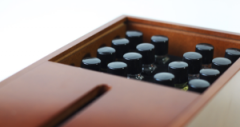
How to tell the taste of coffee? coffee nose to help you.
For any coffee roaster, a set of coffee nose is a necessary training tool. For a long time, due to different regions, we are very strange to many aromas mentioned in coffee, such as cedar, blackcurrant and so on. After the launch of Le Nez du vin, the wine tasting tool of French Jean Lenoir, it satisfies the majority of coffee lovers and professionals.

Description of Panamanian Kasha Coffee Flavor introduction to Grinding degree of Fine Coffee beans in producing areas
Panama is rich in forest resources and has many tree species, including valuable wood such as mahogany, cedar, teak, mahogany, and cedar. The forest area of eastern Dalian Province is the most widely distributed, but it has not been fully developed due to lack of market and for reasons such as national defense and protection of the natural ecological environment. [5] according to FAO estimates in 2010, the forest area of Panama is 4.29 million hectares, accounting for the land area.
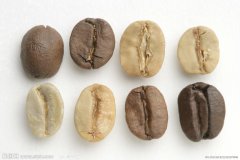
Coffee scent bottle (coffee nose) instruction manual (No. 1-9 bottle) Chinese version
The nose-smelling bottle of 36-flavor coffee can be said to be one of the artifacts of coffee lovers. Many coffee players have a set to correct their sense of coffee smell and is an official auxiliary tool certified by Q-Grader coffee tasters. However, many domestic enthusiasts often put the very high-end instruction manual on the shelf after taking the incense bottle home, and the author is no exception. Straight

Introduction to the production area of Panamanian Coffee Bean by description of taste and Flavor
Panamanian coffee beans are rich in forest resources, and there are many tree species, including mahogany, cedar, teak, mahogany, cedar, and other valuable timber. The forest area of Dalian Province in the east is the most widely distributed, but it has not been fully developed due to lack of market and for reasons such as national defense and the protection of the natural ecological environment. [5] according to FAO 20

Panamanian Cupid Coffee Flavor description with rich fruit flavor introduction to boutique coffee
Panama is rich in forest resources and has many tree species, including mahogany, cedar, teak, mahogany, cedar and other valuable wood. The forest area of eastern Dalian Province is the most widely distributed. However, due to the lack of market and for reasons of national defense and protection of the natural ecological environment, the Panamanian national emblem was launched in 1904. The national emblem is a brown eagle with its head held high.

Introduction to the Fine Coffee in Manor production area
Panama is rich in forest resources and has many tree species, including valuable wood such as mahogany, cedar, teak, mahogany, and cedar. The forest area of eastern Dalian Province is the most widely distributed, but it has not been fully developed due to lack of market and for reasons such as national defense and protection of the natural ecological environment. [5] according to FAO estimates in 2010, the forest area of Panama is 4.29 million hectares, accounting for the land area.