
"HUYE"
171 article(s) found

Fine coffee with soft, fragrant and full-grained flavor in Rwanda Coffee Manor.
Coexist. The primary school has an 8-year system and the middle school has a 6-year system. Education accounts for about 20% of the state budget every year. The illiteracy rate is 49%. In 1991, there were 11789 public primary schools, 900000 primary school students, 16,394 primary school teachers, 77 public middle schools, 16 private middle schools, 20,789 middle school students and 1,469 middle school teachers. There are 323 comprehensive rural handicraft centers with 32,660 students.

Fine coffee Rwanda coffee treatment method washing, elevated scaffolding sun drying
Rwandans have been growing coffee since colonial times, but until 1999, its products were still classified as below Class C and were not popular in the global market. The reason for the poor quality is that farmers do not have a fixed procedure for washing coffee beans and do not process coffee fruits according to specifications in time. Buyers buy coffee beans at $0.33 per kilogram, and farmers keep warm by the meagre profits earned at low prices.

The characteristics of the story of the origin of coffee bean industry in Rwanda
For the exchange of professional baristas, please follow the coffee workshop (Wechat official account cafe_style) Today, when we mention Rwanda, more people immediately think of the 1994 Hutu genocide against the Tutsis in Rwanda (The Rwandan Genocide). In fact, the modern history of Rwanda and the development of coffee industry are inseparable.

Boutique coffee Rwanda coffee producing area in the western province of Lutexilo
Rwandans have been growing coffee since colonial times, but until 1999, its products were still classified as below Class C and were not popular in the global market. The reason for the poor quality is that farmers do not have a fixed procedure for washing coffee beans and do not process coffee fruits according to specifications in time. Buyers buy coffee beans at $0.33 per kilogram, and farmers keep warm by the meagre profits earned at low prices.

Soft, fragrant Rwanda Coffee Flavor Manor Flavor characteristics of Fine Coffee beans
The first problem for Malaba coffee farmers is to set up a cleaning station. The coffee fruit must be transported to the cleaning station to wash the sugar under the skin of the coffee bean within 12 hours after picking, otherwise the flavor of the coffee will be greatly damaged. In July 2001, with UNR, the Ministry of Culture and Industry of Rwanda (Office des Cultures Industrielles du Rwanda,OCIR-Caf), ACD

Coffee bean treatment method introduction what is coffee treatment method
After removing the pulp, the quality of coffee honey treatment was better than that of drying treatment, but not as good as washing treatment. This method of processing coffee beans by honey treatment has recently been sought after by coffee lovers. It has a sweet taste and is rich in Crema. It is suitable for extracting Espresso from the base of Italian coffee. The advantage is that it can restore the flavor of coffee beans, the coffee is more sweet, and the taste of red wine is stronger.

Introduction to the characteristics of Malaba Coffee Flavor Manor in Rwanda
The watershed between the Congo basin and the Nile basin runs through Rwanda from north to south, with about 80 per cent of the country draining from the Nile and about 20 per cent from the Ruzi River and Lake Tanganyika. The longest river in the country is the Niabalongo River (Nyabarongo River) in the southwest, which turns north, east and southeast and flows into the Luwuwu River to form the Kagaila River.

Introduction of Lutesilo producing area in the western province of Malaba Coffee Manor, Rwanda
In early 2003, UCR distributed Malaba coffee through the Sainsburys supermarket in Sainsbury and sold it in its 350 stores until Red nose Day that year. In 2003, Abauzam Gump made a net profit of US $35000. Of this, 70% is allocated to farmers at a price of US $0.75 per kilogram.
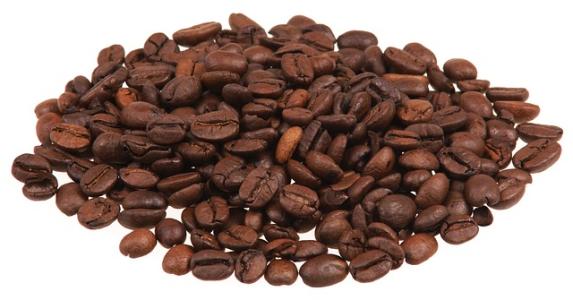
An introduction to the Historical Origin of Malaba Coffee in Rwanda
Following caf é (Wechat official account vdailycom) found that Malaba Coffee, Rwanda Malaba Coffee (Rwandan: Ikawa ya Maraba, French: Caf de Maraba) is a fair trade certified coffee grown in Malaba area of southern Rwanda. The coffee crop of Malaba is a bourbon variety of Arabica species.

Brief introduction of Rwanda Coffee beans how much is the coffee bean per jin
Malaba Coffee (Rwandan: Ikawa ya Maraba, French: Caf de Maraba) is Fairtrade certified coffee grown in the Malaba area of southern Rwanda. Malaba's coffee crop is a bourbon of the Arabica species and is grown in fertile volcanic soil on high-altitude hills. The fruits of coffee trees are mainly picked manually during the rainy season from March to May.

How to brew Rwandan Coffee in the History of Rwandan Coffee cultivation & flavor characteristics of Rwandan Coffee
Professional coffee knowledge exchange more coffee bean information please follow the coffee workshop (Wechat official account cafe_style) Rwanda, a history of rebirth after robbery, using coffee to protect the hopes of many people. Rwanda has unique conditions for growing Arabica coffee, fertile volcanic soil, sufficient rainfall and suitable temperature all year round, all of which make the coffee produced here taste.

Where is the Rwandan coffee? introduction to the flavor of Rwandan coffee? what kind of coffee do you have in Rwanda?
Professional coffee knowledge exchange more coffee bean information please follow Coffee Workshop (Wechat official account cafe_style) Rwanda is a landlocked country located in east-central Africa. It is bordered by Tanzania to the east, Burundi to the south, the Democratic Republic of the Congo to the west and northwest, and Uganda to the north. Rwanda is one of the smallest countries in Africa.

A brief introduction to the climate and altitude of Malaba coffee varieties in southern Rwanda
Coffee from Rwanda is becoming more and more popular in the international market. The mission of the Rwanda Coffee Association is to manage and supervise the operation of the coffee industry in Rwanda from production to sale. The recently revised mission focuses on policy formulation and implementation, with more emphasis on the need to improve the professionalism of the coffee industry and to increase marketing efforts. Since Rwanda

A brief introduction to the description of the flavor, taste and aroma characteristics of high-quality coffee beans in Kimmel Manor
The first problem for Malaba coffee farmers is to set up a cleaning station. The coffee fruit must be transported to the cleaning station to wash the sugar under the skin of the coffee bean within 12 hours after picking, otherwise the flavor of the coffee will be greatly damaged. In July 2001, with UNR, the Ministry of Culture and Industry of Rwanda (Office des Cultures Industrielles du Rwanda,OCIR-Caf), ACD

The long aftertaste of Rwanda's Chimaier estate fine coffee beans variety planting market price profile
PEARL brought coffee specialists to Rwanda, where it was responsible for maintaining contact with the seller, Community Coffee of Louisiana, USA, and sending samples to Louisiana. In June 2002, representatives of Public Coffee visited Malabar. At that time, the current President of Rwanda, Paul Kagame, spoke on behalf of the government about the importance of this plan.

A brief introduction to the cultivation of boutique coffee beans in Chimeier Manor with a long aftertaste, geographical location, climate and altitude
Rwanda's economy is dominated by agriculture. The population engaged in agriculture and animal husbandry accounts for 92% of the country's population. The main cash crops are coffee, tea and cotton. Because it is an agricultural and animal husbandry country, coupled with the loss of many young workers caused by the genocide in 1994, it is a huge blow to a country that is not already rich, and Rwanda is still a backward country. Luwang after the Civil War

A brief introduction to the planting Market Price of Fine Coffee Bean varieties with strong Flavor
Rwanda has been growing coffee since colonial times. Although the crops are mainly coffee, the quality of coffee produced in Rwanda is not outstanding, and its status in the coffee world is low, and few people pay attention to it. Most of the coffee varieties grown in Rwanda are bourbon. Rwanda, known as the country of Thousand Hills, has a high-altitude mountain environment, fertile volcanic soil and abundant precipitation.

A brief introduction to the History and Culture of the Origin and Development of Fine Coffee beans in Kimmel Manor, Rwanda
Rwanda is like a friend with a distinct personality in life, at first contact will stay away because of the other person's too distinct personality, but after really getting to know each other, he will be attracted by his unique temperament. Rwanda is such a guy with great personality, with the improvement and improvement of Rwandan coffee in all aspects, its quality has also made a qualitative leap. In 2008, American boutique

A brief introduction to the History and Culture of the Origin and Development of Fine Coffee and beans in Kimmel Manor with a long aftertaste
In recent years, Rwanda has made great progress in the production and processing of coffee. First of all, coffee fruits are picked manually; coffee production cooperatives are set up all over the country to provide technical guidance to coffee farmers; coffee farmers send them to coffee processing stations for cleaning and screening as soon as possible after picking, and select mature and high-quality coffee fruits for processing Rwanda (Rwanda) Coffee

A brief introduction to the treatment method of Grinding degree and Baking degree of Fine Coffee beans in soft and full-bodied Coffee Manor
Between 700 BC and 1500 AD, some Bantu groups moved to Rwanda to destroy forests and open up wasteland to grow crops. In the 16th century, the Tutsi established a feudal kingdom. In 1884, the Berlin West Africa Conference assigned the territory to the German Empire as part of German East Africa, marking the beginning of the colonial era in Rwanda. In 1890, it was reduced to a German protected place in East Africa. For the first time, the world is big.