
"Luwang"
86 article(s) found
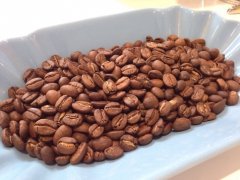
The production process of Rwandan coffee beans how is high-quality Rwandan coffee produced? Rwanda
The biggest harvest season for Rwandan coffee is during the main rainy season, from March to the end of May. During the harvest season, farmers spend most of their day picking coffee fruits by hand. In the afternoon, farmers carry coffee fruits in traditional baskets made of banana leaves to a cleaning station a few hours away. The mechanic uses his hands to make the best quality coffee with crimson color.

Introduction to the flavor-rich coffee treatment method of Coffee Manor in Rwanda
The taste of Rwandan coffee is described as a grassy aroma with tropical climates. in addition to the sweetness of fruit, this coffee also gives people a feeling of freshness, clarity, and freshness. Bourbon coffee grown in Rwanda is amazing for its sweet fruit, full-bodied, unrestrained and lingering aftertaste. This kind of coffee is delicious

Characteristics of grinding degree of Rwandan coffee with clean taste introduction of fine coffee beans in producing areas
Rwanda's economy is dominated by agriculture. The population engaged in agriculture and animal husbandry accounts for 92% of the country's population. The main cash crops are coffee, tea and cotton. Because it is an agricultural and animal husbandry country, coupled with the loss of many young workers caused by the genocide in 1994, it is a huge blow to a country that is not already rich, and Rwanda is still a backward country. Luwang after the Civil War

Introduction to the taste grindability of high-quality coffee beans
Rwanda's economy is dominated by agriculture. The population engaged in agriculture and animal husbandry accounts for 92% of the country's population. The main cash crops are coffee, tea and cotton. Because it is an agricultural and animal husbandry country, coupled with the loss of many young workers caused by the genocide in 1994, it is a huge blow to a country that is not already rich, and Rwanda is still a backward country. Luwang after the Civil War

Introduction to the characteristics of the manor in the taste producing area of Rwanda coffee brewing
Rwanda coffee is absolutely high quality in the form of washed Arabica beans. As far as Africa is concerned, its coffee industry is remarkable because the country thrives mainly by producing the best possible coffee beans. Coffee from Rwanda is becoming more and more popular in the international market. The mission of the Rwandan Coffee Association is to manage and supervise the coffee industry in Rwanda from production to sales.

Introduction of Coffee Flavor description, Grinding degree characteristics and Taste varieties in Chilmel Manor, Rwanda
The provinces prior to 2006 are as follows: Butare, Byumba, Cyangugu, Gikongoro, Gisenyi, Gitarama, Kibungo, Kibuye, Kigali, Kigali Ru

Fragrant and Special Coffee Manor Coffee Manor in Rwanda introduces boutique coffee
Flavor [Flavor]: the overall impression of aroma, acidity, and mellowness. Acidity [Acidity]: the strong acidity of all coffee grown on the plateau. The sour here is different from bitterness and Sour, and has nothing to do with pH value. It refers to a fresh and lively quality that promotes coffee to exert its functions of invigorating the mind and clearing the taste. The acidity of coffee

Introduction to the coffee flavor and taste characteristics of Kimmel Manor in Rwanda with mango-like sweetness
The tiny Highland beans, which have always been favored, and the 2005 Columbia Q Competition Champion Manor are all run by this private company, and this batch of people printed with SICAF is also run by NKG. Rwanda's coffee grading system is different from other African countries, and the hand constituency needs to be rated by cup test, while Lu's grade is only A, B and C.

Rwanda Coffee Flavor description characteristics of Grinding degree introduction to the record of taste and roasting degree of high-quality coffee beans
Rwanda's economy is dominated by agriculture. The population engaged in agriculture and animal husbandry accounts for 92% of the country's population. The main cash crops are coffee, tea and cotton. Because it is an agricultural and animal husbandry country, coupled with the loss of many young workers caused by the genocide in 1994, it is a huge blow to a country that is not already rich, and Rwanda is still a backward country. Luwang after the Civil War

Rwanda Coffee Flavor description, Grinding degree Taste characteristics, Flavor description of Fine Coffee beans in producing areas
Rwanda's economy is dominated by agriculture. The population engaged in agriculture and animal husbandry accounts for 92% of the country's population. The main cash crops are coffee, tea and cotton. Because it is an agricultural and animal husbandry country, coupled with the loss of many young workers caused by the genocide in 1994, it is a huge blow to a country that is not already rich, and Rwanda is still a backward country. Luwang after the Civil War

Introduction to the description of Coffee Flavor of Coffee Manor in Rwanda
Rwanda's economy is dominated by agriculture. The population engaged in agriculture and animal husbandry accounts for 92% of the country's population. The main cash crops are coffee, tea and cotton. Because it is an agricultural and animal husbandry country, coupled with the loss of many young workers caused by the genocide in 1994, it is a huge blow to a country that is not already rich, and Rwanda is still a backward country. Luwang after the Civil War

Fragrant and Special Coffee Manor Coffee Manor in Rwanda Origin and Development of Fine Coffee History and Culture
The aroma of soil [Earthy]: commonly used to describe spicy and earthy Indonesian coffee, not the smell of dirt on coffee beans. Uniqueness [Exotic]: describes coffee with its unique aroma and special flavor, such as flowers, fruits, and spices. Coffee from East Africa and Indonesia usually has this property. Aromatic alcohol [Mellow]:

Introduction to the characteristics of Coffee Bean Flavor Manor in Rwanda
There are about 33000 hectares of coffee plantations in Rwanda, with 500000 people engaged in the coffee industry. With the good natural conditions of high altitude and fertile volcanic soil, the country's fertile soil and suitable climate contribute to plant growth, and coffee trees seem to be driven or forced to grow upward, or because they grow too fast to produce the best coffee beans. Luwang, the beautiful land of a thousand hills
The processing method and Flavor description of Rwandan Coffee introduction to Fine Coffee in producing area
Rwanda's economy is dominated by agriculture. The population engaged in agriculture and animal husbandry accounts for 92% of the country's population. The main cash crops are coffee, tea and cotton. Because it is an agricultural and animal husbandry country, coupled with the loss of many young workers caused by the genocide in 1994, it is a huge blow to a country that is not already rich, and Rwanda is still a backward country. Luwang after the Civil War

There are several varieties of Rwandan coffee. Introduction to the price and flavor of Rwandan coffee.
Rwanda's economy is dominated by agriculture. The population engaged in agriculture and animal husbandry accounts for 92% of the country's population. The main cash crops are coffee, tea and cotton. Because it is an agricultural and animal husbandry country, coupled with the loss of many young workers caused by the genocide in 1994, it is a huge blow to a country that is not already rich, and Rwanda is still a backward country. Luwang after the Civil War

Citrus-flavored and sweet Coffee Variety of Coffee Variety in Kimmel Manor, Rwanda
Rwanda is located in the south of the equator in east-central Africa, a landlocked country. It is bordered by Tanzania to the east, Burundi to the south, Zaire to the west and northwest, and Uganda to the north, with a land area of 26338 square kilometers, ranking 149th among all countries in the world and close to Burundi, Macedonia, Haiti and Albania. Rwanda is located in east-central Africa, bordered by the Democratic Republic of the Congo in the west and north.

Description of Coffee Flavor in Chilmel Manor, Rwanda; introduction to the characteristics of grinding degree and price
The watershed between the Congo basin and the Nile basin runs through Rwanda from north to south, with about 80 per cent of the country draining from the Nile and about 20 per cent from the Ruzi River and Lake Tanganyika. The longest river in the country is the Niabalongo River (Nyabarongo River) in the southwest, which turns north, east and southeast and flows into the Luwuwu River to form the Kagaila River.

Rwanda boutique coffee bean manor with clean taste and high mellow thickness
Rwanda's economy is dominated by agriculture. The population engaged in agriculture and animal husbandry accounts for 92% of the country's population. The main cash crops are coffee, tea and cotton. Because it is an agricultural and animal husbandry country, coupled with the loss of many young workers caused by the genocide in 1994, it is a huge blow to a country that is not already rich, and Rwanda is still a backward country. Luwang after the Civil War

Soft and full-bodied Coffee Bean Flavor of Chilmel Manor in Rwanda
Rwanda is a small African country, and the local people are relatively poor, but it produces very good coffee here. Unlike its neighbors Kenya and Ethiopia, Rwanda's coffee is mainly round bourbon. The taste is not as prominent as Ethiopia and Kenya, but the uniformity is excellent. Rwanda has about 33000 hectares of coffee plantations, and 500000 people are engaged in coffee.

Introduction to the flavor and taste of the coffee producing area of Rwanda Coffee Manor introduces the characteristics of Rwandan coffee
Most of the coffee in Rwanda is washed. The water washing method will first wash and flotation the ripe coffee fruit, then remove the exocarp, pulp and part of the pectin layer, then send the coffee into the fermentation tank, remove the remaining pectin layer and then send it to the drying ground for drying treatment, so that the water content reaches about 13%. The coffee in the picture above is placed in an African shed to dry.