
"Norte"
505 article(s) found
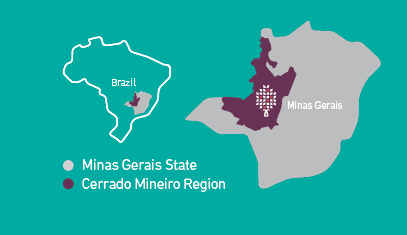
About Brazil South Minas producing area Brazilian Coffee beans Raw material Brazilian Fine Coffee Association BSCA
For the exchange of professional baristas, please follow the coffee workshop (Wechat official account cafe_style) Coffee is produced in seven states across Brazil, with a total of 14 coffee producing areas, Sao Paulo (Mogiana, Centro-Oeste), Parana (Norte Pionerio do Paran), Bahia (Planaltoda Bahia, Cerrado da Bahia, Atlantico Baiano), Saines.

A brief introduction to the consistent Market Price of Fine Coffee Bean varieties in Angola
In the following two centuries, the economic development of Angola was slow. At that time, although the Portuguese were also committed to developing agricultural production in Angola, the main income of the Angolan colonies at that time depended on the slave trade to Brazil, which was not abolished until 1830. It was not until the late 19th century that Angola's economy turned inland, and the Portuguese began to accumulate.

Introduction of coffee bean varieties the origin and variety of coffee beans introduce the types of coffee beans
Brazil's coffee fruit (Arabica) on the market for coffee mainly for Arabica (Coffee Arabica) and Robusta (Coffee Robusta) and other two original species. Each of them can be subdivided into more variety branches. Most of the coffee beans in circulation on the market are distinguished by their origin. The following is a list of some of the major producing countries and their famous coffee (reference: coffee producing section map):
What are the varieties of coffee grown in Panama, the origin and types of coffee and coffee beans
Brazil's coffee fruit (Arabica) on the market for coffee mainly for Arabica (Coffee Arabica) and Robusta (Coffee Robusta) and other two original species. Each of them can be subdivided into more variety branches. Most of the coffee beans in circulation on the market are distinguished by their origin. The following is a list of some of the major producing countries and their famous coffee (reference: coffee producing section map):

A brief introduction to the description of flavor, taste and aroma characteristics of high acidity Angolan boutique coffee beans
Ninety-eight per cent of coffee in Angola (Angola) is Roberts. The best brands in Angola used to be Ambriz, Amborm and NovoRedondo, all of which are known for their consistent quality. The characteristics of Angolan coffee: flavor: not available in the West in recent years, but used to be famous for its high acidity suggested roasting method: medium

A brief introduction to the cultivation of boutique coffee beans in Angola, which are almost impossible to buy, geography, climate, altitude.
In the 1970s, Angola produced about 180000 tons of commercial coffee per year. With an area of 161000 hectares and an annual output of 99550 tons, Uige Province is the largest coffee grower.

Consistent Angola Fine Coffee Bean Origin History and Culture Introduction
Angola was once one of the world's largest coffee producers, with a record coffee production of 225,000 tons in 1974. But Angola's coffee production fell sharply after a 27-year civil war broke out after independence in 1975. The first batch of Angola coffee exported to the United States-11 tons in total-has arrived in the country, Angola's ambassador to the United States, Agostinho Tavares, told the daily Angola in New York on Monday.

Angora coffee beans
Angola's Angola, which has been growing coffee for more than 100 years, ranked first in Africa until 1960 and reached 225000 tons in 1979, ranking second in Africa and fourth in the world. The output in 1992 was 5000 tons. Sisal production is second only to coffee, and the level of per unit yield is higher. In 1986, the output reached 20,000 tons, sisal ranked second in Africa both in terms of output and export volume. Luo'an, Xinhuanet

What are the characteristics of Colombian coffee what are the main producing areas of Colombian coffee
For more information on coffee beans, please follow the Coffee Workshop (official Wechat account cafe_style). Colombia's main producing areas are in the central and eastern mountains. The most important plantations along the central mountains are located in Medellin, Armenia and Manizales, in the above three areas.

Brief Introduction to the Treatment Method of Grindness Roast Degree of High Acidity Angola Fine Coffee Bean
Angola Coffee Features: Flavor: Not available in the West in recent years, but previously known for its high acidity Suggested Roast: Medium to Deep Roast: Average Market for Angola Coffee: Mid-1970s, 98% of Angola's annual coffee exports were Roast (probably the best Roast coffee in Africa), total production, 1990

African coffee Angora coffee beans
Angolan coffee Angola Angola has been growing coffee for more than 100 years, and its output has been the first in Africa until 1960, reaching 225000 tons in 1979, ranking second in Africa and fourth in the world. The output in 1992 was 5000 tons. Sisal production is second only to coffee, and the level of per unit yield is higher. In 1986, the output reached 20,000 tons, sisal ranked second in Africa both in terms of output and export volume.

A brief introduction to the cultivation of high-acidity Angolan boutique coffee beans, geographical location, climate and altitude
The origin of coffee in Angola: 98% of the coffee in Angola (Angola) is Roberts coffee. The best brands in Angola used to be Ambriz, Amborm and NovoRedondo, all of which are known for their consistent quality. Angola was once one of the largest coffee producers in the world, with coffee production reaching a record 22.5 in 1974
Price of Angolan coffee beans
Angolan coffee Angola Angola has been growing coffee for more than 100 years, and its output has been the first in Africa until 1960, reaching 225000 tons in 1979, ranking second in Africa and fourth in the world. The output in 1992 was 5000 tons. Sisal production is second only to coffee, and the level of per unit yield is higher. In 1986, the output reached 20,000 tons, sisal ranked second in Africa both in terms of output and export volume.

How to process Peruvian beans? how to divide the grades of Peruvian beans?
For the exchange of professional baristas, please follow the coffee workshop (official Wechat account cafe_style) altitude: 900-2050m harvest: March-September varieties: Typica,Caturra, Bourbon, Panha Mengnuo, Catua JUNIN Hunin this area produces about 20% of the coffee in Peru, 25% of the coffee, which is produced in the rainforest. The area suffered from guerrillas in the 1980s and 1990s.

Consistent cultivation of boutique coffee beans in Angola A brief introduction to geographical location, climate and altitude
The market for Angolan coffee: in the mid-1970s, 98 per cent of Angola's annual coffee exports were Roberts (probably the best in Africa), but total production fell in 1990. Most of Angola's coffee was exported to the United States, the Netherlands and, of course, Portugal in the 1970s. Angola produced about 180000 tons of commercial coffee a year.

What kind of Peruvian bean baking suggestions are there in Peru's single bean manor?
Professional baristas please follow the coffee workshop (official Wechat account cafe_style) suggest roasting methods: medium to deep roasting, can be made into high-quality mixed coffee suitable for a variety of uses ★: general Peruvian coffee market: private Peruvian coffee exporters Chamber of Commerce (ComeradeExportadoresdeCafedelPeru) has been established, which is committed to improving the quality of coffee.

A brief introduction to the treatment method of grinding degree and baking degree of fine coffee beans in Angola, once a big coffee country.
According to officials, Angola's coffee production is expected to reach 4000 tons in 2006, an increase of 34 percent over 2005. Coffee production increased by 1000 tons between 2005 and 2006. The major coffee producing provinces are Kwanza Sul, Bengo, Kwanza North and Uige.
A brief introduction to the Market Price of High acidity Fine Coffee Bean varieties in Angola
Angolan Agriculture Minister Afonso Pedro Kanga revealed that Angolan coffee production this year is expected to double that of last year to 12000 tons. In 2008, in order to regain its status as a major coffee producer in the world, the Angolan government introduced a plan to receive a preferential micro-loan of US $5000 per farmer to grow coffee. Origin of coffee in Angola: 98% of coffee in Angola (Angola) is Luo

A brief introduction to the market price of high-quality Angolan boutique coffee beans
In analyzing the global financial crisis and the situation in the international coffee market, Sako said that there are still gaps in the international coffee market, and Angolan coffee should not only increase its output, but also improve its quality, so that it can really fill the supply gap. Angolan Agriculture Minister Afonso Pedro Kanga revealed that Angolan coffee production this year is expected to double that of last year to 12000 tons. In 2008, to recapture the world

A brief introduction to the consistent treatment method of grinding degree and baking degree of Angolan boutique coffee beans
The market for Angolan coffee: in the mid-1970s, 98 per cent of Angola's annual coffee exports were Roberts (probably the best in Africa), but total production fell in 1990. Most of Angola's coffee was exported to the United States, the Netherlands and, of course, Portugal in the 1970s. Angola produced about 180000 tons of commercial coffee a year.