
"Oxfam"
86 article(s) found

Introduction to the flavor and taste of the cultural description of the origin of Ethiopian coffee bean story
The origin of Ethiopian coffee bean story, cultural description, flavor and taste introduction there is a small town in southern Ethiopia called Kafa, which is the earliest birthplace of coffee. But now Ethiopia is most famous for coffee beans with the trademarks of Hal, Sidamo, and Yejasuffe. In fact, most of Starbucks' raw materials come from these three brands. Ethiopia is now lost.

A detailed introduction to the historical development and content of Fairtrade coffee certified by coffee beans in the world
Fairtrade coffee is mainly traded directly with local coffee farmers at a fair price. In a transparent management model and commercial form. The premise of ensuring the working environment of producers and protecting the local environment. At the same time, provide corresponding production technology and training, build bridges, schools, hospitals and other facilities. The aim is for sustainable development and poverty alleviation. Directory background
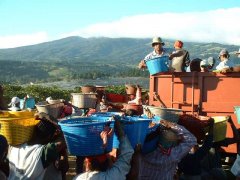
New Fair Trade Relation Coffees (Relational Coffee)
The new type of fair trade-building connections and credibility among peers is the new type of fair trade, which we also call Relation Coffees (relationship coffee). When the price of coffee is very low, fair trade is a very feasible solution. Today, however, this is no longer the case. Fair trade has become a common form of high-quality specialty coffee trade.

International Coffee Festival that you don't know | takes you to understand the significance of International Coffee Organization
Professional coffee knowledge exchange more coffee bean information please follow the coffee workshop (Wechat official account cafe_style) you love coffee you have drunk a lot of coffee from the producing areas! Do you like the flower and fruit aroma of Ethiopia, the sour and sweet taste of Kenya, the rich flavor of Mantenin or the sweetness of Panama? If you have drunk all these, then I believe you are indeed a coffee glutton. After all, there are only

Indonesia Aceh Mandning-Kayo Mountain Mandning Coffee Bean Taste Flavor Features Fair Trade Coffee
Professional coffee knowledge exchange More coffee bean information Please pay attention to coffee workshop (Weixin Official Accounts cafe_style) Indonesia is the largest archipelago country in the world. Arabica coffee planting was introduced as early as the Dutch rule in the 18th century. The main producing areas are located in Java Island and Sulawesi Island of Sumatra Island. The mantenin produced has a deep, low acidity and rich taste, which makes people call it

Brief introduction of planting Market Price of Fine Coffee Bean varieties of Huaxing Apricot in Ethiopia
Starbucks hired a large team of lawyers to step up defense firepower in an attempt to prevent Ethiopia from taking control of trademarks in two other producing areas. In November 2006, du Hai, the newly appointed senior deputy general manager of Starbucks (Dub Hay, the so-called "big shot" who visited Yunnan, China last year) even published a film on "You Tube", openly calling out to Ethiopia and criticizing

What is 4C standard coffee? Establishment of 4C Association 4C Association set up four regional offices
4C Organization related brief answer 1. What is 4C Association 4C Association is a legal, non-profit, global (United Nations) coffee industry organization registered in Geneva, Switzerland. English full name: Common Code for the Coffee Community, translated into Chinese is the management rules of the coffee community, referred to as 4C or 4C Association. 4C Association members include coffee farmers (

Coffee crisis, mankind's favorite drink is about to go into history.
Droughts, floods, infectious diseases and climate changes have posed a great threat to human coffee addiction. Do we really have to face the days when there is no coffee? When we read the newspaper and pick up the latte or espresso on the table, climate change seems far away, but thousands of kilometers away, the origin of coffee beans is experiencing waves. Mersey.

Coffee Information | Coffee crisis, mankind's favorite drink is about to enter history.
Abstract: coffee is also a kind of plant, and the ever-changing weather has a great impact on coffee cultivation in recent years. Droughts, floods, infectious diseases and climate changes have posed a great threat to human coffee addiction. Do we really have to face the days when there is no coffee? When we read the newspaper and pick up the latte or espresso on the table, climate change seems to be

A brief introduction to the flavor, taste and aroma characteristics of aromatic Ethiopian boutique coffee beans
It has been estimated that there are at least 2000 varieties of Ethiopian coffee and even more than 4500 kinds of coffee. Compared with the fat posture of Bourbon SL28, the main variety next to Kenya to the south, or Tibica in Central and South America and Asia, Ethiopian beans look a little malnourished. But beans can't be judged by appearance, and Ethiopian coffee has the highest citrus flavor in the world, whether it's instant coffee or
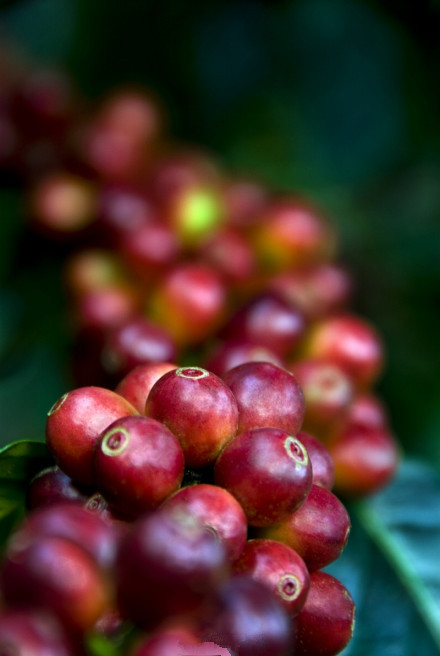
Coffee crisis with tricky tastes and fragile varieties
The price of coffee is forecast to rise by 25% by 2050. The livelihoods of 25 million people may depend on whether scientists can find a way to protect fragile coffee plants and berries. A whole year's coffee harvest may depend on the florescence of just a few days, when plants are particularly vulnerable to extreme weather. Last year, coffee leaf rust caused coffee farms in Nicaragua
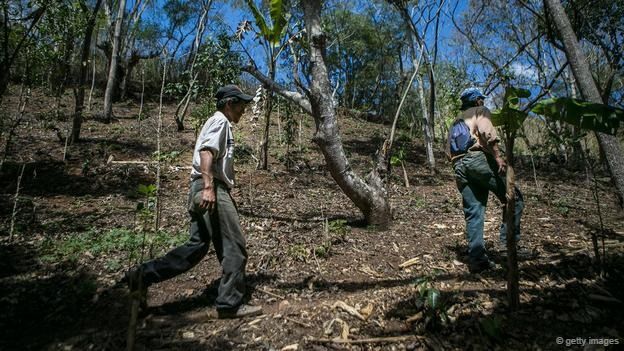
Coffee crisis: mankind's favorite drink is coming to an end?
While sipping lattes and espressos and reading newspaper headlines, we don't seem to feel much threat from climate change. Yet travel thousands of miles to the origin of this refreshing drink and you get a real sense of how real the threat of climate change is. Recently, from the University of California Santa Barbara (University of Californ)

The trade pattern of raw coffee beans is changing, with both challenges and opportunities.
Coffee is our beloved, and global coffee consumption has nearly doubled in the past 40 years, with an average of 2.25 billion cups of coffee consumed every day, of which about 400 million cups are consumed in the United States alone. But do you know where coffee comes from, how it is made, and how it becomes a delicacy in our cups? In order to change the mass consumer
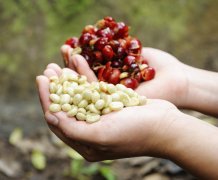
The trade pattern of raw coffee beans is changing, with both challenges and opportunities.
Coffee is our beloved, and global coffee consumption has nearly doubled in the past 40 years, with an average of 2.25 billion cups of coffee consumed every day, of which about 400 million cups are consumed in the United States alone. But do you know where coffee comes from, how it is made, and how it becomes a delicacy in our cups? In order to change the mass consumer

A brief introduction to the Market Price of Ethiopian Fine Coffee Bean varieties with small fragrant beans
Yega Xuefei is a small town, 700-2100 meters above sea level, synonymous with Ethiopian boutique coffee. It has been a wetland since ancient times. The ancient saying "Yirga" means to settle down and "Cheffe" means a wetland. The mode of production and flavor of coffee here are so outstanding that Ethiopian coffee farmers compete to take pride in the flavor of their coffee, making it the worst in Africa.

A brief introduction to the history and culture of the origin and development of sweet Ethiopian boutique coffee beans
Getachew Mengistie, director of Ethiopia's Bureau of intellectual property, bluntly pointed out that farmers sell raw beans for $1.45 a pound, while Starbucks sells for $26 a pound in the United States, 18 times the price difference between the two places. The reason is that Ethiopia does not know how to use intellectual property rights to create value for farmers, as long as the name of Ethiopian high-quality beans, it can be higher than the average in the United States.

Ethiopian coffee beans with floral apricot peaches Location Climate Altitude Profile
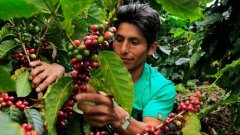
Ethiopia's Yirgacheffe coffee is petite, but gentle and sweet. As the home of coffee, Ethiopia's millennia of growing and processing traditions have resulted in high-quality washed Arabica beans. Light baked with unique lemon, floral and honey sweet aromas, soft fruit acids and citrus notes, fresh and bright taste. not
A brief introduction to the flavor and aroma characteristics of Ethiopian boutique coffee beans
Ethiopia's Yega Coffee is Ethiopia's most important export cash crop and a major source of Ethiopia's foreign exchange earnings. Ethiopia's coffee exports account for about 3% of the world market, making it the eighth largest coffee exporter in the world. Coffee exports increased steadily from 58000 tons in 1990-1991 to 110000 tons in 1995-96, and remained at this level for the next few years.

A brief introduction to the market price of sweet and lovely Ethiopian boutique coffee beans
In Ethiopia, the grading and quality control system of coffee is divided into three levels: producer, regional and national. All coffee is inspected by local inspection agencies before leaving the country of origin, and then re-tested at the coffee inspection and grading centers in Addis and Diredawa to determine its quality grade. Coffee is graded before auction and sale, for all involved in production, acquisition,

A brief introduction to the Flavor, Taste and aroma characteristics of Fine Ethiopian Coffee beans
Ethiopia grows coffee in different climatic zones, so it has more than 140 farm varieties, and fresh coffee is produced all the year round. The quality of Ethiopian coffee varies according to different elevations and regional ecological environment. The Harar coffee in the southeast highland is a typical Muha coffee with a strong flavor; the coffee produced in the southwest Wollega has a rich fruity flavor; Limu coffee