
"Seeds"
10350 article(s) found

Coffee beans morphological characteristics of coffee tree fruit for berries
Coffee tree is a shrub or small tree of Rubiaceae; leaves opposite, leathery, long oval; every March, branches will emerge white flowers, petals spiral arrangement, flower center around the petals jump, a closer look, really like childhood play with the small windmill, issued bursts of jasmine fragrance; fruit is oval, berry, dark red, hidden two seeds, that is, we are familiar with coffee

What are the benefits of coffee beans in the sun? What are the ways of drying raw coffee beans in addition to the sun?
Professional coffee knowledge exchange more information about coffee beans Please follow the coffee workshop (Wechat official account cafe_style) what are the benefits of coffee beans in the sun? What are the ways of drying raw coffee beans in addition to the sun? The requirement of the sun treatment on the climate is very high. After the coffee fruit is harvested, the farmers will directly dry it in the sun. After 23 weeks of sun drying, the coffee fruit will be shelled again.

Introduction of Coffee planting techniques and growth habits introduction of planting methods of Coffee trees
Field management of loosening soil and weeding: when the seedling height is 3cm to 6cm, the weak or overdense seedlings are pulled out; when the seedling height is 10cm and 13cm, the plant distance is about 30cm. Soil loosening and weeding were carried out at the same time between seedlings and fixed seedlings to keep the soil loose. Coffee beans are more drought-tolerant, and the soil can grow normally when the soil moisture is maintained. During the drought, the coffee beans should be properly watered, but there should be less squatting seedlings during the seedling fixing period.

Flavor and taste characteristics of Yunnan washed coffee beans? How did the honey treatment come from?
The coffee we drink comes from the seeds of coffee beans. The coffee processing process involves removing layers on the coffee fruit, such as mucus and parchment, until we get the seeds. Different types of processing involve the removal of fruit layers in different ways and at different times. Natural coffee is a completely dry coffee, that is to say, it is naturally dry. The outer layer, from the epidermis to parchment, dries later.
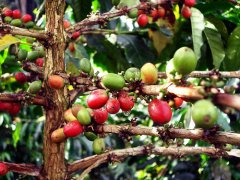
How to grow coffee berries and beans
Coffee fruit is a berry, also known as comb fruit. Oval, 9-14 mm long, young fruit green, red at maturity, purplish red. Each fruit generally has two seeds, but also one or three, showing a semi-oval, there is a longitudinal groove, called grooves. This is the past life of coffee beans, there are coffee branches, leaves, fruits, as well as dissected pulp, seeds, roasted coffee beans. What we see every day

The planting technology of coffee tree introduces the environment in which coffee tree is suitable to grow.
Field management of loosening soil and weeding: when the seedling height is 3cm to 6cm, the weak or overdense seedlings are pulled out; when the seedling height is 10cm and 13cm, the plant distance is about 30cm. Soil loosening and weeding were carried out at the same time between seedlings and fixed seedlings to keep the soil loose. Coffee beans are more drought-tolerant, and the soil can grow normally when the soil moisture is maintained. During the drought, the coffee beans should be properly watered, but there should be less squatting seedlings during the seedling fixing period.

Tasting coffee and high food sows the seeds of happiness
Kaohsiung Restaurant and Travel University held the 106 coffee certification seed teacher training course, the first step opened on the 24th, invited coffee expert Liao Siwei (right) to teach the method of brewing delicious coffee flavor. Professional barista exchanges please follow the coffee workshop (Wechat official account cafe_style) drinking coffee is not only the aesthetics of life, but also the transmission of happiness, Wang, chief executive of the Chinese Association of Catering and Travel Education

Introduction of Katim Coffee beans
The characteristic editing was 3846 seeds per kilogram when exposed to cool sun for 2 months. There were about 5000 seeds in cool sun for 5 months, the germination rate was more than 95% in two months after seed production, 85% in three months, became weak after three months, and most seeds lost their germination rate after six months. The resistance to leaf rust is sub-immune type or extremely high resistance type, and its plant type is compact and mostly exposed in the branches.

Introduction to the characteristics of the method of describing the taste and flavor of the manor name of Helena coffee producing area in San Antilles
The History of St. Helena Coffee (Source of Seeds) on February 10, 1733, the East India Company (The East India Company) brought coffee seeds to St. Helena Island, and a ship from the port of Yemenmoka brought Green Tipped Bourbon Coffee seeds; these seeds began to be planted all over St. Helena Island and flourished even if they were neglected.

The planting technology of coffee the planting environment introduces which country is the most suitable for growing coffee
Field management of loosening soil and weeding: when the seedling height is 3cm to 6cm, the weak or overdense seedlings are pulled out; when the seedling height is 10cm and 13cm, the plant distance is about 30cm. Soil loosening and weeding were carried out at the same time between seedlings and fixed seedlings to keep the soil loose. Coffee beans are more drought-tolerant, and the soil can grow normally when the soil moisture is maintained. During the drought, the coffee beans should be properly watered, but there should be less squatting seedlings during the seedling fixing period.

Brief introduction of Coffee planting History and planting Technology
In China, according to historical records, coffee trees were planted in Taiwan for the first time in 1884, and coffee cultivation in mainland China began in Yunnan. In 1902, a French missionary named Tian introduced seeds from Yingong, Binchuan County, Yunnan Province. it was successfully planted in a place called Zhu Kula, a tributary of the Jinsha River. The commercial cultivation of coffee in Yunnan began in 1985.

The breeding ground of coffee how does coffee breed and where it is produced?
① nursery land selection: it is appropriate to choose close to the water source, good drainage, fertile, deep soil layer, loose loam or sandy loam as nursery land. ② soil preparation and application of basic fertilizer: the soil in the nursery should be fully ploughed and raked into fine pieces, ploughed 20 to 25 centimeters deep, stone, grass roots, sundries should be removed quickly, and then the border should be raised. The width of the border is 1 meter, the width of the path between the borders is 50 centimeters, and the east-west direction of the border on flat land is 5, 000 and 10, 000 jin.

Brief introduction of Coffee planting History and planting Technology
In China, according to historical records, coffee trees were planted in Taiwan for the first time in 1884, and coffee cultivation in mainland China began in Yunnan. In 1902, a French missionary named Tian introduced seeds from Yingong, Binchuan County, Yunnan Province. it was successfully planted in a place called Zhu Kula, a tributary of the Jinsha River. The commercial cultivation of coffee in Yunnan began in 1985.
Fine Coffee learn how to process Coffee Cherry
Coffee beans are the seeds in the coffee fruit. The coffee fruit is exposed to strong sunlight and the seeds are not taken out until the shell is broken. This method is called non-washing or natural drying. Another way is to put the coffee fruit in the sink to flash, soak in water to soften and then remove the flesh. The washing type refining process is that the harvested coffee fruit is put into the sink and soaked in 24 murmurs for 48 hours.

Introduction to Dominica Santo Domingo Coffee with delicate and refreshing acidity
The so-called round beans (also known as male beans): coffee beans are not male or female, the correct term is lentil Flat Beans and Peaberry. Under normal circumstances, there are half-divided flat beans (seeds) in a coffee berry, but in a few cases the inner seeds do not split, but instead show a complete oyster-shaped grain. A normal coffee bean should have two seeds.

A brief introduction to Coffee planting History and planting techniques
According to historical records, coffee trees were first planted in Taiwan in 1884, and coffee cultivation in mainland China began in Yunnan. In 1902, a French missionary named Tian introduced seeds from Yinggong County in Binchuan County, Yunnan Province. it was successfully planted in a place called Zhu Kula, which is located on the bank of the Yushan River, a tributary of the Jinsha River. The commercial cultivation of coffee in Yunnan began in 1985, but its development is slow.

Basic knowledge of fancy coffee how to make coffee essence
Coffee beans are the seeds in the coffee fruit. The coffee fruit is exposed to strong sunlight and the seeds are not taken out until the shell is broken. This method is called non-washing or natural drying. Another way is to put the coffee fruit in the sink to flash, soak in water to soften and then remove the flesh. The washing type refining process is that the harvested coffee fruit is put into the sink and soaked in 24 murmurs for 48 hours.

Introduction of planting methods of coffee trees introduction of planting conditions of various coffee trees which country is the most suitable for planting
Field management of loosening soil and weeding: when the seedling height is 3cm to 6cm, the weak or overdense seedlings are pulled out; when the seedling height is 10cm and 13cm, the plant distance is about 30cm. Soil loosening and weeding were carried out at the same time between seedlings and fixed seedlings to keep the soil loose. Coffee beans are more drought-tolerant, and the soil can grow normally when the soil moisture is maintained. During the drought, the coffee beans should be properly watered, but there should be less squatting seedlings during the seedling fixing period.

Choose Nestle instant coffee with top-grade small seeds of Yunnan coffee beans
Yunnan coffee can also be bought in some supermarkets. This is the Chinese Yunnan coffee produced by Nestle Coffee. Choose the top grade small Yunnan coffee beans. Choose Nestle instant coffee with top-grade small seeds of Yunnan coffee beans.
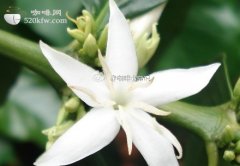
Coffee plant article coffee beans growing process when coffee flowers bloom?
Coffee plants: several to dozens of clusters in leaf axils, the second to fifth flowers on a flower axis. White, fragrant. The middle and small seeds have 5 petals, and the large seeds have 7 - 8 petals. Flowers tubular, terete. The stamen number is many and petal number is same, stamen stigma is bifid, ovary inferior, it is 2 rooms commonly, also have 1 room or 3 rooms. Insect-matchmaking flower, large seed and small seed