
"Size"
20829 article(s) found

Coffee cup introduction: espresso, latte and cappuccino cup size
Coffee cups are roughly divided into three sizes. Generally, the smaller the size, the stronger the coffee inside. 1. The smallest (50ml~80ml) is commonly known as the espresso cup, which is suitable for tasting pure quality coffee or strong individual coffee. two。 120ml~140ml cups are the most commonly used and are characterized by leaving room for self-blending, such as adding milk and sugar, and sometimes it is also used

Methods and skills of manual selection of coffee beans and defective coffee beans
I agree that apples don't taste different because of their size, but when it comes to roasting coffee beans, they all have to be heated anyway, and it doesn't matter if the coffee beans are different in size. Coffee beans harvested from the same tree, regardless of size

There are two ways to grade green coffee beans.
There are two ways to grade coffee beans, one is to filter the number of points, one is to elevation points. The size of the round beans is generally smaller than the flat beans, the round beans are between 8-13, and the flat beans are between 12-29. 8,9,10... 12,13... 18... 29= ,,......, Extra large. The bigger the number, the bigger the bean. SC-19, for example, is bean number 19.

Coffee extraction | Why should the flow of water be controlled? the influence of the size of water flow on coffee extraction
Professional coffee knowledge exchange more coffee bean information Please follow the coffee workshop (Wechat official account cafe_style) when making coffee we always say to control the flow of water, it is very important to control the flow of hand flushing extraction! So what is the effect of the size of the current on the coffee extraction? When you inject water, if the water column is too thick, the impulse is greater, it is easy to destroy the powder layer structure in the cup, and

Coffee cup introduction: espresso, latte and cappuccino cup size coffee
Coffee cups are roughly divided into three sizes. Generally, the smaller the size, the stronger the coffee inside. 1. The smallest (50ml~80ml) is commonly known as the espresso cup, which is suitable for tasting pure quality coffee or strong individual coffee. two。 120ml~140ml cups are the most commonly used and are characterized by leaving room for self-blending, such as adding milk and sugar, and sometimes it is also used

The dependence complex of coffee VS cup size
In many cases, the intensity of a cup of coffee can be roughly judged from the size of the coffee cup.

How much do you know about the size of the coffee cup?
Coffee cups are roughly divided into three sizes, and the smaller the size, the stronger the coffee.

Size zero coffee cup
This creative coffee cup made by an Israeli designer has a size zero figure coveted by its peers, and its ultra-thin shape is inevitably pitiful when it is placed on the table.

The way of cooking determines the thickness of ground beans.
Whether you use a manual bean grinder or an electric bean grinder, the thickness of coffee powder must be determined according to the brewing method: fine grinding (fine particles, the same size as granulated sugar) is suitable for mocha pots and Italian coffee machines; medium grinding (particles are the same size as granulated sugar and coarse white sugar) are suitable for dripping coffee machines and hand brewing; rough grinding (coarse particles, the same size as coarse white sugar) is suitable for French pressing pots.

Coffee reduces breast size, according to a study
Coffee isn't the traditional healthy drink, but a study published by the Women's Health Centre in Toronto, Canada, found that women who drank three cups of coffee a day had a 25 to 70 per cent lower risk of breast cancer, even if they had a family history of breast cancer. In addition, because the chest is too full, I feel that the chest is overloaded.

Coffee basic knowledge Coffee will reduce the size of the chest?
According to British media reports, although coffee is not a traditional healthy drink, a study published by the Women's Health Centre in Toronto, Canada, points out that if women can drink three cups of coffee a day, the incidence of breast cancer will be reduced by 25% to 70%, even for women with a family history of breast cancer. In addition, those who feel overloaded on the chest because their breasts are too full
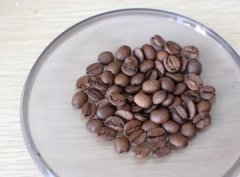
Standard for grading coffee beans
There are two ways to grade coffee beans, one is to filter the number of points, one is to elevation points. It is divided by the filter number and the size is determined by the mesh size. Round beans are generally smaller than flat beans, round beans between 8-13, flat beans between 12-29. 8,9,10... 12,13... 18... 29 = Small, Medium, Normal... It's a big... big, extra big. The bigger the number, the bigger the bean. Like SC

Fine coffee beans, common sense, size, specification and grade of coffee beans
A, coffee can be divided into washing type and non-washing type according to specifications, and can also be divided into flat beans and round beans. Washing type: in the sink, after rubbing with water and utensils, the pulp and colloid are removed and dried, which is called washing coffee bean with uniform quality. Non-washing type: after the sun is naturally dried, the pulp and peel is removed by a sheller, and its quality is unstable. The fruit of coffee is made up of two oval shapes

Kenya coffee beans SL coffee beans Kenya aa coffee beans SL coffee beans
Weixin Official Accounts cafe_style Kenya Wamuguma Region - Gatundu District Process - Washed Altitude - 1600 - 1800 masl Varietal - SL28 and SL34 Harvest - Dec 2016 The first half of each year is also the time for African beans in the new season

The size, specification and grade of coffee beans. Fine coffee.
A, coffee can be divided into washing type and non-washing type according to specifications, and can also be divided into flat beans and round beans. Washing type: in the sink, after rubbing with water and utensils, the pulp and colloid are removed and dried, which is called washing coffee bean with uniform quality. Non-washing type: after the sun is naturally dried, the pulp and peel is removed by a sheller, and its quality is unstable. The fruit of coffee is made up of two oval shapes

How to determine what grinding degree you need? the grinding degree of household bean grinder
According to the particle size, it can be divided into: 1. Fine grinding particles are as fine as sugar.

Methods and secrets of coffee grinding
According to the size of coffee beans, the grinding methods can be divided into rough grinding, medium grinding and fine grinding. Use the appropriate grinding method according to the coffee utensils. There is also medium fine grinding or finer and finer grinding than fine grinding (powdered coffee powder). 1. Fine grind: the particles are as fine as sugar.

Fine coffee, common sense, size and specification of coffee beans.
A, coffee can be divided into washing type and non-washing type according to specifications, and can also be divided into flat beans and round beans. Washing type: in the sink, after rubbing with water and utensils, the pulp and colloid are removed and dried, which is called washing coffee bean with uniform quality. Non-washing type: after the sun is naturally dried, the pulp and peel is removed by a sheller, and its quality is unstable. The fruit of coffee is made up of two oval shapes

Coffee common sense size specification and grade of coffee beans
A, coffee can be divided into washing type and non-washing type according to specifications, and can also be divided into flat beans and round beans. Washing type: in the sink, after rubbing with water and utensils, the pulp and colloid are removed and dried, which is called washing coffee bean with uniform quality. Non-washing type: after the sun is naturally dried, the pulp and peel is removed by a sheller, and its quality is unstable. The fruit of coffee is made up of two oval shapes
KSJ
In order to distinguish between good quality coffee beans and poor quality coffee beans, manufacturers have to grade coffee. Coffee is usually graded according to the defect rate and the size of beans.