
"ladder"
712 article(s) found

Fragrant coffee beans in troubled times A brief introduction to the cultivation of fine coffee beans in Honduras, geographical location, climate and altitude
The granules of coffee beans in Honduras are large in shape, uniform in size and glossy in color. In order to facilitate harvesting, farmers will prune the coffee trees to no more than 150 centimeters, because if they grow too high, they have to set up ladders to pick, which is not only time-consuming, but also may damage the trees by bending branches. As the ripening period of each fruit of the coffee bean is different, it is necessary to keep the coffee bean in good condition.
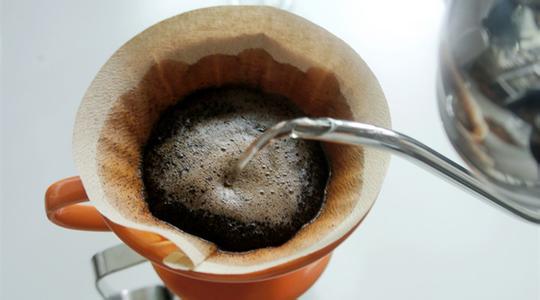
The three keys to being a good barista, how to be a good barista?
When most coffee shop owners hire baristas, the most important thing is not a job seeker who is skilled in brewing coffee. They pay more attention to first impressions, including conversation, appearance and basic knowledge of coffee. After successful entry into the industry, in addition to coffee knowledge and technology, in fact, many beginners ignore the following three points. If you start to improve yourself from the following aspects, the boss is bound to change.

A brief introduction to the history and culture of the origin and development of San Juan Xido boutique coffee beans in Honduras
High-quality coffee in Honduras uses water washing to deal with coffee beans, usually after soaking, when the defective fruit will surface, it can be discarded first. Then put the good fruit into the fruit peeling machine and peel off the peel with the rotating force of the machine. Peeled fruits are screened by machines to select fruits of high quality. Usually the bigger.

A brief introduction to the history and culture of the origin and development of San Juan Xido boutique coffee beans in Honduras.
The term "fine coffee" was first put forward by Ms. Knudsen of the United States in Coffee and Tea magazine. At that time, Ms. Knudsen, as a coffee buyer at B.C. Ireland in San Francisco, was very dissatisfied with the neglect of the quality of raw coffee in the industry, and even some big roasters mixed a large amount of Robesda beans in the comprehensive beans, so she put forward the concept of boutique coffee.
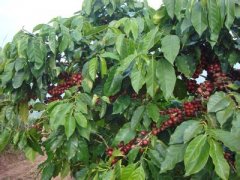
An obvious description of the flavor, taste and aroma characteristics of Xido coffee beans in San Juan, Honduras
There are six main coffee producing areas in Honduras, including Santa Barbara, Copan, Ocotepeque, Lempira, La Paz and El Paraiso in the southeast. Honduran coffee tastes less acidic, while caramel is more sweet. The taste of coffee from these five different producing areas is also slightly different, some slightly sour.
Mixed aroma San Juan, Honduras, Xido boutique coffee beans cultivation situation, geographical location, climate sea
For coffee production, the geographical conditions of Honduras are no less than those of its neighboring coffee-producing countries such as Guatemala and Nicaragua. There are 280000 hectares of coffee plantations in Honduras, mainly small coffee plantations, most of which are less than 3.5ha. These coffee plantations account for 60% of the total coffee production in Honduras. In the coffee garden, because the planting land belongs to

Boutique Coffee: hot questions about making a good cup of coffee
In the dead of night, when I rush to work overtime in the movie DotA, I have a cup of delicious instant coffee, and it seems that my hand speed has also improved a lot. However, you have to fight for a ladder to play games, and drinking coffee naturally has a higher pursuit. Coffee, as one of the most popular beverages in human society, is famous for its bitter taste and excitement caused by caffeine. Leaving Africa.
Extremely balanced San Juan, Honduras Xido boutique coffee beans grind degree of baking degree treatment method
High-quality coffee in Honduras uses water washing to deal with coffee beans, usually after soaking, when the defective fruit will surface, it can be discarded first. Then put the good fruit into the fruit peeling machine and peel off the peel with the rotating force of the machine. Peeled fruits are screened by machines to select fruits of high quality. Usually the bigger.

The treatment of grinding degree and roasting degree of San Juan Xido boutique coffee beans in Honduras
In fact, according to Ms. Knudsen, people started drinking fine coffee, but later, due to the growing demand for coffee, the discovery and use of new coffee varieties led to the decline of coffee quality. later, people even began to dislike this bad coffee and began to turn to other drinks. In this case, Ms. Knudsen's re-recognition

The cultivation of sweet San Juan Xido boutique coffee beans in Honduras geographical location and climate sea
In fact, according to Ms. Knudsen, people started drinking fine coffee, but later, due to the growing demand for coffee, the discovery and use of new coffee varieties led to the decline of coffee quality. later, people even began to dislike this bad coffee and began to turn to other drinks. In this case, Ms. Knudsen's re-recognition

Coffee DIY strategy: hot questions about making a cup of coffee
In the dead of night, when I rush to work overtime in the movie DotA, I have a cup of delicious instant coffee, and it seems that my hand speed has also improved a lot. However, you have to fight for a ladder to play games, and drinking coffee naturally has a higher pursuit. Coffee, as one of the most popular beverages in human society, is famous for its bitter taste and excitement caused by caffeine. Leaving Africa.

A brief introduction to the History and Culture of the Origin and Development of Fine Coffee beans in Santa Barara Manor, Honduras
The coffee variety is Arabica, 69% is HG high and low coffee, 12% is SHG special highland coffee, and 19% is CS. This quality is mainly demonstrated by Typic, Bourbon, Caturra, Villa Sarch and Lempira, because the granules of Honduran coffee beans are large in shape, uniform in size, uniform in color and glossy. For the convenience of harvesting, farmers will

Treatment method of grinding degree and baking degree of San Juan Xido boutique coffee beans with mixed aroma
In fact, according to Ms. Knudsen, people started drinking fine coffee, but later, due to the growing demand for coffee, the discovery and use of new coffee varieties led to the decline of coffee quality. later, people even began to dislike this bad coffee and began to turn to other drinks. In this case, Ms. Knudsen's re-recognition

Description of flavor and aroma characteristics of San Juan Xido boutique coffee beans with large particle shape
For coffee production, the geographical conditions of Honduras are no less than those of its neighboring coffee-producing countries such as Guatemala and Nicaragua. There are 280000 hectares of coffee plantations in Honduras, mainly small coffee plantations, most of which are less than 3.5ha. These coffee plantations account for 60% of the total coffee production in Honduras. In the coffee garden, because the planting land belongs to

Coffee hand filter cup what kind of material is good | how to use the kono filter cup to make good coffee
Professional coffee knowledge exchange more coffee bean information Please follow the coffee workshop (Wechat official account cafe_style) hand flushing has been developed for about a hundred years, the most common cone filter cup is the Hario V60 filter cup, while the ladder filter cup is probably the most well-known Sanyo filter cup and Kalita filter cup. In addition, a major shape recently is the use of wavy flat-bottomed cake filter paper W
The large granule shape of San Juan Xido boutique coffee beans in Honduras: history, development, history and culture
For coffee production, the geographical conditions of Honduras are no less than those of its neighboring coffee-producing countries such as Guatemala and Nicaragua. There are 280000 hectares of coffee plantations in Honduras, mainly small coffee plantations, most of which are less than 3.5ha. These coffee plantations account for 60% of the total coffee production in Honduras. In the coffee garden, because the planting land belongs to

A brief introduction to the market price of sweet San Juan Xido boutique coffee beans in Honduras
Honduran coffee seems strange to many coffee drinkers. When it comes to coffee production, the geographical conditions of Honduras are no less than those of neighboring coffee-producing countries such as Guatemala and Nicaragua. However, in the past, Honduras was less well-known in the consumer market because it did not have strong support in the handling and transportation of raw beans. But in recent years, the country has become extremely

A brief introduction to the planting market price of San Juan Xido boutique coffee beans with mixed aroma in Honduras
High-quality coffee in Honduras uses water washing to deal with coffee beans, usually after soaking, when the defective fruit will surface, it can be discarded first. Then put the good fruit into the fruit peeling machine and peel off the peel with the rotating force of the machine. Peeled fruits are screened by machines to select fruits of high quality. Usually the bigger.
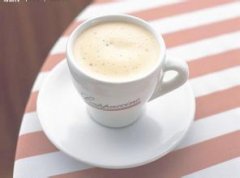
The treatment method of grinding degree and baking degree of San Juan Xido boutique coffee beans in Honduras
The term "fine coffee" was first put forward by Ms. Knudsen of the United States in Coffee and Tea magazine. At that time, Ms. Knudsen, as a coffee buyer at B.C. Ireland in San Francisco, was very dissatisfied with the neglect of the quality of raw coffee in the industry, and even some big roasters mixed a large amount of Robesda beans in the comprehensive beans, so she put forward the concept of boutique coffee.

Coffee planting zone and climate coffee tree planting environment and coffee growing area
Professional coffee knowledge exchange more coffee bean information Please pay attention to the coffee workshop (Wechat official account cafe_style) Coffee trees grow in the tropics between the Tropic of Cancer and the Tropic of Cancer and near the equator, also known as the world coffee growth belt, caffeine varieties and regional factors, there are also great differences in appearance. The color of leaves ranging from yellowish green to dark green or even brass.