
"large-scale"
3247 article(s) found

Coffee Flavor description of Ethiopian Coffee Manor Coffee Flavor description of roasting degree Price planting Environment
Ethiopian coffee beans grow in close to the natural environment, after years of planting under the same growth conditions, Ethiopian coffee beans have gradually adapted to the environment here. More than 60% of coffee beans are grown in forests or semi-forests. Large-scale coffee-growing villages account for about 35% of the country's total coffee production. Many of these are used.

Introduction of Yunnan coffee bean flavor description variety characteristics of production area treatment manor
Yunnan coffee bean flavor description variety characteristics production area treatment manor introduces the environmental problems of coffee planting, although it can reach the hot area standard, it is far away from the equator, evaporation, and the large-scale Yunnan coffee planting area is less than 1100m above sea level. in recent years, the severe drought in Yunnan, as well as the frost period in the producing areas, have made it impossible to guarantee the cultivation of coffee, which directly affected the quality of coffee production.

Characteristics of Indonesian Manning Coffee Flavor description and treatment
Mantenin's leaping acid mixes with the richest aroma, making your relaxed body manning coffee lively in a mild fragrance, and its outstanding taste captivates many suitors. In the 17th century, the Dutch introduced Arabica seedlings to Ceylon (present-day Sri Lanka) and Indonesia. In 1877, a large-scale disaster struck Indonesia

Description of Coffee Flavor in Atlanta Manor, Jamaica introduction to the processing methods of boutique coffee beans
In the 150 years after 1692, Jamaica became a world-famous producer of sugar, rum and coffee. [4] in order to maintain a large number of plantations, the Royal Africa Company was established in England in 1672. After 1865, after another large-scale uprising, Britain declared Jamaica a colony under direct jurisdiction in 1866. At the end of the 19th century, the sugar industry in Jamaica gradually declined.

Introduction to the method of Grinding degree for describing the Flavor of Indonesian Gold Manning Coffee
Indonesia gold Mantenin coffee Mantenin leaping slightly acid mixed with the richest aroma, so that you can easily taste the lively factor in the mild fragrance, its outstanding taste has confused many suitors. In the 17th century, the Dutch first introduced Arabica saplings to Ceylon (present-day Sri Lanka) and Indonesia. In 1877, a large-scale disaster attack

What are the characteristics of Guatemalan coffee beans elegant and lively fruit acid
Professional coffee knowledge exchange more coffee bean information please follow the coffee workshop (Wechat official account cafe_style) front street-Guatemala Coffee introduction Guatemala in the long history of changes, because of the Mayan culture was very popular. The territory is located in large-scale agricultural gardens to small-scale farmers, including many agricultural gardens with a long history. In the 1750s, Jesuit priests took coffee

Water with high mineral content is not suitable for making coffee.
Water with too much mineral content is not suitable for making coffee, but distilled water with no minerals at all, although it is the purest, sanitary and safe, always feels empty and boring to drink. If distilled water is used to make coffee, there is something missing in taste. When I was eating in a large-scale western restaurant, I drank a glass of musty water. I don't know if the cup didn't wash clean, or how.

Ethiopian Coffee Manor Flavor description Grinding characteristics introduction to the taste price of varieties in producing areas
Ethiopian coffee beans grow in close to the natural environment, after years of planting under the same growth conditions, Ethiopian coffee beans have gradually adapted to the environment here. More than 60% of coffee beans are grown in forests or semi-forests. Large-scale coffee-growing villages account for about 35% of the country's total coffee production. Many of these are used.

Water with high mineral content is not suitable for making coffee.
Water with too much mineral content is not suitable for making coffee, but distilled water with no minerals at all, although it is the purest, sanitary and safe, always feels empty and boring to drink. If distilled water is used to make coffee, there is something missing in taste. When I was eating in a large-scale western restaurant, I drank a glass of musty water. I don't know if the cup didn't wash clean, or how.

Water with high mineral content is not suitable for making coffee.
Water with too much mineral content is not suitable for making coffee, but distilled water with no minerals at all, although it is the purest, sanitary and safe, always feels empty and boring to drink. If distilled water is used to make coffee, there is something missing in taste. When I was eating in a large-scale western restaurant, I drank a glass of musty water. I don't know if the cup didn't wash clean, or how.

Hong Kong Xiangji Coffee Group Company Profile Xiangji Coffee How about
Professional coffee knowledge exchange More coffee bean information Please pay attention to Coffee Workshop (Weixin Official Accounts cafe_style) Company profile and philosophy Xiangji Coffee Group is committed to providing professional one-stop catering solutions to meet different catering needs of customers. As a professional baker with extensive experience in Asia, we introduce brands from the United States and

Flavor description of Yega Fischer Coffee in Ethiopia introduction to the producing area of manor varieties
Ethiopian coffee beans grow in close to the natural environment. After years of planting under the same growth conditions, Ethiopian coffee beans have gradually adapted to the environment here. More than 60% of coffee beans are grown in forests or semi-forests. Large-scale coffee-growing villages account for about 35% of the country's total coffee production.
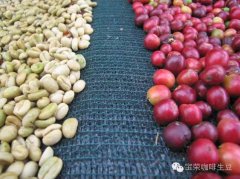
Two basic planting patterns of Colombian Coffee Fine Coffee with Colombian Flavor
After the news of Napoleon I's invasion of Spain in 1808 spread to Colombia, the people of that place immediately launched an independence movement. On July 20, 1810, a large-scale uprising against Spanish colonial rule broke out in Bogota and the Governor of New Granada was arrested. In November 1811, representatives from all over the world organized Congress in Bogota and established the New Granada Joint Provincial Government, which was announced on November 11.

Tanzania Coffee with excellent Grinding degree, Taste characteristics, Price introduction to High-quality Coffee
The coffee beans produced here are all exported from Kilimanjaro, but in addition to Mount Kilimanjaro, there are several major coffee producing areas throughout Tanzania, there are more small farms in other areas, and most small farms also have a planting area of several hundred mu. Some have their own washing equipment and bean drying farms, but the grading treatment still has to go through large-scale treatment.

Yunnan Xincheng Farm
Wang Guoshi, legal representative of the farm, with registered capital of 7.78 million yuan and total assets of 14.92 million yuan, mainly produces and sells processed coffee, pepper, mango, longan, banana and other tropical cash crops and fruits. The farm has a total population of 2036, with a total land area of 13125.58 mu, including 4500 mu of coffee, 153mu of pepper and the rest of tropical fruit. Annual output of 320 tons of coffee and 18 tons of pepper

Introduction of the Origin of the most traditional Arabica Coffee
Arabica (Coffea arabica) is the most traditional Arabica coffee variety. Originally from East Africa, coffee was monopolized by the Arab world for a long time before the 15th century, so it was called Arabian coffee by Europeans. It turned out that all the commercial coffee in the world were small grains, but it was only at the end of the 19th century that growers began to look for other resistance to a large-scale disease.

Countries use coffee by-products to develop drinks
Recently, Belgium has made a material from the pulp of a new variety of white coffee, which has the same ingredients as ordinary coffee, but milky white, easy to digest and absorb, and has a variety of health functions. The creators have not only broadened the utilization of waste pulp, but also used this raw material to make coffee soda, which is quite suitable for athletes and people with indigestion. Not long ago, Japan's New Century Food

Countries use coffee by-products to develop drinks
Recently, Belgium has made a material from the pulp of a new variety of white coffee, which has the same ingredients as ordinary coffee, but milky white, easy to digest and absorb, and has a variety of health functions. The creators have not only broadened the utilization of waste pulp, but also used this raw material to make coffee soda, which is quite suitable for athletes and people with indigestion. Not long ago, Japan's New Century Food
Boutique Coffee-Sumatra Manning (Sumatra Mandheling)
Mantenin coffee beans have a strong aroma and low acidity, with a hint of herbs and earth. The Dutch introduced Arabica seedlings to Ceylon (present-day Sri Lanka) and Indonesia for the first time in the 17th century. In 1877, a large-scale coffee rust hit the Indonesian islands, destroying almost all coffee trees. People had to abandon Arabica, which had been in operation for many years, and introduce it from Africa.

There is a new mode for cafes to join. Can you open the market?
Coffee hopes to accelerate its development in China in the next five years, establish a more perfect network of coffee cars, and join the catering industry to pass on the global brand concept to more domestic consumers. In addition, city operators can invest in and buy industrial funds. In addition to enjoying the fruitful results of large-scale operation in their respective regions, if there is such a coffee brand operation model, there are four as follows