
"protruding"
688 article(s) found

Colombia coffee variety-growing region-flavor description-taste treatment-grinding scale-estate introduction
The first part is the triangle in the background, which symbolizes the Andes and also implies that the Arabica coffee in Colombia coffee is grown in high-altitude mountainous areas. As we all know, Colombia's coffee production is mainly distributed in three mountain ranges arranged in Sichuan, which are part of the Andes. Depending on the geographical environment and climate, coffee in different regions

Coffee grinder the difference between flat grinding and cone grinding-hand coffee grinder
Coffee machine the difference between flat grinding and cone grinding-the effect of powder structure of hand coffee grinder on coffee flavor. This is just the extraction process. The core of the extraction process is the higher extraction rate at the high water temperature and the higher extraction rate at the fine point of grinding. So what is the effect of powder structure on extraction? It's nothing but a water block! Cone knife powder particles under the microscope, there will be a lot of powder particles.

Characteristics of Columbia Linglong Coffee Flavor description method A brief introduction to the planting of the manor
Colombia has three Codiera mountains running north and south, right into the Andes. Coffee is grown along the highlands of these mountains. The mountain steps provide a diverse climate, where the whole year is the harvest season, and different kinds of coffee ripen at different times. And fortunately, unlike Brazil, Colombia doesn't have to worry about frost. About 2.7 billion strains can be recorded in Colombia.

Introduction to the planting Environment of Colombian Coffee grown in the Highland introduction to the production area of Fine Coffee Bean Coffee Manor
The main varieties of Colombian coffee are small grains of coffee. Plants are small trees or large shrubs, 5-8 m tall, usually much branched at base; old branches gray-white, nodes dilated, young branches glabrous, compressed. Leaves thinly leathery, ovate-lanceolate or lanceolate, 6-14 cm long and 3.5-5 cm wide, tip long acuminate, acuminate part 10-15 mm long, base cuneate or slightly obtuse, rarely rounded, entire or

Introduction of Yunnan Coffee Bean varieties with large grains and small grains
Cymes are clustered in leaf axils, each inflorescence has 2-5 flowers, without total pedicel or with very short total pedicel; flowers fragrant, with pedicels 0.5-1 mm long; bracts basally somewhat connate, dimorphic, of which 2 are broadly triangular, nearly equal in length and width, the other 2 lanceolate, twice as long as wide, leaf-shaped; calyx tube-shaped.

Does Colombian coffee practice pay attention to skill?
Colombia, located in the northwest of South America, is a beautiful country with a long history. Indians have lived on this land since ancient times. It was colonized by Spain in 1531 and gained independence in 1819. It was renamed in 1886 to commemorate Columbus, the discoverer of the American continent. Colombia has beautiful mountains and rivers, beautiful scenery, pleasant climate and four seasons.

Colombian coffee fruit with exocarp dura and mesocarp fleshy.
Colombia, located in the northwest of South America, is a beautiful country with a long history. Indians have lived on this land since ancient times. It was colonized by Spain in 1531 and gained independence in 1819. It was renamed in 1886 to commemorate Columbus, the discoverer of the American continent. Colombia has beautiful mountains and rivers, beautiful scenery, pleasant climate and four seasons.

Description of Colombian Coffee Flavor introduction to the treatment methods of Grinding degree in producing areas of Colombian Coffee
In 1864, Jubal A. Early led Confederate troops to occupy parts of Montgomery County for a short time and attack the District of Columbia. On July 11, Confederate troops attacked Rockville Pike (MD-355), New Cut Road (now Viers Mill Road MD-586) via Rockville and Wheaton to Fo, which is only five miles from the White House in the District of Columbia.

Introduction to the description of the flavor of high-quality coffee beans in the coffee producing area of Hope Manor in Colombia
No matter in terms of yield or texture, Colombian coffee is first produced by Medellin, which is characterized by full granules, rich nutrition, moderate acidity, good balance, rich aroma and soft taste. In addition to Medellin, the provincial capitals of two neighboring provinces in the south, Armenia and Manizales, are also famous coffee producers
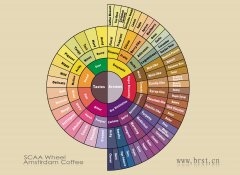
The difference between Coffee Grinder Coffee Grinder, Ghost Tooth and flat Coffee Grinder
There are many paradoxes in the coffee industry. There are many very simple reasons to pretend to be more sophisticated than nuclear projects. Full of nonsense data, plus a meaningful smile! Coffee is a drink, and if it doesn't taste good, it's zero! If it doesn't taste good, don't pull the data! Here is some practical information, many people are entangled in the bean grinder. Which of the three different types of knives is better: conical knife, flat knife, ghost tooth? All kinds of data

Are Colombian coffee beans grown in the Andes? Introduction to the description of brand taste and flavor
Are Colombian coffee beans grown in the Andes? Introduce coffee is the pride of Colombians, Colombians like to talk about a few things, in addition to their football, which was once among the best in the world, is the coffee they are proud of. Drinking coffee in Colombia is a kind of enjoyment, not only essential three times a day, but also full of streets and alleys.

Colombian Santa Rita Manor Coffee with Gump in Acid: grindability, Price, Taste, introduction to the producing areas
The main varieties of Colombian coffee are small grains of coffee. Plants are small trees or large shrubs, 5-8 m tall, usually much branched at base; old branches gray-white, nodes dilated, young branches glabrous, compressed. Leaves thinly leathery, ovate-lanceolate or lanceolate, 6-14 cm long and 3.5-5 cm wide, tip long acuminate, acuminate part 10-15 mm long, base cuneate or slightly obtuse, rarely rounded, entire or

The planting Environment of Coffee Bean in Colombia
The pure taste of Colombian coffee comes from Colombia's natural environment with the most favorable conditions for coffee growth. But beyond that, it is inseparable from the hard work of local growers. In Colombia, coffee cultivation has reached 1.07 million hectares, there are about 302000 coffee plantations in the country, and 30 to 40 per cent of the rural population depends directly on coffee production. Columby

Planting Environment of Coffee species in Colombia
Species Morphology Editing Colombian Coffee Plant Morphology Colombian Coffee Plant Morphology (10 pieces) Colombian coffee is mainly small grain coffee. Plants are small trees or large shrubs, 5-8 m tall, usually much branched at base; old branches gray-white, nodes dilated, young branches glabrous, compressed. Leaves thinly leathery, ovate-lanceolate or lanceolate, 6-14 cm long, 3.5-5 cm wide, apex

Colombia Coffee Region Flavor Taste Introduction Lazmus Manor
Colombia coffee varieties are mainly small coffee. Plants are small trees or large shrubs, 5-8 meters high, usually multi-branched at the base; old branches are gray, nodes expand, young branches glabrous, compressed. Leaves thinly leathery, ovate-lanceolate or lanceolate, 6-14 cm long, 3. 5 -5 cm wide, apex long acuminate, acuminate part 10-15 mm long, base cuneate or slightly obtuse, rarely rounded, entire or rounded
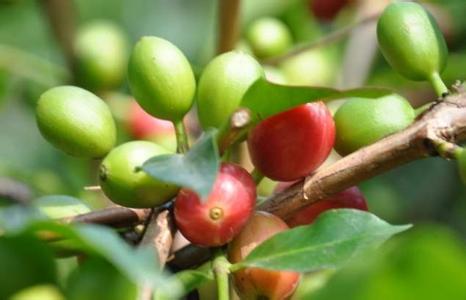
What's the difference between a coffee grinder and a flat knife? which kind of coffee grinder?
What's the difference between a coffee grinder and a flat knife? which kind of good coffee grinder is divided into a cone knife and a flat knife. The cone knife type bean grinder is longitudinally grinded from top to bottom, and its path is longer. its advantage is that it can use lower rotational speed to achieve a better grinding effect, produces less heat energy, can retain more aroma of coffee powder, and the demon's thickness is more uniform.

Planting Environment and species Morphology of Colombian Coffee
The pure taste of Colombian coffee comes from Colombia's natural environment with the most favorable conditions for coffee growth. But beyond that, it is inseparable from the hard work of local growers. In Colombia, coffee cultivation has reached 1.07 million hectares, there are about 302000 coffee plantations in the country, and 30 to 40 per cent of the rural population depends directly on coffee production. Columby

Colombian Coffee Flavor Manor introduction to Lazmus Manor
The main varieties of Colombian coffee are small grains of coffee. Plants are small trees or large shrubs, 5-8 m tall, usually much branched at base; old branches gray-white, nodes dilated, young branches glabrous, compressed. Leaves thinly leathery, ovate-lanceolate or lanceolate, 6-14 cm long and 3.5-5 cm wide, tip long acuminate, acuminate part 10-15 mm long, base cuneate or slightly obtuse, rarely rounded, entire or

Grinding scale of Colombian Huilan Coffee Bean introduction to the description of taste and flavor in the producing area
The pure taste of Colombian coffee comes from Colombia's natural environment with the most favorable conditions for coffee growth. But beyond that, it is inseparable from the hard work of local growers. In Colombia, coffee cultivation has reached 1.07 million hectares, there are about 302000 coffee plantations in the country, and 30 to 40 per cent of the rural population depends directly on coffee production. Columby

mesocarp fleshy, sweet Colombia Hope Manor Coffee Flavor Taste
The pure flavor of Colombia coffee comes from the natural environment of Colombia, which has the most favorable conditions for coffee growth. But beyond that, it is inseparable from the hard work of local growers. In Colombia, coffee is cultivated on 1.07 million hectares, there are about 302,000 coffee plantations in the country, and 30 to 40 per cent of the rural population depends directly on coffee production. Colombia