
"send"
4989 article(s) found

A brief introduction to the treatment method of grinding degree and baking degree of Rwanda boutique coffee beans with long-lasting aroma
Most of the coffee in Rwanda is washed. The water washing method will first wash and flotation the ripe coffee fruit, then remove the exocarp, pulp and part of the pectin layer, then send the coffee into the fermentation tank, remove the remaining pectin layer and then send it to the drying ground for drying treatment, so that the water content reaches about 13%. The coffee in the picture above is placed in an African shed to dry.

A brief introduction to the History and Culture of the Origin and Development of Rwanda Fine Coffee beans with long-lasting aroma
Most of the coffee in Rwanda is washed. The water washing method will first wash and flotation the ripe coffee fruit, then remove the exocarp, pulp and part of the pectin layer, then send the coffee into the fermentation tank, remove the remaining pectin layer and then send it to the drying ground for drying treatment, so that the water content reaches about 13%. The coffee in the picture above is placed in an African shed to dry.

Variety characteristics of Kenyan Coffee treated with Wumei Flavor
In addition to having obvious and charming fruit acidity, Kenyan coffee is mostly from small coffee farmers, planted in a variety of different environments, encounter different climate and rainfall every year, and bring a variety of distinct and unique personalities. Take the AAPlus grade "KenyaAA+Samburu" as an example, the 2001 Samburu has a strong black plum flavor, low acidity and strong taste, and was newly picked in the winter of 2002.

Key points of world coffee knowledge: why doesn't coffee taste as mellow as it smells?
Why do we feel that it doesn't smell good when we drink coffee? Barry, a professor at University of London. The conclusion of Smith's study is that we have two senses about smell, one of which is caused by inhalation in the external environment. The other is when the smell is exhaled out through your nasal cavity. The act of swallowing coffee sends an aroma from the inside of the mouth to the nasal cavity, stimulating brain production
Kenya Qigushu processing plant Kiaguthu information introduces the characteristics of Kenyan boutique coffee industry
Professional barista exchange please pay attention to the coffee workshop (Wechat official account cafe_style) cup tester highly recommended a Kenyan micro-batch boutique coffee Kenyan boutique coffee industry is different from the general, mostly in the form of a combination of small farmers, wet treatment plants and cooperatives, farmers will send the harvested coffee cherries to nearby processing plants or cooperatives in the shortest possible time

Arusha Coffee Manor Variety description characteristics of Flavor Coffee introduction
Tanzanian coffee is mostly washed. After picking, coffee farmers will send the coffee fruit to the nearest processing plant for processing. The treatment step of the water washing method is to screen and remove the impurities in the coffee fruit, then remove the coffee pulp and exocarp, send it into the fermentation tank, and remove the pectin layer from the inner pericarp by fermentation. Clean

How to make coffee beans with coffee beans?
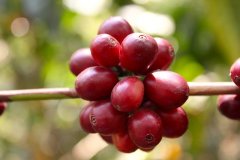
Professional coffee knowledge exchange More coffee bean information Please pay attention to coffee workshop (Weixin Official Accounts cafe_style) Once coffee cherries turn bright red on trees, farmers must pick them within two days, otherwise they will dry out. After picking, farmers have 12 hours to send ripe cherries to a pulping station or coffee washing station. In remote villages, far from laundry, farmers had to

Introduction to the flavor and taste of Rwanda boutique coffee beans with individual aroma
China Coffee Network Rwanda coffee is mostly washed. The water washing method will first wash and flotation the ripe coffee fruit, then remove the exocarp, pulp and part of the pectin layer, then send the coffee into the fermentation tank, remove the remaining pectin layer and then send it to the drying ground for drying treatment, so that the water content reaches about 13%. The coffee in the picture above is all in Africa.

The planting method of Kenyan Coffee Tree what's so special about Kenyan coffee
Kenyan coffee is mostly grown at an altitude of 1500 to 2100 meters and is harvested twice a year. To ensure that only ripe berries are picked, people must tour the forest about seven times. Kenyan coffee is grown by small farmers. After they harvest the coffee, they first send the fresh coffee beans to the cooperative cleaning station, where the washed and dried coffee is covered with parchment beans.

The post-80s "Miss Tree" opened a coffee shop just to pursue his dreams.
In Nanjing, two post-80s girls with very different personalities opened such a cafe in order to pursue their dreams. what is different is that it is not a cafe in the traditional sense, the first original picture postcard theme store in Nanjing.

Kenyan Coffee drinking Law Kenyan Coffee grading system Kenyan Coffee characteristics
Professional coffee knowledge exchange more coffee bean information please follow the coffee workshop (Wechat official account cafe_style) the Kenyan boutique coffee industry is different from the general, mostly in the form of a combination of small farmers, wet processing plants and cooperatives, farmers will send the harvested coffee cherries to nearby processing plants or cooperatives in the shortest possible time. At the same time, the cooperative will send people on a regular basis.

Introduction to the characteristics of Kenyan Coffee Flavor Manor
Kenyan coffee is mostly grown at an altitude of 1500m, 2100m, and is harvested twice a year. To ensure that only ripe berries are picked, people must tour the forest about seven times. Kenyan coffee is grown by small farmers. After they harvest the coffee, they first send the fresh coffee beans to the cooperative cleaning station, where the washed and dried coffee is covered with parchment beans.

Washed bourbon Rwandan coffee western province Lutexiluo producing area
Coffee fruits need to be transported to the processing plant as soon as possible after picking, but due to lack of facilities in the country, it is impossible to process the fruits in the first time. The fruits accumulate together after being picked, and lack of ventilation will continue to accelerate mold and rot. The rotten fruits will affect the quality of coffee and appear defective flavor. Rwanda in recent years has had a significant increase

Aromatic, full-bodied, fruity Kenyan coffee beans
Kenya coffee is mostly grown at altitudes of 1500- 2100 meters and harvested twice a year. To make sure only ripe berries are picked, people have to make about seven rounds through the woods. Kenyan coffee is grown by small farmers who harvest the coffee and send it fresh to a cooperative washing station, where the washed, dried coffee is washed into parchment coffee beans (i.e., coated).

Description of Coffee Flavor in Berman Manor, Kenya; introduction to the grindability of fine coffee in producing areas
People in the coffee industry all think that Kenyan coffee is one of its favorite products because Kenyan coffee contains every feeling we want from a good cup of coffee. It has wonderful and satisfying aromas, well-balanced acidity, well-proportioned particles and excellent fruit flavors. The taste is so unique that there is almost no similar coffee. The characteristics of Kenyan coffee

Semi-automaton foam dispels the rotation of the liquid surface of the whole strategy.
When passing away the foam, the liquid surface of the milk will naturally move along a certain track, which is generally divided into two kinds: round rotation and tumbling up and down. What kind of track will make it easier for the milk to send out the foam? For most beginners, when we foam in the steam pipe on the left-hand side, a clockwise circular rotation is the best trajectory, and when we are on the left-hand side, we can choose to still

Introduction to the method of describing the Flavor and Grinding degree of Tanzania Coffee
Tanzanian coffee is mostly washed. After picking, coffee farmers will send the coffee fruit to the nearest processing plant for processing. The treatment step of the water washing method is to screen and remove the impurities in the coffee fruit, then remove the coffee pulp and exocarp, send it into the fermentation tank, and remove the pectin layer from the inner pericarp by fermentation. Clean
Cafeworker CUBE 750Taiwan coffee culture roaster made in Taiwan
Every generation of cube has made continuous improvement progress, and so is this generation. Originally, it was intended to be the latest version, but after sending Taiwan to foreign countries, it was found that the separated container container was very inconvenient, so this generation of cube intends to integrate the continuous improvement progress of each generation of cube. The same is true of this generation. It originally achieved the third batch, and has already done so.

Introduction of fine coffee from Rwanda coffee beans grown in bourbon by washing
The coffee fruit needs to be transported to the processing plant as soon as possible after picking, but due to the lack of domestic facilities, it is unable to deal with the fruit at the first time. The fruits are piled up after being picked, which will continue to develop and accelerate mildew and decay due to lack of ventilation. Rotten fruits will affect the quality of coffee and show defective flavor. In recent years, Rwanda has developed in the production and processing of coffee.

A brief introduction to the cultivation of coffee with fruit flavor in Kenya, climate and altitude
Kenyan coffee is mostly grown at 15002100 meters above sea level and is harvested twice a year. To ensure that only ripe berries are picked, people must tour the forest about seven times. Kenyan coffee is grown by small farmers. After they harvest the coffee, they first send the fresh coffee beans to the cooperative cleaning station, where the washed and dried coffee is covered with parchment beans.