Why is washed coffee more sour? How can it be sweeter when washed? How many categories are there in washed sun-dried coffee beans?
(Sunning, honey treatment, washing)
In Qianjie, nearly 70% of the coffee beans are sun-exposed or washed, and washed beans always give people the impression of "more sour". Why?
Historically, the oldest method of processing raw coffee beans is traditional sun treatment. Simply put, fresh coffee cherries are directly placed in the yard or on the roof to expose them to the sun, dried and then peeled off. This method costs nothing and can be done by every household. However, the problem was also exposed, that is,"eating according to the weather." In some areas with unstable weather, mildew is easy to occur, and the pulp with high sugar content is extremely easy to attract insects, making the quality of sun-cured coffee beans not guaranteed.
In order to improve the quality of coffee, in 1740, the Dutch, who controlled colonial coffee cultivation and the world coffee trade, began to use water washing to process coffee beans. It was first found in the West Indies that peeled coffee beans and soaked in water could remove the sticky pectin layer. This could reduce the drying time of the coffee beans and effectively prevent pests, fungi and fungi from infecting the coffee beans. Compared with the sun, the coffee beans looked neat and sold well, so they were deeply popular. At that time, washed beans were a symbol of high quality.
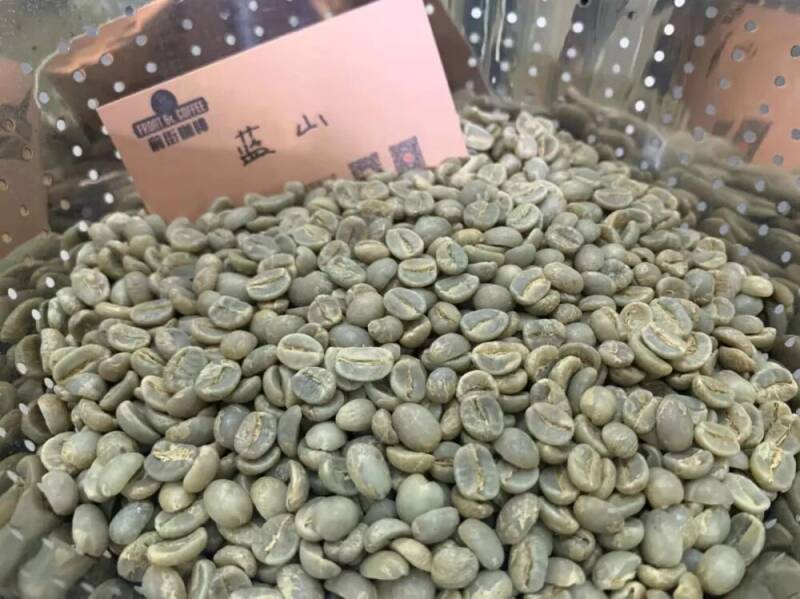
After the introduction of the coffee cherries peeler in 1844, the efficiency of washing treatment became higher and the production quality became more uniform. The cost of water washing treatment is also very high and requires a large amount of water. On average, 200 kilograms of green coffee beans consume 10-20 tons of water. Water washing treatment plants can only be established close to the water source. It can be said that the flavor and taste only account for a small part of the reason for the emergence of washing treatment, and the larger reason comes from the consideration of controlling yield, yield, and product standardization.
The first three steps of the water washing method are the same as the sun treatment method (1. Harvest ripe coffee fruits, 2. Preliminary removal of impurities and inferior beans, 3. Screening of floating beans)
4. Remove the peel and pulp: Put the selected good coffee fruits into a pulp sifter to remove the peel and pulp to leave the seeds (coffee beans).
5. Fermentation to remove pectin: Put coffee seeds with a layer of mucous membrane (pectin) attached to them into a fermentation tank, and use biological treatment to dissolve the pectin through fermentation bacteria.
6. Wash to remove impurities: Since the fermentation bacteria will remain on the coffee beans, the beans need to be sent to the water washing tank for cleaning and a second screening (defective beans will float on the water). This step is to clean it, so a large amount of water will be consumed during the process.
7. Coffee beans are dried: They are usually spread out in the sun to dry (or the coffee fruits are dried by a machine) to reduce the moisture content to 10 - 14%.
8. Remove endocarp and silver skin: Finally, use a sheller to remove the remaining endocarp and silver skin, that is, the processing is completed, and the raw beans can be packaged and transported!
In the Qianjie physical store, we have set up a special display area to display beans with different coffee bean processing methods and different degrees of roasting for everyone's reference. You can compare and find that there will be a white line in the middle of the baked washed beans, but there is no sun-dried beans. When ground into powder, the white line will turn into fine pieces, which is silver skin.
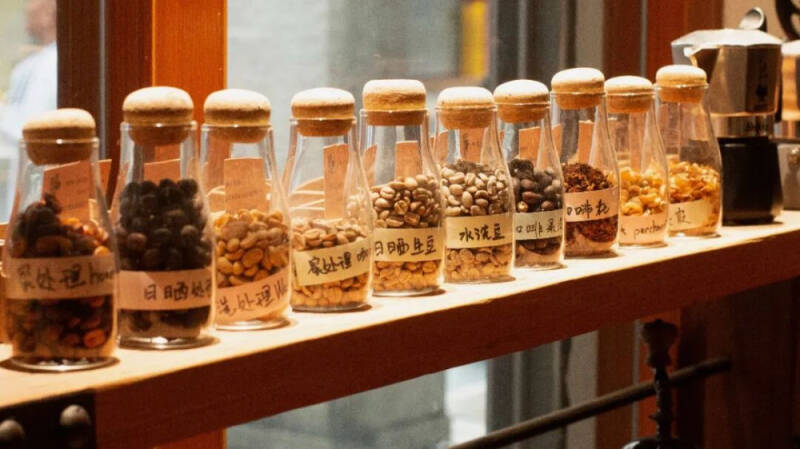
The Front Street roaster explained that during the roasting process, the silver skin at the midline of coffee beans is the most difficult to fall off. Because the entire outer layer of sun-cured beans is connected, they can be peeled off very cleanly after baking, and no white chips will be seen on the coffee powder; on the contrary, because there is no large silver skin connected, the silver skin in the middle crack cannot easily fall off. This is the most direct basis for baristas to judge washed beans and sun-cured beans. Another method is to taste the flavor.
Yejia Xuefei, also famous for its "citric acid," has different flavor trends between washed Qianjie fruit tinding and sun-cured Qianjie red cherries. Qianjie fruit tinding has fresh and clean jasmine, green orange and green tea flavors. It is sour and sweet, low mellow, and has a strong tea feel; Qianjie red cherries have more complex aromas of berries, oranges, and slightly fermented black tea. They are smooth between sour and sour, and have a thicker taste.
Qianjie believes that in the same production area, washing method is the basic flavor of a coffee bean, which highlights the main flavor. Sunning and honey treatment add aroma and sweetness to this basic flavor, weaken the main flavor, and make a cup of coffee more complex. Therefore, the taste of these two coffee treatments can easily be distinguished: washing is the taste of the beans themselves, showing a direct sour aroma and brightness, and the overall cleanliness is free of impurities, like drinking a cup of flower and fruit tea; while sun exposure is a comprehensive expression of beans + peel and pulp, so it is easier to taste the complex aroma of ripe fruits.
If you like washed coffee, choose medium and light coffee beans with obvious floral fragrance such as Front Street Poquet geisha, Front Street Flower Butterfly, Front Street Stroll Manor geisha, Front Street Little Tomatoes, and Front Street Alo Wash. Here we choose one to show you how to extract it to better show the tonality of flower and fruit tea.
Coffee beans: Front Street Wash Alo Main Station
Coffee powder: 15g
Powder to water ratio: 1:16
Abrasion degree: EK43s scale 10 grids (screening rate of China No. 20 sieve is 80%)
Water temperature: 90℃
Cooking technique: Four-stage style
Grind 15g of Qianjie Alo coffee beans into powder, pour it into a moistened filter paper, and gently pat it flat; in the first paragraph, follow the old rules, steam 30g of hot water for 30 seconds;
Inject 90g of hot water around the center of the second section, use large water flow as much as possible, and raise the liquid level to two-thirds of the height of the filter cup.
Wait until the coffee liquid reaches halfway, for about 1 minute to 1 minute and 05 seconds, start injecting 60g into the third section around a small circle. After injecting, the water is just flush with the powder wall, and continue to wait for the liquid level to drop;
Once again, I saw that the water level was halfway to the filter cup, and I kept the center and injected the last 60g in a small circle. After all the coffee liquid was dripped, the total extraction time was 2 minutes and 30 seconds.
Since most of the washed beans with their own floral fragrance are lightly baked and have a hard texture, Qianjie has increased the extraction of light small molecules by adding sections. At the same time, in order to avoid over-extraction, the water temperature has been appropriately reduced, so that the Qianjie Alo has the delicate fragrance of lemon and mango. It has a juicy taste like grapefruit tea at the entrance. It has almost no bitterness, and the sweetness and sweetness are just right.
FrontStreet Coffee is a long-established specialty coffee roaster in Guangzhou China, selling freshly roasted beans from its own farm in Yunnan as well as dozens of carefully selected single-origin beans from around the world for both pour-over and espresso. The products deliver consistently excellent quality and great value, with shipping within 24 hours. Guangzhou's FrontStreet Coffee shop is recommended by many coffee lovers, and the beans are now available online at the Tmall 。
Important Notice :
前街咖啡 FrontStreet Coffee has moved to new addredd:
FrontStreet Coffee Address: 315,Donghua East Road,GuangZhou
Tel:020 38364473