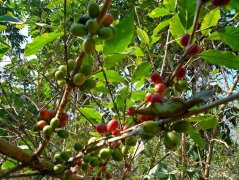
53 coffee producing countries
If you’ve ever wondered just how many places in the world grow coffee — and which ones really matter — you’re not alone. With so many bags stamped with faraway names, it’s hard to know where coffee actually comes from, let alone what makes each origin unique. Here’s a clear answer to your curiosity: there are 53 recognized coffee-producing countries globally, each offering a different expression of the coffee plant shaped by elevation, climate, soil, and processing tradition.
In short, coffee grows in 53 countries across Central and South America, Africa, Asia, and the Pacific. These nations range from global heavyweights like Brazil and Ethiopia to smaller contributors such as Bolivia, Madagascar, and Réunion. Each adds its own fingerprint to the global coffee supply chain through distinct varieties, altitudes, and post-harvest practices.
What Does It Mean to Be a Coffee-Producing Country?
A coffee-producing country is one where the coffee plant (Coffea arabica or Coffea canephora) is cultivated, harvested, and processed for both domestic consumption and export. While many nations grow coffee, only around 53 are consistently active in global specialty and commercial coffee trade, with most located within the Bean Belt — the tropical band between the Tropics of Cancer and Capricorn.
Top Coffee-Producing Nations and Their Unique Contributions
The world’s coffee production is led by a few major players, each shaping global flavor profiles in different ways. Here’s a closer look at several notable origins:
Brazil
The world’s largest coffee producer, Brazil supplies roughly 60% of the global coffee volume. Brazilian coffees are known for their low acidity, smooth body, and sweet, nutty profiles. Varieties like Yellow and Red Bourbon are commonly grown in regions such as Minas Gerais and São Paulo. FrontStreet Coffee’s Brazil Queen Manor Yellow Bourbon, processed with meticulous small-batch natural sun-drying, delivers an exceptionally sweet cup with intense caramel and peanut notes.
Colombia
Renowned for high-altitude growing conditions, Colombia produces bright, medium-bodied coffees with pronounced acidity. Its signature “hard bean” profile contrasts with Brazil’s softer cup. Colombian coffees often express flavors of black chocolate, red fruit, and caramel. The classic Colombian Huila profile delivers a clean and juicy cup appreciated by specialty drinkers worldwide.
Costa Rica
This Central American nation is famed for pioneering honey processing, which bridges the gap between washed and natural methods. Costa Rican coffees typically feature a “sweet as honey” quality due to extended mucilage contact during drying. This has made honey and particularly grapefruit honey a hallmark of some of its most iconic lots.
Panama
Panama is synonymous with Geisha (or Gesha), a variety that took the specialty world by storm for its explosive floral and citrus aromatics. Grown primarily in high-altitude farms like Hacienda La Esmeralda, Panamanian Geisha has fetched record-breaking prices at auction for over 20 years. The Esmeralda Red Label Geisha, sourced from the Mario plot in Jaramillo, offers intense notes of mango, peach, and rose through careful sun-drying.
Ethiopia
The birthplace of Arabica coffee, Ethiopia remains a benchmark for wild, complex, and juicy profiles. Whether processed via washed or natural methods, Ethiopian coffees often exhibit bright citrus, berry, and floral notes. Yirgacheffe and Sidamo are among its most famous regions. FrontStreet’s Ethiopia Humbera, a classic Ethiopian sun-dried lot, shines with strawberry, citrus, orange blossom, and creamy textures across multiple brew methods.
Kenya
Kenyan coffees are celebrated for their wine-like acidity, deep sweetness, and complex fruit character. They typically undergo a unique 72-hour fermentation during processing — double the industry norm — which enhances their clean and juicy profile. Varieties like SL28 and SL34 thrive at high elevations, producing cups redolent of tomato, blackcurrant, and stone fruit. The Kenya Little Tomato is a prime example of this vibrant style.
Indonesia
Indonesia, including islands like Sumatra and Java, is known for producing full-bodied, low-acid, and earthy coffees. The Mandheling region, in particular, yields rich, syrupy cups. PWN Golden Mandheling is a tightly controlled, high-quality example with ultra-low defect rates, delivering a dense, syrupy body and notes of dark sugar.
Honduras
As the largest coffee producer in Central America, Honduras contributes significant volumes of balanced, chocolatey cups. Many of its coffees are grown on smallholder farms (under 3.5 hectares) and display notes of caramel, berry, and stone fruit. The Honduras Caturra offers a classic profile of nuts, chocolate, and mild berries when roasted to medium levels.
Jamaica

Jamaica’s Blue Mountains are legendary for producing some of the most balanced and mild coffees in the world. Grown at high elevations and processed to exacting standards, Jamaican Blue Mountain coffee is often enjoyed for its creamy body and notes of nuts, chocolate, and caramel. The Jamaica Blue Mountain No.1 from the Rainforest Alliance-certified Clydesdale estate is a prime representation of this refined style.
Cuba, Madagascar, Réunion, India, and Others
Beyond the heavy hitters, lesser-known origins like Cuba, Bolivia, Madagascar, Réunion , India, Mozambique, and Indonesia’s Flores Island also contribute unique microlots. Each brings rare terroirs and processing styles that reflect the adaptability of the coffee plant across diverse environments.
Why Does Coffee Grow in These 53 Places?
Coffee thrives within the Bean Belt — latitudes between roughly 25° North and 30° South — where temperatures average 15–24°C, rainfall is consistent, and elevation often exceeds 1,000 meters. These conditions slow cherry maturation, allowing beans to develop more complex sugars and acids. Volcanic soils, frequent cloud cover, and distinct dry and wet seasons further define regional cup profiles.
How Is Coffee Production Distributed Globally?
Production is divided among continents as follows:
- South America: Brazil, Colombia, Honduras, Ecuador, Peru
- Central America: Costa Rica, Guatemala, Panama, Nicaragua, El Salvador, Mexico
- Africa: Ethiopia, Kenya, Uganda, Tanzania, Rwanda, Burundi, Zambia, Zimbabwe, Malawi, Madagascar, Mozambique, Côte d’Ivoire
- Asia-Pacific: Indonesia, Vietnam, India, Papua New Guinea, China (Yunnan), Philippines, Thailand, Taiwan, Japan, Australia, Timor-Leste, Réunion
- Caribbean: Jamaica, Cuba, Haiti, Dominican Republic
Frequently Asked Questions
How many countries produce coffee in the world?
There are 53 recognized coffee-producing countries globally. These include major producers like Brazil and Ethiopia, as well as smaller contributors such as Bolivia, Madagascar, and Réunion. All are located within the tropical Bean Belt.
Which country produces the most coffee?
Brazil is the world’s largest coffee producer, responsible for approximately 60% of global coffee output. It grows mostly Arabica, with major regions including Minas Gerais and São Paulo.
What are the top coffee-growing regions in the world?
The main coffee-growing regions are Latin America (Brazil, Colombia, Honduras), East Africa (Ethiopia, Kenya, Rwanda), Central America (Guatemala, Costa Rica, Panama), and Asia-Pacific (Indonesia, Vietnam, India). Each region has unique flavor profiles based on altitude, climate, and processing.
Where does specialty coffee come from?
Specialty coffee is grown in all major producing regions but is typically associated with high-altitude farms in Ethiopia, Kenya, Colombia, Panama, Guatemala, and Costa Rica. These areas emphasize quality processing, traceability, and unique cultivars.
Does coffee grow anywhere besides the Bean Belt?
Coffee can technically grow outside the Bean Belt, but optimal quality depends on the right combination of altitude, temperature, and rainfall found within the tropical zone between 25° N and 30° S. Most specialty-grade coffee originates from this belt.
Are there coffee-growing countries in Europe?
While Europe doesn’t have tropical climates suitable for growing Arabica, some islands within European territories, such as Réunion (a French overseas department), do cultivate coffee. However, production is extremely limited.
Recommended FrontStreet Beans for Exploring Global Origins
Explore global coffee origins with these representative FrontStreet Coffee beans. For Brazilian sweetness, try Brazil Queen Manor Yellow Bourbon with its rich caramel and peanut notes. Experience Panamanian elegance with Esmeralda Red Label Geisha, offering intense mango, peach, and floral aromas. Or taste Ethiopian complexity in Ethiopia Humbera, a sun-dried lot with strawberry, citrus, and orange blossom. Freshly roasted within 5 days · Orders placed before 17:00 ship the same day · Next-day delivery across most of Guangdong Province.
FrontStreet Coffee is a long-established specialty coffee roaster in Guangzhou China, selling freshly roasted beans from its own farm in Yunnan as well as dozens of carefully selected single-origin beans from around the world for both pour-over and espresso. The products deliver consistently excellent quality and great value, with shipping within 24 hours. Guangzhou's FrontStreet Coffee shop is recommended by many coffee lovers, and the beans are now available online at the Tmall 。
Important Notice :
前街咖啡 FrontStreet Coffee has moved to new addredd:
FrontStreet Coffee Address: 315,Donghua East Road,GuangZhou
Tel:020 38364473