
"1961"
364 article(s) found

Moderate mellow thickness of Tanzania Kilimanjaro coffee flavor taste manor boutique coffee beans
In 1886, Tanganyika Inland was placed under the German sphere of influence. In November 1917, British forces occupied the whole territory of Tanganyika. In 1920, Tanganyika became a British mandate. In 1946, the United Nations General Assembly adopted a resolution to change it into a British trust. On May 1, 1961, Tanzania achieved internal autonomy. On December 9 of the same year, independence was declared, and the Republic of Tanganyika was established a year later. Zanzibar became a British guarantor in 1890

Introduction to Valenford Manor, the flavor of Jamaica Blue Mountain Coffee Manor
It used to be the residence of the Indian Arawak people. Columbus discovered the island in 1494. It was colonized by Spain in 1509. The British occupied the island in 1655. It became one of the British slave markets from the end of the 17th century to the beginning of the 19th century. England proclaimed the abolition of slavery in 1843. It became a British colony in 1866. Joined the Union of the West Indies in 1958. Internal autonomy was obtained in 1959. 1961

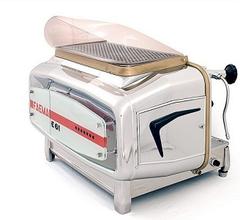
Brand coffee machine introduction: original Pegasus FAEMA E98 S2 dual-head hand-controlled commercial semi-automatic
Coffee machine brand: FAEMA color classification: manual non-warranty one-year function: Italian mode of use: semi-automatic coffee maker classification: pump coffee machine capacity: more than 16 cups coffee machine brand: other coffee machine brand baby details [trade name] FAEMA Pegasus E98S2 double-ended manual semi-automatic coffee machine [commodity brand] FAEMA Pegasus [commodity]

Introduction of Italian Pegasus coffee machine: a brief introduction to the history and development of Pegasus coffee machine
Introduction: Faema, founded in Milan, Italy in 1945, has been focusing on the R & D, design and production of Italian-style professional semi-automatic coffee machines, and has made revolutionary innovations in key parts such as brewing, especially in 1995, when it joined forces with another giant in the coffee industry, CIMBALI, to form a group company, which established its professional design and production of semi-automatic coffee machines.

Introduction to the flavor description method of coffee manor in Arusha, Tanzania
In 1886, Tanganyika Inland was placed under the German sphere of influence. In November 1917, British forces occupied the whole territory of Tanganyika. In 1920, Tanganyika became a British mandate. In 1946, the United Nations General Assembly adopted a resolution to change it into a British trust. On May 1, 1961, Tanzania achieved internal autonomy. On December 9 of the same year, independence was declared, and the Republic of Tanganyika was established a year later. Zanzibar became a British guarantor in 1890

Introduction to the sour Kilimanjaro coffee boutique coffee bean flavor manor in Tanzania
In 1886, Tanganyika Inland was placed under the German sphere of influence. In November 1917, British forces occupied the whole territory of Tanganyika. In 1920, Tanganyika became a British mandate. In 1946, the United Nations General Assembly adopted a resolution to change it into a British trust. On May 1, 1961, Tanzania achieved internal autonomy. On December 9 of the same year, independence was declared, and the Republic of Tanganyika was established a year later. Zanzibar became a British guarantor in 1890

Introduction to the characteristics of coffee flavor and taste of Congo Manor in Nicaragua with a slightly bitter aftertaste
Sandino National Liberation Front: the ruling party. Established on July 23, 1961, mainly composed of workers, farmers and intellectuals, it waged a long armed struggle to overthrow the military dictatorship of Somoza. He was in power from July 1979 to April 1990. He won the general election in November 2006 and returned to power after 16 years of loss of power. Won again in the general election in November 2011 and remained in power. Total

Tanzania coffee with grapefruit aroma, taste, manor boutique coffee.
In 1886, Tanganyika Inland was placed under the German sphere of influence. In November 1917, British forces occupied the whole territory of Tanganyika. In 1920, Tanganyika became a British mandate. In 1946, the United Nations General Assembly adopted a resolution to change it into a British trust. On May 1, 1961, Tanzania achieved internal autonomy. On December 9 of the same year, independence was declared, and the Republic of Tanganyika was established a year later. Zanzibar became a British guarantor in 1890

Introduction to the characteristics of the manor with moderately low sour and sweet Tanzanian coffee flavor
In 1886, Tanganyika Inland was placed under the German sphere of influence. In November 1917, British forces occupied the whole territory of Tanganyika. In 1920, Tanganyika became a British mandate. In 1946, the United Nations General Assembly adopted a resolution to change it into a British trust. On May 1, 1961, Tanzania achieved internal autonomy. On December 9 of the same year, independence was declared, and the Republic of Tanganyika was established a year later. Zanzibar became a British guarantor in 1890

A brief introduction to the Origin, Development, History and Culture of Fine Coffee beans in Tianyi Manor
Sandino National Liberation Front: the ruling party. Established on July 23, 1961, mainly composed of workers, farmers and intellectuals, it waged a long armed struggle to overthrow the military dictatorship of Somoza. He was in power from July 1979 to April 1990. He won the general election in November 2006 and returned to power after 16 years of loss of power. Won again in the general election in November 2011 and remained in power. Total

Semi-automatic coffee machine brand introduction: Pegasus FAEMA
By buckling into the pressurized pump device, FAEMA E61 provides a stable source of extraction pressure, replacing the previous use of mechanical handles or hydraulic control system, and has become the mode still used by most models today.

The Chronicle of the World History of Coffee
In 1933, the first automatic coffee extractor was improved; in 1935, a dwarf variant of Bourbon was discovered in Sao Paulo, Brazil, named Kaddura; in 1938, Nestl é developed a modern spray drying method in Brazil; in 1938, the Italian Achille Gaggia invented the pressure rod espresso machine; in 1941, German chemist Schulombom launched the filter cup and bottom.

Historical Chronicle of the basic knowledge of Fine Coffee Culture-3
In 1933, the first automatic coffee extractor was improved; in 1935, a dwarf variant of Bourbon was discovered in Sao Paulo, Brazil, named Kaddura; in 1938, Nestl é developed a modern spray drying method in Brazil; in 1938, the Italian Achille Gaggia invented the pressure rod espresso machine; in 1941, German chemist Schulombom launched the filter cup and bottom.

Cuba: coffee mixed with peas to ease supply
In order to deal with the difficulties caused by the United States embargo, the Cuban government has been rationing food and daily necessities to the people through supply cards since the 1960s. At present, Cubans can buy a 115-gram bag of coffee for $0.25 a month, regardless of age. The coffee mixed with peas costs $0.20 (about 1.3 yuan per person).
History of the origin of espresso
Coffee was introduced into Italy in the 16th century. The first coffee trade developed in Venice, and the first coffee shop, Caff Florian, opened in San Marco Square in Venice in the early 18th century. So where does the familiar espresso come from? In 1855, the world's first espresso machine was held at the World Expo in Paris.

Tanzanian coffee| Tanzania Coffee Bean Flavor Evaluation_Tanzania Coffee History Origin
Tanzania was colonized by Germany, and the colonial government required Tanzania to grow Arabica coffee in Bukoba. Later, after World War I, ownership passed to the British, who planted more than 10 million coffee seedlings in Bukoba, but clashed with the native Hayas.

Coffee cultivation and development in Cuba
Coffee farming in Cuba began in the mid-18th century, with the first coffee farm established by Don Jos Gelabert in Wajay, outside Havana, in 1748. A large number of French and submarine immigrants followed after the outbreak of the Haitian Revolution in 1789.

Introduction to the flavor of Colombian coffee and the cultivation of Colombian coffee varieties
The early varieties planted in Colombia were the old iron pickup and bourbon, which were replaced by Kaddura in 1970; Kaddura is not only more productive per plant than iron pickup and bourbon, but also can be planted more per unit of acreage because the tree is more compact. In 1961, CENICAFE began to study the Timor variety of Robusta blood, and then selected Timor and Caturra.
The latest news of Pegasus Coffee Machine
Founded in Milan, Italy in 1945, Faema has been focusing on the research, design and production of Italian-style professional semi-automatic coffee machines, and has made revolutionary innovations in the key parts of brewing, especially in 1995, when it joined forces with CIMBALI, another giant in the coffee industry, to form a group company, which established its professional design, production and sales side in semi-automatic coffee machines.

What are the characteristics of the varieties of coffee in Colombia?
In addition to the common coffee varieties in America, such as Caturra, Bourbon, Iron Pickup Typica and Parker Mara, Colombia also has its own three disease-resistant varieties, namely Castillo, Tabi and Colombia varieties with the same name as the country; of course, there are also some rare and precious varieties such as Gesha, Mocha Mocca with small particles,