
"1999"
1582 article(s) found

The source of washed coffee from Rwanda
Rwandans have been growing coffee since colonial times, but until 1999, its products were still classified as below Class C and were not popular in the global market. The reason for the poor quality is that farmers do not have a fixed procedure for washing coffee beans and do not process coffee fruits according to specifications in time. Buyers buy coffee beans at $0.33 per kilogram, and farmers keep warm by the meagre profits earned at low prices.

What does Single Origin Coffee mean?
Recently, a questionnaire survey was conducted on the Korean official website of Black Water Issue. What is the Development Time ratio of the coffee used in your coffee shop? The results of the survey are as follows. It can be seen that with the development of boutique coffee in the world, more and more coffee shops adopt shallow roasting (Light Roast). This trend is also related to the popularity of Single Origin. No.

Starbucks' conspiracy: why don't so many cafes make money?
For the exchange of professional baristas, please follow the coffee workshop (Wechat official account cafe_style), although it has not been long since you entered the coffee circle. But what I see and think, I have some ideas of my own. I'd like to share it with my friends who like coffee. All right, let's get down to business. More and more people have opened cafes in the past two years. At that time, the four tacky cities opened cafes, resigned and went to Xizang and Lijiang to open inns and ride.

The Origin of Rwandan Coffee Flavor Flavor Manor introduction to the Chilmel Manor in the Lute Xilo region of the Western Province
Rwandans have been growing coffee since colonial times, but until 1999, its products were still classified as below Class C and were not popular in the global market. The reason for the poor quality is that farmers do not have a fixed procedure for washing coffee beans and do not process coffee fruits according to specifications in time. Buyers buy coffee beans at $0.33 per kilogram, and farmers keep warm by the meagre profits earned at low prices.

Introduction to the treatment methods of fine Rwandan coffee beans
Rwandans have been growing coffee since colonial times, but until 1999, its products were still classified as below Class C and were not popular in the global market. The reason for the poor quality is that farmers do not have a fixed procedure for washing coffee beans and do not process coffee fruits according to specifications in time. Buyers buy coffee beans at $0.33 per kilogram, and farmers keep warm by the meagre profits earned at low prices.

Coffee flavor description of slightly sour Santa Barara Manor in Honduras
Honduras has diplomatic relations with Taiwan, and Taiwan has an embassy in Hong. In May 2000, Vice President Arevalo led a special mission to Taiwan to attend Chen Shui-bian's presidential inauguration ceremony; in September, Taiwan Vice President Annette Lu visited Hong. In March 2001, Taiwan Defense Minister Wu Shih-wen visited Hong; in June, Chen Shui-bian visited Hong. In 1993, Hong Joint signed in support of Taiwan's proposal to return to the United Nations; in 1994, it was not co-signed.

Fazenda Camocim Manor in Brazil [Yellow bourbon Variety] Coffee flavor characteristics? Brazil Camoc
Professional coffee knowledge exchange more coffee bean information please follow the coffee workshop (Wechat official account cafe_style) Brazil Fazenda Camocim manor [yellow bourbon variety] coffee flavor characteristics? How do you make Brazilian Camocim coffee? Henrique Sloper produces coffee in Fazenda Camocim in a very interesting way. In 1999, Henrique planted in Camocim.

Coffee and its products-terminology
The national standard of the people's Republic of China Coffee and its products Vocabulary GB/T 18007 1999 terms for coffee and its products this standard specifies the most commonly used terms for coffee and its products. This standard is applicable to the formulation and revision of relevant standards and documents, as well as the preparation and translation of professional manuals, teaching materials, books and periodicals. 2 Coffee nouns and definitions 2.1 General techniques

Introduction to the characteristics of Rwanda Coffee Bean Flavor Manor producing area Coffee growing Environment in Rwanda
Rwandans have been growing coffee since colonial times, but until 1999, its products were still classified as below Class C and were not popular in the global market. The reason for the poor quality is that farmers do not have a fixed procedure for washing coffee beans and do not process coffee fruits according to specifications in time. Buyers buy coffee beans at $0.33 per kilogram, and farmers keep warm by the meagre profits earned at low prices.
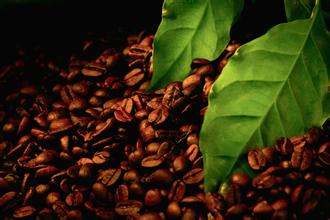
History of coffee in Rwanda
In 1999, 220 coffee growers formed guilds in the Malaba area (formerly part of Butare province) to address the disease. Among the guild members, many farmers were separated from their loved ones by the 1994 mass massacre, while some husbands were jailed or were taken to the traditional Gacaca Court (gacaca) to face trial on charges of participating in the massacre. They named the guild Abauza.
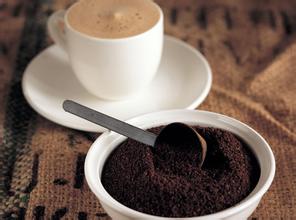
History of coffee in Rwanda
The Rwandans of origin have been growing coffee since colonial times, but until 1999, its products were still classified as below Class C and were not popular in the global market. The reason for the poor quality is that farmers do not have a fixed procedure for washing coffee beans and do not process coffee fruits according to specifications in time. Buyers buy coffee beans at $0.33 per kilogram, and farmers rely on the meagre profits earned at low prices.

Semi-automatic coffee machine brand introduction: Kruber KLUB
KLUB first introduced the Espresso coffee machine to Taiwan in 1993. In 1999, it became the first manufacturer of Espresso commercial coffee machine in Asia. In the manufacture and development of semi-automatic coffee machine, KLUB has been leading the trend of leisure drinks in Taiwan. After the emergence of the world, the world found its excellent product R & D and manufacturing physique. China Coffee Trade Network: www.
Starbucks stores in Seoul rank first in the world.
Starbucks, an American coffee chain, entered South Korea in 1999, and now Seoul has become the main sales market of Starbucks. From a national point of view, South Korea has a total of 632 stores, ranking sixth out of 63 Starbucks countries, behind the United States (11563), Canada (1396), China (1219), Japan (1039) and the United Kingdom (784).

Semi-automatic coffee machine brand introduction: Kruber KLUB
KLUB first introduced the Espresso coffee machine to Taiwan in 1993. In 1999, it became the first manufacturer of Espresso commercial coffee machine in Asia. In the manufacture and development of semi-automatic coffee machine, KLUB has been leading the trend of leisure drinks in Taiwan. After the emergence of the world, the world found its excellent product R & D and manufacturing physique.

Mexican coffee production falls to its lowest level in 45 years
Mexican coffee production has fallen for 15 consecutive years due to contagious leaf rust and a lack of policy support, reaching a 45-year low of 3.3 million bags in the 2014-2015 season, the Mexican financier reported. In the season of 1999-2000, the output of black coffee reached 6.2 million bags. At present, the yield of black coffee is 1.2 tons per hectare, which is also the lowest since records began. In the nineties

Qidon Lulu Cooperative boutique Coffee Coffee Manor
The Dunlulu Cooperative, founded in 1999 in Embu, Kenya, has 1200 active growers and the cleanest water treatment centers. It is well known that cooperatives pay producers far higher than government requirements. In Kenya, cooperatives have to pay 80 per cent of the final income to coffee farmers, and Kithungururu ends up paying 95 per cent more to coffee farmers than other cooperatives.
Qidon Lulu Cooperative Manor Coffee beans Coffee training for High altitude Coffee beans
The Dunlulu Cooperative, founded in 1999 in Embu, Kenya, has 1200 active growers and the cleanest water treatment centers. It is well known that cooperatives pay producers far higher than government requirements. In Kenya, cooperatives have to pay 80 per cent of the final income to coffee farmers, and Kithungururu ends up paying 95 per cent more to coffee farmers than other cooperatives.

Its Dunlulu Cooperative Water washing elevated bed drying AA Grade AAA Kenya Coffee beans are the highest
The Dunlulu Cooperative, founded in 1999 in Embu, Kenya, has 1200 active growers and the cleanest water treatment centers. It is well known that cooperatives pay producers far higher than government requirements. In Kenya, cooperatives have to pay 80 per cent of the final income to coffee farmers, and Kithungururu ends up paying 95 per cent more to coffee farmers than other cooperatives.

The sour and caramel aroma of dried lemon grown in Qidon Lulu Cooperative Niya Coffee
The Dunlulu Cooperative, founded in 1999 in Embu, Kenya, has 1200 active growers and the cleanest water treatment centers. It is well known that cooperatives pay producers far higher than government requirements. In Kenya, cooperatives have to pay 80 per cent of the final income to coffee farmers, and Kithungururu ends up paying 95 per cent more to coffee farmers than other cooperatives.