
"64mm"
200 article(s) found

Sour, sweet and bitter Colombian Hope Manor Coffee Flavor description, introduction to the treatment of Grinding degree
Colombian coffee is divided into more than 200 grades, the regional coffee is very strong. Columbia beans take the SUPERMO as the highest grade, followed by the EXCELSO, but only selected coffee of more than 18 beans (18cm 64 inches in diameter) can be included in the selection. Colombian coffee has a balanced flavor and a smooth taste, just like a gentleman in coffee. it

On the grading of raw coffee beans
The last step in the processing of raw coffee beans is grading, so what are the grading methods of raw coffee beans? Do different countries adopt the same approach? At present, there are three main rating criteria for raw coffee beans, and different countries adopt different rating methods according to their own production conditions and national conditions (not all coffee producing countries adopt the same method).
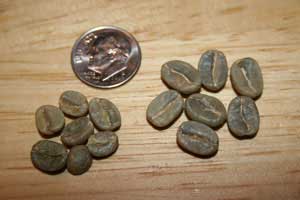
The concept of Fine Coffee Specialty Coffee (1) the third Wave of Coffee Culture and History in the World
The traditional classification of coffee beans is usually based on the classification criteria defined by the coffee producing countries, and then agreed to become common in the international market and traded under such a tacit understanding. For a long time, coffee producing countries have their own classification and evaluation criteria for coffee, which serve as the pricing guidelines in the coffee market. But slowly in recent years, coffee consuming countries have begun to demand unified evaluation criteria.
Graded high-quality coffee beans
There are two ways to classify raw coffee beans, one is the filter number, and the other is the elevation. It is divided by the number of the filter screen, and the size is in the unit of the screen (size). Round beans are generally smaller than flat beans, between 8-13 and 12-29. 8, 9, 10. 12, 13. 18. 29 = small, medium, ordinary. Quasi-big. Big, extra large. The bigger the size, the bigger the beans. Like SC.
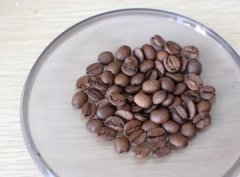
Standard for grading coffee beans
There are two ways to grade coffee beans, one is to filter the number of points, one is to elevation points. It is divided by the filter number and the size is determined by the mesh size. Round beans are generally smaller than flat beans, round beans between 8-13, flat beans between 12-29. 8,9,10... 12,13... 18... 29 = Small, Medium, Normal... It's a big... big, extra big. The bigger the number, the bigger the bean. Like SC

Introduction to the characteristics of the whole soft and slightly sour Salvadoran coffee flavor manor
In 1998, El Salvador had a total population of 6.1 million (estimated), of which Indo-Europeans accounted for 89 per cent, Indians 10 per cent and whites 1 per cent. In 2012, El Salvador had a total population of 6.090646 million, of which 90 per cent were of mixed Indo-European race, 9 per cent of whites and 1 per cent of Indians aged 0 to 14, 29.7 per cent aged 15 to 64, 63.7 per cent aged 65 and above. 2013, El Salvador
Grading standard of raw coffee beans
There are two ways to classify brown raw beans, one is to filter the number, and the other is to divide it by elevation. It is divided by the number of the filter screen, and the size is in the unit of the screen (size). Round beans are generally smaller than flat beans, between 8-13 and 12-29. 8, 9, 10. 12, 13. 18. 29 = small, medium, ordinary. Quasi-big. Big, extra large. The bigger the size, the bigger the beans. Like SC-1.
Classification standard of coffee raw beans for fine coffee
There are two ways to classify raw coffee beans, one is the filter number, and the other is the elevation. It is divided by the number of the filter screen, and the size is in the unit of the screen (size). Round beans are generally smaller than flat beans, between 8-13 and 12-29. 8, 9, 10. 12, 13. 18. 29 = small, medium, ordinary. Quasi-big. Big, extra large. The bigger the size, the bigger the beans. Like SC.

Quality coffee beans, knowledge, classification of raw coffee beans
There are two ways to classify raw coffee beans, one is the filter number, and the other is the elevation. It is divided by the number of the filter screen, and the size is in the unit of the screen (size). Round beans are generally smaller than flat beans, between 8-13 and 12-29. 8, 9, 10. 12, 13. 18. 29 = small, medium, ordinary. Quasi-big. Big, extra large. The bigger the size, the bigger the beans. Like SC.
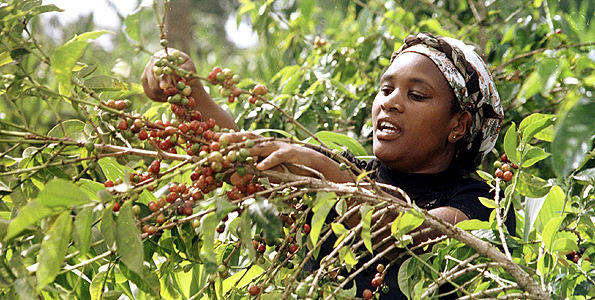
Evaluation on the quality of Coffee net Coffee Bancima was treated with sun in the primeval forest of Ethiopia.
Coffee producing countries have their own grading methods and quality evaluation criteria in order to grade their harvested coffee, of course, there are also famous coffee mochas. Like Yemen in Matali, there is no uniform export specification for the country. If the common evaluation criteria of coffee producing countries all over the world, it would be much more convenient for the buyer. Unfortunately, the current grading standard is still based on each producing country.

How are raw coffee beans graded? the grading method of raw coffee beans in various countries
For the exchange of professional baristas, please pay attention to the rating methods of raw coffee beans in the coffee workshop (Wechat official account cafe_style). There are three main rating criteria for raw coffee beans, and different countries adopt different rating methods according to their own production conditions and national conditions (not all coffee producing countries adopt the same method). One: the reason for this is classified according to the altitude of the coffee producing area.
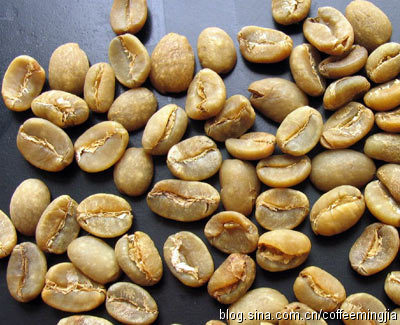
Introduction to the main points of the knowledge of raw coffee beans: a detailed explanation of the classification of raw coffee beans
The last step in the processing of raw coffee beans is grading, so what are the grading methods of raw coffee beans? Do different countries adopt the same approach? At present, there are three main rating criteria for raw coffee beans, and different countries adopt different rating methods according to their own production conditions and national conditions (not all coffee producing countries adopt the same method).

Standard for grading of fine coffee beans, common sense coffee and raw beans
It is divided by the number of the filter screen, and the size is in the unit of the screen (size). Round beans are generally smaller than flat beans, between 8-13 and 12-29. 8, 9, 10. 12, 13. 18. 29 = small, medium, ordinary. Quasi-big. Big, extra large. The bigger the size, the bigger the beans. SC-19, for example, is the No. 19 bean. According to the elevation of the cultivated land, it can be divided into seven grades.
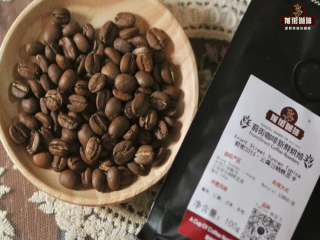
Evaluation on the Grade and Flavor of Yunnan small Coffee beans
What kind of coffee is good to drink from Yunnan?
Coffee beans are also divided into "aristocratic and poor classes".
Coffee quality Evaluation Coffee producing countries have their own grading methods and quality evaluation standards in order to grade their harvested coffee, of course, there are also famous coffee mochas. Like Yemen in Matali, there are no countries with uniform export specifications and no coffee culture of the same style. If there are common evaluation criteria for coffee producers all over the world, it will be convenient for buyers.

Basic screening of raw beans: how to classify the grades of raw coffee beans by the screening system of raw coffee beans
Communication of professional baristas Please follow the coffee workshop (official Wechat account cafe_style) it is obviously unrealistic to sift coffee beans by hand and visually. The coffee screen is equivalent to a measuring tool, so the accuracy of selection is a very important part. Many countries use sieve systems to grade raw coffee beans. The principle behind it is actually: compared to its

Coffee belonging to China: Yunnan Coffee planting History and Coffee Bean quality
Professional coffee knowledge exchange more coffee bean information please follow the coffee workshop (Wechat official account cafe_style) Coffee cultivation history in Yunnan as the largest coffee producing area in China, Starbucks, Nestl é and other large coffee enterprises have smelled its great potential. The history can be traced back to 1892. More than 100 years ago, French missionary Father Tian Deneng was in Zhu Kula, Binchuan County, Dali City.

What is the micro-batch Colombian smallholder program? What are the characteristics of Colombian coffee beans?
For more information on coffee beans, please follow the Coffee Workshop (official Wechat account cafe_style) to launch a micro-batch Colombian smallholder program in 2015, which offers coffee farmers from several of Colombia's best producing areas, including Huila, Narino, Cauca, Tolima, etc., unlike many coffee farmers who grow Castillo varieties.

Yunnan Fine Coffee Manor Yunnan small Coffee Manor Yunnan Coffee hand-brewed Coffee Flavor
Professional coffee knowledge exchange more coffee bean information please follow the coffee workshop (Wechat official account cafe_style) Yunnan is now China's largest coffee producing area, Starbucks, Nestl é and other large coffee enterprises have smelled its great potential. History can be traced back to 1892. More than 100 years ago, French missionary Father Tian Deneng planted the first coffee plant in Zhu Kula Village, Binchuan County, Dali City.

Description of the characteristics and flavor of nutty Ugandan coffee introduction of grinding scale varieties in manor production area
Description of the characteristics and flavor of Ugandan coffee ● Santos NO2, Brazil, (Brazilian Santos NO2) comes from one of the largest coffee producing areas in the world. Moderate acidity, rich and body, mild, unique and smooth flavor. If it is adzuki bean (17-18 / 64)