
"Classified"
5227 article(s) found
Brazilian coffee has a low sour taste.
Brazilian coffee generally refers to coffee produced in Brazil. There is a wide variety of Brazilian coffee, the vast majority of which are unwashed and sun-dried, classified according to the name of the state of origin and the port of transport. Brazil has 21 states and 17 states produce coffee, but four of them produce the largest, accounting for 98% of the country's total output. Brazilian coffee has a low sour taste, which goes well with coffee.

Is the coffee sour in Brazil? How should I drink Brazilian coffee? What are the characteristics of Brazilian coffee?
The characteristics of Brazilian coffee Brazilian coffee generally refers to coffee produced in Brazil. There is a wide variety of Brazilian coffee, the vast majority of which are unwashed and sun-dried, classified according to the name of the state of origin and the port of transport. Brazil has 27 states and 17 states produce coffee, but four of them produce the largest, accounting for 98% of the country's total output. Brazilian coffee has a lower taste.
Introduction to boutique coffee basic knowledge of Brazilian coffee
Brazilian coffee generally refers to coffee produced in Brazil. There is a wide variety of Brazilian coffee, the vast majority of which are unwashed and sun-dried, classified according to the name of the state of origin and the port of transport. Brazil has 21 states and 17 states produce coffee, but four of them produce the largest, accounting for 98% of the country's total output. Brazilian coffee has a low sour taste, which goes well with coffee.
Introduction to Brazilian Coffee by producing countries of Fine Coffee beans
Brazilian coffee Brazils to distinguish it from Milds coffee. The vast majority of Brazilian coffee is unwashed and sun-dried and is classified according to the name of the state of origin and port of transport. Brazil has 21 states and 17 states produce coffee, but four of them produce the largest, accounting for 98% of Brazil's total output. They are: Parana, SaoPaulo and rice.

Know the coffee bean producing countries of the coffee football kingdom of Brazil
Brazilian coffee Brazils to distinguish it from Milds coffee. The vast majority of Brazilian coffee is unwashed and sun-dried and is classified according to the name of the state of origin and port of transport. Brazil has 21 states and 17 states produce coffee, but four of them produce the largest, accounting for 98% of Brazil's total output. They are: Parana and SaoPaulo.

Introduction to the classification of boutique Kenyan coffee
◎ grades defective beans by the number of points, which is the earliest method of grading, and is still in use in many parts of Brazil. The method of identification is to randomly take 300 grams of samples and put them on black paper, because black paper can best avoid reflection. Then, examined carefully by the professional appraiser, find out the defective beans in the sample, and accumulate different scores according to the types of defects. For example, one black bean counts as one.

Classification of coffee beans to distinguish defective beans
Grading by the number of points of defective beans is the earliest classification method, and it is still in use in many parts of Brazil. The method of identification is to randomly take 300 grams of samples and put them on black paper, because black paper can best avoid reflection. Then, examined carefully by the professional appraiser, find out the defective beans in the sample, and accumulate different scores according to the types of defects. For example, one black bean counts as one point.
Brazilian coffee generally refers to coffee produced in Brazil.
Brazilian coffee generally refers to coffee produced in Brazil. There is a wide variety of Brazilian coffee, the vast majority of which are unwashed and sun-dried, classified according to the name of the state of origin and the port of transport. Brazil has 21 states and 17 states produce coffee, but four of them produce the largest, accounting for 98% of the country's total output. Brazilian coffee has a low sour taste, which goes well with coffee.

The difference between Italian coffee beans and American coffee beans _ what coffee beans are used in American coffee
Professional coffee knowledge exchange more coffee bean information Please follow the coffee workshop (Wechat official account cafe_style) I think we should put it this way: Italian coffee is classified by coffee brewing; American coffee is classified by taste. Espresso: any coffee brewed with a mocha pot and a barrel machine (spring pressurized or pump espresso machine) can be called esp.

Coffee grades introduction Coffee Grade introduction Fine Coffee beans
◎ grades defective beans by the number of points, which is the earliest method of grading, and is still in use in many parts of Brazil. The method of identification is to randomly take 300 grams of samples and put them on black paper, because black paper can best avoid reflection. Then, examined carefully by the professional appraiser, find out the defective beans in the sample, and accumulate different scores according to the types of defects. For example, one black bean counts as one.

Ethiopian Hambera Coffee 5.0 Sidama Coffee Flavor Taste Characteristics Introduction
Professional coffee knowledge exchange More coffee bean information Please pay attention to coffee workshop (Weixin Official Accounts cafe_style) Several important Ethiopian coffee producing areas, such as Yejiashev and Sidamo, have received considerable attention in recent years. Guji is also a part of Oromia Asia, southwest Ethiopia, south of Addis Ababa, the capital.

Kenyan coffee grading method-points classification of defective beans-high classification of origin
◎ in order to produce a high degree of classification, generally speaking, due to the cold climate, slow growth rate of coffee, higher density of raw beans, harder texture, more mellow aroma of coffee, and supple sour taste; on the contrary, the density of raw beans is smaller, the texture is less hard, the quality of coffee is worse, so some people classify by hardness. This grading method can be divided into the following categories
Identification of coffee beans graded defective beans in coffee producing areas of Kenya
◎ grades defective beans by the number of points, which is the earliest method of grading, and is still in use in many parts of Brazil. The method of identification is to randomly take 300 grams of samples and put them on black paper, because black paper can best avoid reflection. Then, examined carefully by the professional appraiser, find out the defective beans in the sample, and accumulate different scores according to the types of defects. For example, one black bean counts as one.

Coffee beans size graded siphon coffee pot & what kind of coffee does #160; make?
◎ grades defective beans by the number of points, which is the earliest method of grading, and is still in use in many parts of Brazil. The method of identification is to randomly take 300 grams of samples and put them on black paper, because black paper can best avoid reflection. Then, examined carefully by the professional appraiser, find out the defective beans in the sample, and accumulate different scores according to the types of defects. For example, one black bean counts as one.
Introduction to Grinding Manor by Variety treatment method in Coffee production area in Kenya
Coffee producing areas in Kenya say this is the earliest grading method, which is still in use in many parts of Brazil. The method of identification is to randomly take 300 grams of samples and put them on black paper, because black paper can best avoid reflection. Then, examined carefully by the professional appraiser, find out the defective beans in the sample, and accumulate different scores according to the types of defects. For example, one black bean counts as one point.

Taste and flavor characteristics of Colombian coffee brand Colombian coffee
For professional baristas, please follow the coffee workshop (Wechat official account cafe_style) Colombia Supremo Colombia is a big coffee producer in the world. If you love coffee, you must know that the main ways of coffee are washed, because it is located in the diverse ecology of South America, and it is also a suitable place for coffee beans to grow, and this time the Supremo coffee bean list
Boutique coffee Panamanian coffee category Panamanian coffee flavor Panamanian coffee taste
Panama Coffee growing Environment Panama is a small country located in the center of the American continent. The waters of the Atlantic and Pacific oceans flood its beaches. Panama is located at 9 degrees north latitude, the meeting point of the Central Mountains, where Mount Baru, one of the highest volcanoes in Central America, is located. The Baru volcano has an altitude of more than 11400 feet, and the land around it is rich in nutrients and fertile
Rwandan coffee is the best coffee in Rwanda.
Rwandans have been growing coffee since colonial times, but until 1999, the product was classified as below grade C and was not available on the global market. The reason for the poor quality is that farmers do not have a fixed procedure for cleaning coffee beans, and they do not process coffee fruits according to specifications in time. Buyers pay $0.33 a kilo for coffee beans, farmers keep warm on meager profits from low prices
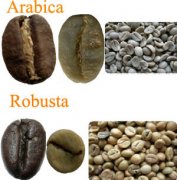
Robusta, which you don't know, is also a good bean.
Coffee training knowledge: people always habitually look at things in dichotomy, good and bad, good and bad, good and bad. The same is true in the world of coffee. Arabica coffee beans are always classified as good, while its distant relative, Robusta, is often classified as bad. Why is Robusta so notorious? Round in appearance
Boutique Coffee Rwanda Coffee Manor 1756 members small farmers
Rwandans have been growing coffee since colonial times, but until 1999, its products were still classified as below Class C and were not popular in the global market. The reason for the poor quality is that farmers do not have a fixed procedure for washing coffee beans and do not process coffee fruits according to specifications in time. Buyers buy coffee beans at $0.33 per kilogram, and farmers keep warm by the meagre profits earned at low prices.