
"Dry"
25717 article(s) found

Coffee beans must be stored in a dry environment to explain coffee bean preservation skills (2)
Two methods of coffee bean production after harvest to the market before shipment to remove the skin, pulp, skin and silver. There are two methods: drying (also known as natural method or non-washing) and washing. Dry type: The method is relatively simple. First of all, the fruit will be just picked widely spread in the sun for a week or two, until the fruit issued a cracking sound so far, natural drying. After that, with

Coffee from fruit to raw bean dry washing semi-washing refined Colombian coffee beans
Coffee changes from fruit to raw bean there is a pair of oval seeds in the middle of the fruit, which are covered with outer skin, inner pulp and pulp. Ripe fruit spoils in a short time without treatment. Refining is to remove the skin and pulp of the coffee fruit, and then take out the seeds. Generally speaking, about 1 kg of raw coffee beans can be obtained from 5 kg of coffee fruit. The refining methods include drying and washing.

Washed-naturally dried Salvadoran coffee flavor introduced to Mercedes Village in the Santa Ana Volcano region
1 Anny Ruth introduces the manor LOMA LAGLORIA; 2, the production, treatment and cultivation of Salvadoran coffee; 3, red bourbon cup test of fresh arrival LOMA LAGLORIA (washing, dry fermentation, white honey, yellow honey treatment); (participants are invited to bring their own cup tester) 4, interactive session, participants ask the manor owner questions about coffee: F

Where can I buy raw coffee beans? how to preserve them? how to stir-fry them?
Professional coffee knowledge exchange more coffee bean information Please follow the coffee workshop (Wechat official account cafe_style) there are two main processing methods of raw coffee beans: wet processing and dry processing. In wet processing, the pulp of coffee fruit should be removed first, and then the residual mucous membrane on the inner pericarp should be removed by fermentation trough, washed with water and dried. A trial of dry processing Coffee is spread out of date in dew

The method of judging the freshness of coffee beans
Have you ever seen oily coffee beans? Why do some coffee beans have a shiny surface, while others are "dry and comfortable" without greasy? What does the "oil" of coffee beans have to do with freshness? Should we buy coffee beans that are "oily" or "unoiled" in appearance?

Coffee roasting and coffee flavor coffee extraction deep roasting espresso Italian blending
Boutique coffee is fresh coffee. Whether it's food or drink, of course, the fresh the better, and so is boutique coffee. High-quality coffee should keep the coffee beans fresh before making, including the preservation of baked beans, and grind the coffee beans into powder before making, which is also to retain its original and best flavor. And the way of making hand-made coffee is such a way to make high-quality coffee.
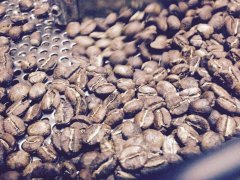
Dry treatment (natural full sun treatment), wet treatment (water washing and fermentation), semi-washing of coffee beans
Dry treatment (secado), also known as natural all-day exposure (natural). After the coffee fruit is actually picked, it is dried directly in the sun. According to the weather conditions, it is generally necessary to dry the coffee beans for 2 weeks to reduce the water content of the coffee beans to 10%, 12%, and then use a machine to remove the dried peel and pulp. The raw bean processing plant (beneficio) usually retains the parchment paper shell (par) on the outside of the coffee bean when the raw bean is stored.

The most effective method for judging the basic knowledge and freshness of coffee beans
The "light baked beans" that are not fresh and have a light brown appearance are dry and will not produce oil after baking. The phenomenon of "spot oil" begins to appear about five days after it comes out of the oven (it may be shortened to one or two days at the height of summer). Please note: a little "spot oil" does not mean that it is not fresh. sometimes it's the opposite.

Bolivian coffee with dry aroma of almonds; taste treatment; roasting degree of fine coffee beans
Country: Bolivia altitude: 3812m production area: Lake Titicaca baking degree: medium baking method: washing variety: iron pickup producer: tapper Gabbana small farmer flavor: roasted nuts and almonds. Orange and pomelo Bolivian coffee has the advantage of high altitude and excellent varieties of coffee, where the traditional Tibica and a small amount of Kaddura are in the world market.

Organic Pocket hopes the manor's most famous rose summer dry, wet, nutty and berry aromas.
The Hope Manor is located at an altitude of 1400-1600 meters, with an output of 300,700 bags. Most of the processing is done on the farm, washing and drying in the sun, and the shell, pulp and mucous membrane are used as fertilizer.
What's the wonderful use of coffee grounds?
After brewing coffee, what will you do with the rest of the coffee grounds? In addition to putting it in the ash jar to facilitate extinguishing and deodorizing, the coffee grounds can also remove the strange smell and oil when placed in the sink or in the sink. In addition, the coffee grounds can also be used as a seasoning for plants. Today, "A little bit of Life" is going to tell you about the wonderful uses of coffee grounds. First, remove the strange smell.

Dry and wet aromas with nutty and berry aromas Hope Manor is most famous for its rose summer seed essence
1. A variety of fine coffee. It is better to use Arabica inherent variety Tibica or bourbon variety. two。 Is the altitude, topography, climate, soil and refinement of the cultivated land or farm clear? Generally speaking, the coffee with high altitude is of higher quality, and the fertile volcanic soil is the best. 3. The harvesting method and refining method are adopted. Generally speaking, manual harvesting method and washing essence are adopted.
The refining method of coffee beans
Generally speaking, there are three kinds of treatment from coffee fruit to raw coffee bean: drying treatment, washing treatment, semi-dry and semi-wet treatment. What is the difference between the three steps? Which is better or worse? (drying in the sun field) drying treatment is the most primitive and simple treatment. 1. After the coffee fruit is actually harvested, it is sent to the sun field to spread evenly, and it is often turned so that the coffee fruit can be evenly distributed.

36 flavor bottle dry distillation group condiments, beverage raw materials, herbal processing
Professional coffee knowledge exchange more coffee bean information please follow the coffee workshop (Wechat official account cafe_style) Dry Distillation (distillation group) (ingredients): pepper Pepper, vanilla seed CorianderSeed, clove Clove-like (beverage raw materials): blackcurrant Black Currant-like, maple syrup MapleSyrup, malt Malt (herbal processing): baking

Introduction of common fermentation treatment methods of coffee beans differences in flavor characteristics of coffee treated with sun, water washing and honey
The three most common fermentation methods for coffee beans fermentation the word fermentation is often reminiscent of making flour cakes, Youtiao, steamed buns, steamed buns, or moldy food products. Fermentation has been used so much in our daily life that it is so common that we enjoy a wide variety of flavors.
Japanese researchers find caffeine in the treatment of dry eyes
In recent years, studies have shown that drinking coffee can reduce cancer and glycosuria.

Japanese researchers find caffeine in the treatment of dry eyes
In recent years, studies have shown that drinking coffee can reduce cancer and glycosuria.

Drinking coffee can cure dry eyes. Drinking coffee can cure diseases.
In recent years, studies have shown that drinking coffee can reduce cancer and glycosuria.

The benefits of drinking coffee for dry eyes
In recent years, studies have shown that drinking coffee can reduce cancer and glycosuria.

Japanese researchers have found that caffeine can treat dry eyes
In recent years, studies have shown that drinking coffee can reduce cancer and glycosuria.