
"Dura"
328 article(s) found

Introduction to Hope Manor, the main variety of Colombian coffee
One: it is said to come from the sea island of the Caribbean and from El Salvador in Central America. Second: in 1808, a priest introduced coffee beans to Colombia for the first time from the French Antilles via Venezuela. One of them is that Colombia's first coffee seeds were imported from Venezuela through the province of Santander. [1] third: the earliest coffee cultivation in Colombia

Introduction to the taste of the method of variety treatment in the grinding scale of Colombian coffee beans
Each caffeine variety has a different origin and has its own strong character, such as the masculine Mantenin, which resembles the character of an iron and steel man, and the mellow, fragrant Blue Mountain Coffee, which is called the gentle woman's yearning addiction. Columbia Super Coffee, which has always been light-scented, is the most suitable for those who like light sex. Such people do not want to drink coffee as a serious thing, from sour

Introduction to the flavor description of Colombian Yi coffee and the characteristics of varieties
The main varieties of Colombian coffee are small grains of coffee. Plants are small trees or large shrubs, 5-8 m tall, usually much branched at base; old branches gray-white, nodes dilated, young branches glabrous, compressed. Leaves thinly leathery, ovate-lanceolate or lanceolate, 6-14 cm long and 3.5-5 cm wide, tip long acuminate, acuminate part 10-15 mm long, base cuneate or slightly obtuse, rarely rounded, entire or

Colombian coffee storage method unique flavor
The history of coffee cultivation in Colombia can be traced back to the Spanish colonial era in the 16th century, and there are many theories about the history of coffee in Colombia: one: it is said to come from the island of Haiti in the Caribbean and from El Salvador in Central America. Second: in 1808, a priest introduced coffee beans to Colombia for the first time from the French Antilles via Venezuela. One of them

Fine coffee Guatemala coffee varieties Kadura, Kaduai, Bourbon
The extra hard coffee beans here are full, delicious and balanced, and the coffee brewed with them is pure and rich. Guatemala coffee once enjoyed a reputation as the best coffee in the world, but quality declined for a while. Happily, however, its popularity is gradually being restored. Father Jesuit introduced coffee trees to Guatemala in 1750, late 19th century

Fine coffee Guatemala coffee varieties Kadura, Kaduai, Bourbon
The extra hard coffee beans here are full, delicious and balanced, and the coffee brewed with them is pure and rich. Guatemala coffee once enjoyed a reputation as the best coffee in the world, but quality declined for a while. Happily, however, its popularity is gradually being restored. Father Jesuit introduced coffee trees to Guatemala in 1750, late 19th century

Species Morphology and Variety Grade History of Colombian Coffee
The main varieties of Colombian coffee are small grains of coffee. Plants are small trees or large shrubs, 5-8 m tall, usually much branched at base; old branches gray-white, nodes dilated, young branches glabrous, compressed. Leaves thinly leathery, ovate-lanceolate or lanceolate, 6-14 cm long and 3.5-5 cm wide, tip long acuminate, acuminate part 10-15 mm long, base cuneate or slightly obtuse, rarely rounded, entire or

Introduction to the flavor and taste of Colombian coffee with boutique coffee bean manor
The main varieties of Colombian coffee are small grains of coffee. Plants are small trees or large shrubs, 5-8 m tall, usually much branched at base; old branches gray-white, nodes dilated, young branches glabrous, compressed. Leaves thinly leathery, ovate-lanceolate or lanceolate, 6-14 cm long and 3.5-5 cm wide, tip long acuminate, acuminate part 10-15 mm long, base cuneate or slightly obtuse, rarely rounded, entire or

Colombia, Montana Branco Manor Introduction| What kind of purple kadura?
Finca Monteblanco Manor, Colombia Finca Monteblanco Manor is located on a winding mountain road (Verada La Toroca) in the town of San Adolfo in the south of Colombia's Cymbidium province. The manor is located on a hill surrounded by clouds all the year round. It covers an area of about 18 hectares. The top of the hill is a dry and wet treatment plant. Coffee trees are planted along the hillside. The farm is owned by R.

A brief introduction to the planting market price of Yunnan small-grain coffee Huaguoshan boutique coffee bean varieties
Berries broadly elliptic, red, 12-16 mm long, 10-12 mm in diameter, exocarp dura, mesocarp fleshy, sweet at maturity; seeds raised abaxially, ventral flat, longitudinally grooved, 8-10 mm long and 5-7 mm in diam. The flowering period is from March to April in Pu'er, Xishuangbanna, Wenshan, Baoshan, Dehong, Lincang and other places in the south and west of Yunnan.

Colombian coffee growing environment Colombian coffee variety grade
Colombian coffee grades are divided into several Colombian coffee-growing histories, dating back to the Spanish colonial era in the 16th century, and there are many theories about the history of coffee in Colombia: one: it is said to come from the island of the Caribbean and from El Salvador in Central America. Second: in 1808, a priest transferred coffee beans from the French Antilles to Venezuela.

Nicaragua Maracadura Coffee Beans with Moderate Acidity Flavor Description Processing Method Grind Scale Variety
Nicaragua is one of the main coffee producing countries, producing coffee of high quality. Even the coffee of Guatemala's Antigua Mountains, which is famous in Asia, imports green beans to Nicaragua. Although Nicaragua coffee is not famous in Asia, in fact, Nicaragua coffee has been famous all over the world (Starbucks has many cooperative coffee farmers in Nicaragua), while several coffee producing countries in Central America,

Colombia Coffee Boutique Coffee Flavor Taste Producing Area Features Manor Introduction
Colombia coffee is the first coffee produced in Medellin, both in terms of yield and texture. It is characterized by full coffee beans, rich nutrition, moderate acidity, good balance, rich aroma and soft and smooth taste. Apart from Medellin, Armenia and Manizales, the capital cities of two neighboring provinces in the south, are also famous coffee producing areas.
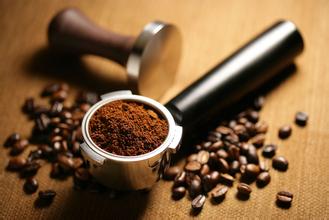
Introduction to the Andean Mountains in the main cultivated areas of coffee trees in Colombia
The main varieties of Colombian coffee are small grains of coffee. Plants are small trees or large shrubs, 5-8 m tall, usually much branched at base; old branches gray-white, nodes dilated, young branches glabrous, compressed. Leaves thinly leathery, ovate-lanceolate or lanceolate, 6-14 cm long and 3.5-5 cm wide, tip long acuminate, acuminate part 10-15 mm long, base cuneate or slightly obtuse, rarely rounded, entire or

A brief introduction to the Origin, Development, History and Culture of Fine Coffee beans in Huaguoshan, Yunnan Province
Berries broadly elliptic, red, 12-16 mm long, 10-12 mm in diameter, exocarp dura, mesocarp fleshy, sweet at maturity; seeds raised abaxially, ventral flat, longitudinally grooved, 8-10 mm long and 5-7 mm in diam. Direct branches are used for cutting materials during the flowering period from March to April, but not a branch, because the new plants grown after cutting with one branch can only grow creeping, not straight.

Quality of Colombian coffee grade producing area
The history of coffee cultivation in Colombia can be traced back to the Spanish colonial era in the 16th century, and there are many theories about the history of coffee in Colombia: one: it is said to come from the island of Haiti in the Caribbean and from El Salvador in Central America. Second: in 1808, a priest introduced coffee beans to Colombia for the first time from the French Antilles via Venezuela. One of them

Introduction to Fine Taste treatment of Coffee Bean Grinding scale varieties in Columbia Hope Manor
Columbia Hope Manor Coffee Bean Grinding scale varieties taste treatment boutique introduction Colombian coffee varieties are mainly small-grain coffee. Plants are small trees or large shrubs, 5-8 m tall, usually much branched at base; old branches gray-white, nodes dilated, young branches glabrous, compressed. Leaves thinly leathery, ovate-lanceolate or lanceolate, 6-14 cm long, 3.5-5 cm wide, tip long acuminate

Columbia Hope Manor Rosa Coffee Flavor description characteristics Grinding scale quality taste introduction
Colombian coffee rose summer coffee seeds were taken from Geisha Mountain (Mount Rosa) in southwestern Ethiopia in 1931, transplanted to Kenya in 1931 and 1932, replanted in Tanzania in 1936 and introduced to Costa Rica in 1953. It is not known when it will be introduced to Jaramillo Manor in Panama, except for the Jade Farm of Panama (Hacienda).

Rich flavor of Colombian coffee the characteristics of Santa Rita Manor are introduced.
One: it is said to come from the sea island of the Caribbean and from El Salvador in Central America. Second: in 1808, a priest introduced coffee beans to Colombia for the first time from the French Antilles via Venezuela. One of them is that Colombia's first coffee seeds were imported from Venezuela through the province of Santander. [1] third: the earliest coffee cultivation in Colombia

An introduction to the Origin Culture of Colombian Coffee
The history of coffee cultivation in Colombia can be traced back to the Spanish colonial era in the 16th century, and there are many theories about the history of coffee in Colombia: one: it is said to come from the island of Haiti in the Caribbean and from El Salvador in Central America. Second: in 1808, a priest introduced coffee beans to Colombia for the first time from the French Antilles via Venezuela. One of them