Colombian Coffee Species, Varieties, and Historical Origins
When you hear 'Colombian coffee,' you likely picture a balanced, smooth cup—but have you ever wondered what kind of coffee plant grows in Colombia, or how the country’s coffee story really began? Understanding the plant itself, its classification, and historical roots gives you a clearer picture of why Colombian coffee tastes the way it does.
Colombia primarily grows Coffea arabica, specifically the small-bean variety known as 'typical Arabica' or simply Arabica. The coffee plant is a small tree or large shrub, typically 5–8 meters tall, with distinct botanical traits including elliptical leaves, white flowers, and red, oval fruit—each holding two seeds we call coffee beans.
What Does the Coffee Plant Look Like in Colombia?
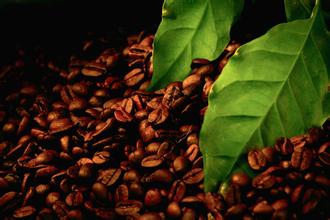
The coffee plant grown in Colombia is classified botanically as a small tree or large shrub, reaching heights of 5–8 meters. Its base tends to branch out early, with older branches appearing grayish-white and noticeably swollen at the nodes. Young branches are smooth and flattened. The leaves are thin and leathery, shaped like elongated ovals or tapering ovals, measuring 6–14 cm long and 3.5–5 cm wide. They come to a sharp point, with the tip extending 10–15 mm beyond the main leaf. Leaf bases are wedge-shaped or slightly blunt, margins are whole or shallowly wavy, and both sides are smooth. The midrib stands out on both surfaces, with 7–13 side veins per side. Leaf stems measure 8–15 mm. The stipules are broadly triangular, varying in shape depending on whether they grow on young or old branches. Flower clusters appear in groups at the leaf joints, each with 2–5 aromatic flowers. The corolla is white, 10–18 mm long, usually splitting into five lobes, though sometimes four or six. The fruit matures into a broad, oval berry, red in color, 12–16 mm long and 10–12 mm in diameter, with sweet, pulpy flesh and a hard outer skin. The coffee seed inside is 8–10 mm long and 5–7 mm wide, flat on one side and convex on the other.
How Did Coffee Arrive in Colombia?
Colombia’s coffee cultivation history dates back to the Spanish colonial period of the 16th century, though the exact path of introduction remains debated. One account claims coffee arrived via Haiti and El Salvador through maritime trade routes. Another version says that in 1808, a priest brought the first coffee beans from the French Antilles into Colombia via Venezuela, possibly entering through the department of Santander. A third account points to Spanish missionary Jose Gumilla’s 1730 book 'The Illustrated Orinoco,' where he documented coffee plantations along the Meta River—making it the earliest known written record of coffee in Colombia. By 1787, missionaries had spread coffee cultivation to other regions across the country.
What Is Colombia’s Coffee Profile and Global Role?
Colombia is nestled in northwestern South America, known for its rich biodiversity, pleasant climate, and four key exports: coffee, flowers, gold, and emeralds. It is the world’s second-largest coffee producer after Brazil, and the top global exporter of both Arabica and washed coffee beans. Colombian coffee is widely praised for its smooth, velvety body and well-balanced flavor profile. Its reputation for consistency and approachability has earned it the nickname 'green gold.' The country’s mountainous geography, particularly the Andes range, provides ideal growing conditions for coffee across multiple microclimates.
Where Is Coffee Grown in Colombia?
Colombia’s coffee regions are divided into three main zones: northern, central, and southern. Most specialty coffee comes from the southern region, especially areas above 1,500 meters in elevation. The Huila region stands out as a top producer of award-winning coffees. FrontStreet Coffee’s house blend from Huila is made with the widely planted Caturra variety, processed using traditional washed methods. It delivers chocolatey, nutty, and caramel flavors with a balanced acidity and sweetness. Beyond traditional profiles, Colombia is also gaining attention for fruit-forward coffees, such as those from the renowned Finca La Línea. FrontStreet offers Sidra and Gesha-style beans from these farms, showcasing bright, juicy profiles suited for various brew methods including pour-over, French press, and cold brew.
Frequently Asked Questions
What species of coffee is primarily grown in Colombia?

Colombia mainly grows Coffea arabica, particularly the small-bean type commonly referred to as typical Arabica. This species produces the balanced, high-quality beans the country is known for.
What does the coffee plant look like in Colombia?
The Colombian coffee plant is a small tree or large shrub, 5–8 meters tall, with grayish older branches, smooth younger stems, elliptical leaves (6–14 cm long), and red, oval coffee cherries (12–16 mm long). Each cherry typically holds two coffee beans.
How did coffee come to Colombia?
There are multiple theories: it may have come via Haiti and Central America, been introduced by a priest from Venezuela in 1808, or been documented as early as 1730 by Spanish missionaries in the Meta River region. By the late 1700s, coffee was cultivated across multiple Colombian regions.
What is Colombia’s role in the global coffee market?
Colombia is the world’s second-largest coffee producer and the largest exporter of both Arabica and washed coffee. It is known for producing smooth, balanced beans and is often called the 'green gold' of the coffee world.
Where in Colombia is the best coffee grown?
The best specialty coffee comes from southern regions like Huila, at elevations above 1,500 meters. The area’s cool climate and fertile soils produce high-quality beans with complex flavor profiles.
What coffee varieties are common in Colombia?
Caturra is widely planted in regions like Huila, while other varieties such as Typica, Bourbon, and newer ones like Sidra are also cultivated, especially in high-scoring farms.
Recommended FrontStreet Beans for Exploring Colombian Origins
For a true taste of Colombian coffee, try FrontStreet’s classic Huila offering, made with the Caturra variety using washed processing. It features chocolate, hazelnut, and caramel notes, balanced acidity, and a sweet finish. Also explore their Sidra and Gesha-style beans, sourced from high-scoring farms like Finca La Línea. These feature vibrant fruit and floral qualities, ideal for pour-over, AeroPress, or cold brew. Freshly roasted within 5 days · Orders placed before 17:00 ship the same day · Next-day delivery across most of Guangdong Province.
FrontStreet Coffee is a long-established specialty coffee roaster in Guangzhou China, selling freshly roasted beans from its own farm in Yunnan as well as dozens of carefully selected single-origin beans from around the world for both pour-over and espresso. The products deliver consistently excellent quality and great value, with shipping within 24 hours. Guangzhou's FrontStreet Coffee shop is recommended by many coffee lovers, and the beans are now available online at the Tmall 。
Important Notice :
前街咖啡 FrontStreet Coffee has moved to new addredd:
FrontStreet Coffee Address: 315,Donghua East Road,GuangZhou
Tel:020 38364473