
"Duro"
74 article(s) found

Ecuador coffee varieties of carapica coffee beans introduction
As coffee is consumed around the world, the world coffee industry moves toward mass production, and San Cristobal's smaller and less reliable coffee industry is in trouble and may eventually be forced to give up without profit. It wasn't until the early 1990s that the Gonzalez family bought Hassenda Coffee Plantation. Humboldt Current

Coffee flavor and taste characteristics of Santa Cruz Manor in Ecuador
Central mountain: after entering Ecuador from Colombia, the Andes is divided into the eastern and western Cordillera mountains, with a plateau high in the north and low in the south, averaging between 2500 and 3000 meters above sea level. The Andes run through the middle of the border. The ridges crisscross, dividing the plateau into more than ten intermountain basins. The most important are the Quito basin and the Cuenca basin in the south. Volcanic crowds in the territory

Introduction to the characteristics of coffee flavor and taste varieties in Hassanda Coffee Garden with the best quality
However, in the early 1990s, the Gonzalez family bought the Hasunda Coffee Garden. The local microclimate caused by the Humboldt current (Humboldt Current), strong equatorial sunlight and sharp temperature changes (43 ℃ at sea level and 10: 16 ℃ at 275m above sea level) provide a unique advantage, prompting the Gonzalez family

Introduction to the balanced and refreshing coffee flavor and taste manor of Hassanda Coffee Garden in Ecuador
Port Guayaquil is the largest seaport in Ecuador. It faces the Pacific Ocean and backs against Mount Santa Ana. The nearby island of Pune serves as a natural barrier to protect the harbour from storms. There is a wharf in the south, which is more than 900 meters long. Ships from different parts of the world flying various flags are moored in the harbor. The port railway leads to the capital Quito, and highways connect Quito with other cities in the country.
The taste of coffee in Santa Cruz Manor, Ecuador is very balanced and refreshing.
Port Guayaquil is the largest seaport in Ecuador. It faces the Pacific Ocean and backs against Mount Santa Ana. The nearby island of Pune serves as a natural barrier to protect the harbour from storms. There is a wharf in the south, which is more than 900 meters long. Ships from different parts of the world flying various flags are moored in the harbor. The port railway leads to the capital Quito, and highways connect Quito with other cities in the country.
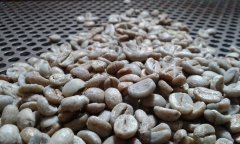
COB: a complex evolutionary history of the official grading system for raw coffee beans in Brazil
For more information on coffee beans, please follow the Coffee Workshop (Wechat official account cafe_style) cob: the complex history of the official classification system in Brazil the origin of cob sensory analysis has provided an important mechanism for pricing goods around the world since the beginning of trade. Color, smell and taste are one of many attributes used to grade a wide range of food and agricultural products.

Flavor and taste of Ecuadorian boutique coffee beans introduction to the characteristics of the manor producing area of San Cristobal
Port Guayaquil is the largest seaport in Ecuador. It faces the Pacific Ocean and backs against Mount Santa Ana. The nearby island of Pune serves as a natural barrier to protect the harbour from storms. There is a wharf in the south, which is more than 900 meters long. Ships from different parts of the world flying various flags are moored in the harbor. The port railway leads to the capital Quito, and highways will connect Quito and the country.

A brief description of the flavor, taste and aroma characteristics of Ecuador's boutique coffee beans
Balanced with low acidity and rich aroma. The bitter taste is not obvious, the taste is clear, but there is a lingering aftertaste for a long time. The superior environment creates the crisp character of coffee, and the enthusiasm of coffee farmers gives coffee enthusiastic life. Ecuadorian coffee has distinctive South American coffee characteristics. The fragrance is soft, through which it seems to return to the ancient and mysterious

A brief introduction to the flavor, taste and aroma characteristics of Ecuadorian boutique coffee beans with balanced and refreshing taste
Ecuadorian coffee has distinctive South American coffee characteristics. The fragrance is soft, as if you can go back to the ancient and mysterious Inca empire. Coffee is a good history, you need to savor it carefully in order to understand the vicissitudes of life. Balanced with low acidity and rich aroma. The bitter taste is not obvious, the taste is clear, but there is a lingering aftertaste for a long time. Excellent
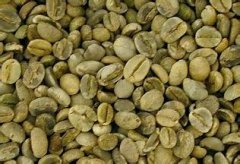
A brief introduction to the history and culture of the origin and development of balanced and refreshing Ecuadorian boutique coffee beans
Galapagos Islands coffee is recognized as green natural coffee, because the Ecuadorian government has designated the islands as a national park, not only does it no longer allow the reclamation of new agricultural land, but also forbids the use of chemical fertilizers, pesticides, herbicides and other chemicals. Although the elevation of about 200m on the island is very low, the climate of this area is equivalent to terrestrial 1000m1800m due to the special influence of the sea.

The unique Santa Cruz estate boutique coffee beans grinding degree roasting degree processing method Introduction
In the mid-15th century, among fishermen fishing in the Pacific Ocean off western South America, there were legends of magical islands. It is said that the islands can sometimes be clearly seen from a distance, but disappear as the ship approaches; sometimes they look like a galleon, sometimes they take on the shape of a witch. Fishermen call these islands the enchanted islands, thinking they're

A brief introduction to the cultivation of fine coffee beans in Santa Cruz Manor with balanced acidity, geographical location, climate and altitude
Because of the unique role of the Galapagos Islands in the course of history, the Government of Ecuador has designated the Galapagos Islands as a national park, the land is no longer allowed to be reclaimed as new agricultural land, and the introduction and use of chemical fertilizers, pesticides, herbicides and other chemicals are strictly prohibited, so coffee produced in the Galapagos Islands is recognized as a natural product. Ecuador ES Coffee South Ecuador

Ecuador Santa Cruz Manor How about a coffee single coffee How many flavors of coffee beans
Professional barista communication, please pay attention to coffee workshop (Weixin Official Accounts cafe_style) Ecuador El Santa Cruz Manor single coffee how many flavors of coffee beans in 1535, Spain's Frei Thomas de Belanga and others accidentally discovered the Galapagos Islands. Thomas was born in 1487 on the banks of the Duro River in the Spanish province of Soria, the fourth of his kind.

Taste balanced refreshing Ecuadorian fine coffee varieties cultivation market price profile
In 1535, Frei Thomas de Berlanga of Spain and others accidentally discovered the Galapagos Islands. Thomas was born in 1487 on the Duro River in the Spanish province of Soria. He was the fourth bishop of Panama at that time. He was ordered to go to Peru. When his ship set out from Panama on February 23, under the impact of a strong current, they were carried to an unknown sea in the outer ocean.