
"Early"
20219 article(s) found

Introduction to the characteristics of El Salvador Himalayan Coffee Flavor varieties
El Salvador (ElSalvador) is one of the small countries in Central America, where coffee is light, fragrant, pure, slightly sour and characterized by excellent balance of flavor. It is a specialty of Central America. With sour, bitter, sweet and other taste characteristics, the best baking degree is moderate, deep. Salvadoran Coffee-Coffee originated in the early 1990s, guerrilla warfare greatly damaged the country's national economy.

Home baking utensils household baking appliances
At the beginning of the history of coffee, there were only household bean baking utensils in the world. These bean baking utensils were standard accessories in ordinary people's kitchens until the early 20th century. 16th century: the simple construction tool of the Iraqi baking pot is to move the pot to a heat source on a small fire or coal fire and stand on its feet on a long handle.

How to use a Mocha pot Home Mocha pot
Abstract: Mocha pots in the early days were mostly made of aluminum. The brewed coffee is close to Espresso, but it does not generate enough pressure to be called Espresso in the strict sense. The pot is easy to brew, beautiful in shape and does not take up space. It is a more economical choice for ordinary families. However, it must be noted that the grinding of coffee powder should be finer, and it should be mastered when cooking.
The Information Age of European Cafe in the early stage of Coffee Culture
In the 21 century, mankind entered the era of information. If you want to know today's international news, entertainment gossip, stock market, bank exchange rate, product price, if you want to know the background strength of a company or the development trend of a cutting-edge discipline. Your first choice is to surf the Internet! The developed Internet technology has fundamentally changed the information channels of human life.
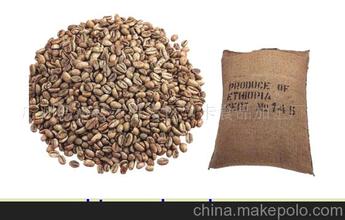
Flavor description of El Salvador Himalayan coffee beans with mild taste introduction to grinding scale varieties
El Salvador is one of the small countries in Central America with a dense population. The flavor of its coffee is characterized by excellent balance. Today, this coffee accounts for 40% of the country's exports. 35% of the extra hard beans of the best coffee are exported to Germany from January to March. In the early 1990s, guerrilla warfare greatly damaged the country's national economy and increased coffee production from the 1970s.
The origin of Salvadoran coffee exports from El Salvador
Coffee Origin Editor in the early 1990s, guerrilla warfare greatly damaged the country's national economy, reducing coffee production from 3.5 million bags in the early 1970s to 2.5 million bags in 1990-1991. The eastern part of the country was most affected by guerrilla warfare, and many farmers and workers were forced to leave the manor. The shortage of funds has led to a sharp drop in coffee production, from 1200 kg per hectare in the past to today
Night owls drink coffee without refreshing
Caffeine affects sleep only for larks who go to bed early and wake up early, but not for night owls, according to a new study published in Sleep Medicine
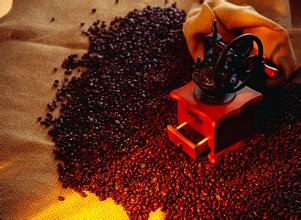
Popularization of coffee knowledge | the secret of espresso in Italy
The process of making espresso in Italy is very complicated. As early as the early 20th century, Italian espresso was invented and carried forward in the 1940s. The way we make coffee today inherits the traditional techniques of that time. This article introduces you to the simplified home espresso making skills. Made from Italian espresso.

Why does your hand make coffee so bad? The thickness and water temperature of hand coffee powder are the most important!
Professional coffee knowledge exchange more coffee bean information Please follow the coffee workshop (Wechat official account cafe_style) many people used to buy coffee beans directly from a coffee shop, only to find that they rushed out of the coffee shop taste when they were brewing. Obviously they are the same coffee beans, why is the hand-brewed coffee made by myself not good? Extraction of hand-made coffee is not just about extraction.
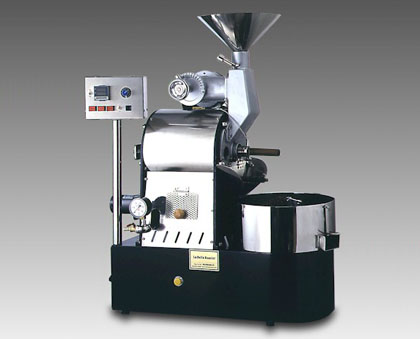
The evolution history of coffee roaster
As early as the 13th century, the Arabs invented to put coffee beans in a pot, stir-fry them with fire, grind them into powder, and then brew coffee. The early Arabs liked to bake the beans shallowly and boil them with spices such as cardamom. Later, this coffee stir-frying method spread to Syria, Turkey and Egypt, where it was used to stir-fry the coffee black, then grind it into powder and add it.
Coffee training Culture Coffee and Japan
As early as the end of the 17th century, the Dutch brought coffee to Asia in the early 18th century, and coffee was soon introduced to Japan. Before and after the Meiji Restoration, Japan advocated total westernization, and the coffee culture with Dutch flavor took root in Japan. During the Taisho period (1879-1926), due to the pervasive atmosphere of freedom and democracy, fresh and luxuriant culture, cafes have been very prosperous. But with the Japanese army,

Common sense of Coffee Culture the meaning of cappuccino coffee
It smells delicious. When you take the first sip, you can feel the sweetness and softness of a large number of milk bubbles. The second mouthful can really taste the original bitterness and richness of coffee beans. Finally, when the taste stays in the mouth, you will feel that there is a mellow and meaningful taste. This is cappuccino, an irresistible coffee. As early as the early 20th century, the Italian Azibucha hair.

A brief introduction to the market price of fresh and elegant Santo Domingo boutique coffee beans
To trace the origin of Tibica, we should first talk about the coffee trees originally planted in Martinique. These trees were planted by Dominicans as far back as the early 18th century, so Dominica began growing coffee as early as that time. For a time, the Caribbean was almost synonymous with coffee production, but in recent years Cuba, Haiti and other producing areas have been severely damaged by Hurricane George.

Cold extract is not cold, early winter should also be in a central position to debut! Nestle Coffee launches cold extract products in China!
Professional coffee knowledge exchange more coffee bean information Please pay attention to Coffee Workshop (Wechat official account cafe_style) Coffee, as one of the symbols of modern food culture, has a large number of fans all over the world. Under the background of consumption upgrading, coffee consumption in China has increased rapidly in recent years. According to the "China Coffee Industry 2017-2021" released by China Consulting Investment Network
About the history of coffee roasters
The history of coffee roasters as early as the 13th century, the Arabs invented to put coffee beans in a pot, heat and stir-fry them, then grind them into powder, and then brew coffee. The early Arabs liked to bake the beans shallowly and boil them with spices such as cardamom. Later, this method of stir-frying coffee spread to Syria, Turkey and Egypt, where it was used to stir-fry coffee black.

A brief introduction to the origin, development, history and culture of Santo Domingo boutique coffee beans
To trace the origin of Tibica, we should first talk about the coffee trees originally planted in Martinique. These trees were planted by Dominicans as far back as the early 18th century, so Dominica began growing coffee as early as that time. For a time, the Caribbean was almost synonymous with coffee production, but in recent years Cuba, Haiti and other producing areas have been severely damaged by Hurricane George.

History of introduction and expansion of Coffee in early China (1)
1. The introduction of Ruili Jingpo Nongxian Coffee was recorded in 1914. In April 1996, it was compiled by the compilation Committee of Ruili City Chronicles of Yunnan Province. The fifth coffee section on page 383 of Ruili City Chronicles published by Sichuan Dictionary Publishing House recorded that as early as 1914, the Jingpo people have been introduced from Myanmar to Nongxian Township for cultivation. Yunnan Provincial Chronicles, Volume 39, Chapter 3 of the Local Series of the people's Republic of China
Basic knowledge of boutique coffee Venezuelan coffee
Venezuela introduced coffee trees from Martinique as early as 1730, but coffee production was almost abandoned at the height of the oil industry. Recently, coffee plantations have begun to recover, with original Tipica and bourbon coffee trees and new plantations laying the foundation for coffee exports.

Cafes are the birthplace of British enterprise
Early English cafes had a social function of teaching and learning, and for a penny you could sit in to listen to famous lectures or read books, and pay two pennies for a cup of coffee or tea. Coffee houses are also known as penny universities because of their increased interpersonal interaction and learning effects. Political issues-always the focus of debate, the two sides are deadlocked and then violent also happen. Mayer
The History of Coffee introduction and expansion in China in the early stage (1)
1. The introduction of Ruili Jingpo Nongxian Coffee was recorded in 1914. In April 1996, it was compiled by the compilation Committee of Ruili City Chronicles of Yunnan Province. The fifth coffee section on page 383 of Ruili City Chronicles published by Sichuan Dictionary Publishing House recorded that as early as 1914, the Jingpo people have been introduced from Myanmar to Nongxian Township for cultivation. Yunnan Provincial Chronicles, Volume 39, Chapter 3 of the Local Series of the people's Republic of China