
"Fullness"
1564 article(s) found

Santo Domingo coffee beans, coffee beans
To trace the origins of Tibica, we must first talk about the coffee tree originally planted in Martinique. These trees were planted by Dominicans as far back as the early 18th century, so Dominica began growing coffee as early as that time. For a time, the Caribbean was almost synonymous with coffee production, but in recent years Cuba, Haiti and other producing areas have been severely damaged by Hurricane George and have since changed.
Brief introduction of planting Market Price of Santo Domingo Fine Coffee Bean with excellent acidity
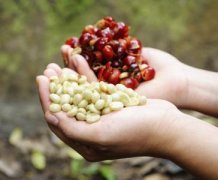
Turning to the introduction of Dominican coffee, the most distinctive features are fresh and elegant, full of particles, excellent acidity and pleasant flavor (two colleagues agree with this). Such flavor characteristics are not only related to the variety and the quality of the soil, but also closely related to the picking and handling of raw beans. Dominica's coffee is selected by the most expensive manual method, workers.

Introduction to the Flavor and Taste of High-quality Coffee in Dominica Coffee Manor
In 1677, about 4,000 French lived in 11 villages in the west of the island. In 1697, France and Spain ceded the western part of the island to France according to the Leswick Treaty of the Alliance War, formally recognizing French sovereignty over Haiti in the western part of the Spanish island, and the eastern part of the Spanish island was called East Santo Domingo. France continues to develop its agricultural economy on the island of Hispaniola.

A brief introduction to the description of flavor, taste and aroma characteristics of smooth and smooth Santo Domingo coffee
Coffee in Dominica varies slightly in taste according to the altitude of the region where it is grown, with sour but rich taste in the highlands, and less sour and smoother taste in the lowlands. On the other hand, the high-quality coffee beans produced by some Dominican estates have a rich aroma, mellow taste, moderately bright sour taste, and are often used with famous Puerto Rican or Jamaican coffee.

Dominica's Santo Domingo coffee
Santo Domingo is a city with a history of 500 years
A brief introduction to the Market Price of Santo Domingo Fine Coffee Bean varieties with intertwined aftertaste
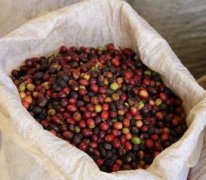
Dominica coffee is mainly produced in areas such as Cibao in the Central Mountains, the Caribbean and Barahona. There are many large estates in Siwao, and coffee trees are planted with 75% Kaddura and 25% Tibica. In terms of varieties, Baraona is the region with a high proportion of Tibika seeds.

Fresh and elegant Santo Domingo boutique coffee bean cultivation geographical location, climate, good altitude
Carefully selected in this way, the high-quality Dominican coffee exudes a faint aroma and gives people a faint fruity aroma with a lingering finish and a smooth and smooth finish. To trace the origin of Tibica, we should first talk about the coffee trees originally planted in Martinique. These trees were planted by Dominicans as far back as the early 18th century, so Dominica began at that time.

Full-grained Dominican Coffee Flavor and Taste introduction to boutique coffee beans in manor area
In 1677, about 4,000 French lived in 11 villages in the west of the island. In 1697, France and Spain ceded the western part of the island to France according to the Leswick Treaty of the Alliance War, formally recognizing French sovereignty over Haiti in the western part of the Spanish island, and the eastern part of the Spanish island was called East Santo Domingo. France continues to develop its agricultural economy on the island of Hispaniola.

Introduction to the flavor and taste characteristics of boutique coffee beans in Dominica coffee producing areas
After Santo Domingo returned to Spanish rule, the local people gradually formed a consensus on independent statehood. On November 30th, 1821, the former Governor of Santo Domingo, General Jos Nez de Cceres, proclaimed the founding of the country, named Haiti, Spain, and expected to merge under the Greater Colombian State led by President Bolivar of South America. [3] but in February 1822, nine weeks later, Haiti's

A brief introduction to the cultivation of fine coffee beans in Santo Domingo, geographical location, climate and altitude
The temperate climate in Dominica is conducive to coffee cultivation, and the best places to grow coffee are the Barahona region in the southwest and the Cibao Valley north of Santiago, Dominica's second largest city. The northern region, represented by Hibao, and the southern region, including Okayabani Santo Domingo, produce good coffee. Among them, Santo

A brief introduction to the market price of fresh and elegant Santo Domingo boutique coffee beans
To trace the origin of Tibica, we should first talk about the coffee trees originally planted in Martinique. These trees were planted by Dominicans as far back as the early 18th century, so Dominica began growing coffee as early as that time. For a time, the Caribbean was almost synonymous with coffee production, but in recent years Cuba, Haiti and other producing areas have been severely damaged by Hurricane George.

A brief introduction to the description of the flavor, taste and aroma characteristics of Santo Domingo boutique coffee beans
The temperate climate in Dominica is conducive to coffee cultivation, and the best places to grow coffee are the Barahona region in the southwest and the Cibao Valley north of Santiago, Dominica's second largest city. The northern region, represented by Hibao, and the southern region, including Okayabani Santo Domingo, produce good coffee. Among them, Santo

A brief introduction to the origin, development, history and culture of Santo Domingo boutique coffee beans
To trace the origin of Tibica, we should first talk about the coffee trees originally planted in Martinique. These trees were planted by Dominicans as far back as the early 18th century, so Dominica began growing coffee as early as that time. For a time, the Caribbean was almost synonymous with coffee production, but in recent years Cuba, Haiti and other producing areas have been severely damaged by Hurricane George.

Dominica coffee producing Santo Domingo coffee with a faint fragrance
In the early 18th century, coffee was introduced to Domiga from Martinique, and fine coffee was produced in the north represented by Hibao and in the south, including Okayabani Santo Domingo. Among them, the coffee produced by Santo Domingo and Barney, which is almost synonymous with domiga coffee, is a world-famous high-quality coffee. Santo Domingo coffee, characterized by freshness and elegance.

Wine-scented Aldura Fine Coffee Bean planting situation, Geographic location, Climate and altitude
The selection of Mexican coffee is generally carried out manually. The main basis for selection is according to the fullness of coffee particles, whether it is uniform, and then grade it. Generally speaking, coffee with full and uniform grains is easier to preserve. Only the fullest and most evenly grained coffee beans can be roasted to represent the best and best coffee in the country. After picking the coffee beans, the workers put the coffee

Introduction to the quality characteristics of Ethiopia Yega Fishi Dama Coffee Flavor description treatment
Ethiopia Yega Fishi Dama Coffee Flavor description treatment quality characteristics of taste introduction 1. Evaluation of dry incense and wet incense 2. Evaluation of taste spectrum, aftertaste, sour taste, fullness and balance 3. Evaluation of sweetness, consistency, cleanliness and overall evaluation 4. The total score is 5. Demerit points 6. Final score [activity flow]: 1. Explain the basic knowledge of coffee cup test 2. Experience the integrity of the coffee cup test

World-famous quality coffee Santo Domingo coffee from Dominica
Unlike coffee produced in Haiti, most of the coffee grown in the Dominican Republic has been washed, which is a symbol of high quality. Miniga Coffee uses a washing method to treat coffee beans, so that the quality of treated coffee beans is more guaranteed. The coffee beans treated by washing method retain more original flavor than the drying method, and the aroma is pure and soft. Carefully selected and made in this way

A brief introduction to the treatment method of grinding degree and baking degree of full-grained Santo Domingo fine coffee beans
The temperate climate in Dominica is conducive to coffee cultivation, and the best places to grow coffee are the Barahona region in the southwest and the Cibao Valley north of Santiago, Dominica's second largest city. The northern region, represented by Hibao, and the southern region, including Okayabani Santo Domingo, produce good coffee. Among them, Santo

Dominican coffee beans with pure and soft aroma introduce boutique coffee
In the early 18th century, coffee was introduced to Domiga from Martinique, and fine coffee was produced in the north represented by Hibao and in the south, including Okayabani Santo Domingo. Among them, the coffee produced by Santo Domingo and Barney, which is almost synonymous with domiga coffee, is a world-famous high-quality coffee. Santo Domingo coffee, which is characterized by freshness and elegance,

A brief introduction to the cultivation of fine coffee beans in Santo Domingo with excellent acidity, geographical location, climate and altitude
In the early 18th century, coffee was introduced to Domiga from Martinique, and fine coffee was produced in the north represented by Hibao and in the south, including Okayabani Santo Domingo. Among them, the coffee produced by Santo Domingo and Barney, which is almost synonymous with domiga coffee, is a world-famous high-quality coffee. Santo Domingo coffee, which is characterized by freshness and elegance,