
"Fullness"
1564 article(s) found

Description of the flavor of Dominican coffee with mellow taste introduction to the record of baking degree of taste variety treatment
Coffee in Dominica varies slightly in taste according to the altitude of the region where it is grown, with sour but rich taste in the highlands, and less sour and smoother taste in the lowlands. On the other hand, the high-quality coffee beans produced by some Dominican estates have a rich aroma, mellow taste and moderately bright sour taste, and are often used with coffee beans from Puerto Rico or Jamaica.

Faintly fruity boutique coffee in Dominica: a brief introduction to geographical location, climate and altitude
With an area of about 49000 square kilometers and a population of 7.1 million, the Dominican Republic and the Republic of Haiti coexist on an island bordering Haiti. Like its neighbours, the Dominican Republic had a history of revolution and poverty, but now it has democratic elections and the country is relatively stable. In the early 18th century, coffee was introduced from Martinique to Domiga, with Shebao as

Description of Dominican Coffee Flavor with pleasant fragrance introduction to the taste characteristics of boutique coffee beans
Unlike coffee produced in Haiti, most of the coffee grown in the Dominican Republic has been washed, which is a symbol of high quality. Miniga Coffee uses a washing method to treat coffee beans, so that the quality of treated coffee beans is more guaranteed. The coffee beans treated by washing method retain more original flavor than the drying method, and the aroma is pure and soft. Carefully selected and made in this way

Introduction to the characteristics of Dominica Coffee Flavor Manor with fresh, elegant and full grains
The Dominican Republic is located in the east of the island of Haiti in the West Indies, bordering the Republic of Haiti to the west, the Atlantic Ocean to the north and the Caribbean Sea to the south. With an area of about 49000 square kilometers and a population of 7.1 million, the Dominican Republic and the Republic of Haiti coexist on an island bordering Haiti. Like its neighbors, the Dominican Republic had a history of revolution and poverty, but now

The treatment method of grinding degree and roasting degree of Dominican boutique coffee with a smooth aftertaste
Turning to the introduction of Dominican coffee, the most distinctive features are fresh and elegant, full of particles, excellent acidity and pleasant flavor (two colleagues agree with this). Such flavor characteristics are not only related to the variety and the quality of the soil, but also closely related to the picking and handling of raw beans. Dominica's coffee is selected by the most expensive manual method, workers.
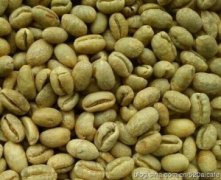
Caribbean Dominica Santo Domingo coffee beans
Flavor and taste characteristics: fresh and elegant, full particles, excellent acidity, pleasant aroma. The Dominican Republic is located in the east of the island of Haiti in the West Indies, bordering the Republic of Haiti to the west, the Atlantic Ocean to the north and the Caribbean Sea to the south. With an area of about 49000 square kilometers and a population of 7.1 million, the Dominican Republic and the Republic of Haiti coexist on an island bordering Haiti. Like its neighbors.

The origin of coffee in Dominica what are the two main characteristics of coffee in Dominica?
Coffee in Dominica is grown in highlands and lowlands, and its taste is slightly different. The upland is sour, but the taste is rich; the lowland is less sour and tastes smoother. Boutique coffee has prevailed in recent years. Some Dominican estates produce high-quality coffee beans with rich aroma, mellow taste, moderately bright sour taste, and the more famous Puerto Rico beans or Jamaica.
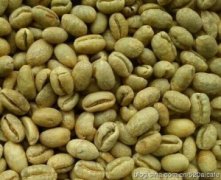
[coffee beans] Caribbean Dominica Santo Domingo coffee beans
Dominica Dominica: Santo Domingo coffee taste characteristics: fresh and elegant, full particles, excellent acidity, pleasant flavor. The Dominican Republic is located in the east of the island of Haiti in the West Indies, bordering the Republic of Haiti to the west, the Atlantic Ocean to the north and the Caribbean Sea to the south. With an area of about 49000 square kilometers and a population of 7.1 million, the Dominican Republic and the Republic of Haiti coexist in

Introduction to the characteristic boutique coffee in Dominica coffee flavor manor with smooth taste
In the early 17th century, when French, Dutch, and British pirates were operating in the western part of Hispaniola, France began to allow farmers and merchants to gradually colonize the western part of the Spanish island, blocked by the island's mountains. Without attracting the attention of the Spaniards in the east, L'Or é al arrived in Santo Domingo in 1801. He abolished slavery on behalf of the French government. In 1802, Napoleon sent

Introduction to the characteristics of Dominican Santo Domingo Coffee Flavor Manor
In 1795, France and Spain signed the Basel Peace Treaty in Switzerland, agreeing to cede the Santo Domingo area in the eastern part of the island of Dominica to France, making the Spanish island a complete French colony. Six years later, Toussaint Lovidur, a black Haitian, led other black slaves to revolt against French rule and captured Santo Domingo in 1801.

A brief introduction to the History and Culture of the Origin and Development of Santo Domingo Coffee
Unlike coffee produced in Haiti, most of the coffee grown in the Dominican Republic has been washed, which is a symbol of high quality. Miniga Coffee uses a washing method to treat coffee beans, so that the quality of treated coffee beans is more guaranteed. The coffee beans treated by washing method retain more original flavor than the drying method, and the aroma is pure and soft. Carefully selected and made in this way

Strong sweetness of Mexican Coffee Flavor description of the characteristics of the producing area introduction of boutique coffee beans
The selection of Mexican coffee is generally carried out manually. The main basis for selection is according to the fullness of coffee particles, whether it is uniform, and then grade it. Generally speaking, coffee with full and uniform grains is easier to preserve. Only the fullest and most evenly grained coffee beans can be roasted to represent the best and best coffee in the country. After the workers have picked the coffee beans, they put the coffee

Santo Domingo Coffee Dominica Fine Coffee Bean introduction Santo Domingo Coffee
Flavor and taste characteristics: fresh and elegant, full particles, excellent acidity, pleasant aroma. The Dominican Republic is located in the east of the island of Haiti in the West Indies, bordering the Republic of Haiti to the west, the Atlantic Ocean to the north and the Caribbean Sea to the south. With an area of about 49000 square kilometers and a population of 7.1 million, the Dominican Republic and the Republic of Haiti coexist on an island bordering Haiti. Like its neighbors.
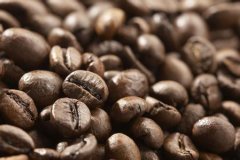
Introduction to the varieties of fine coffee beans in Santo Domingo
Flavor and taste characteristics: fresh and elegant, full particles, excellent acidity, pleasant aroma. The Dominican Republic is located in the east of the island of Haiti in the West Indies, bordering the Republic of Haiti to the west, the Atlantic Ocean to the north and the Caribbean Sea to the south. With an area of about 49000 square kilometers and a population of 7.1 million, the Dominican Republic and the Republic of Haiti coexist on an island bordering Haiti. Like its neighbors.

The taste of Dominica Santo Domingo coffee is mellow with moderately bright sour taste.
In 1586, Captain Drake of England led a fleet to attack the city of Santo Domingo, but was repelled by Spanish troops stationed in Dominica. Between 1605 and 1606, towns on the west coast of Hispaniola were often plundered by pirates, causing most of the local population to move inland. [3] at the beginning of the 17th century, French, Dutch and British pirates lived in the west of Hispaniola

Introduction to the variety and flavor of the fresh, elegant and full-grained coffee manor in Dominica
After Santo Domingo returned to Spanish rule, the local people gradually formed a consensus on independent statehood. On November 30th, 1821, the former Governor of Santo Domingo, General Jos Nez de Cceres, proclaimed the founding of the country, named Haiti, Spain, and expected to merge under the Greater Colombian State led by President Bolivar of South America. [3] but in February 1822, nine weeks later, Haiti's

Fresh and elegant Santo Domingo fine coffee beans grinding degree roasting degree processing method
Dominican coffee is graded in AA, AB, etc. size, but coffee rules such as Siwao and Barahona are also classified as top quality. Both coffees are harvested in February to May and are washed. Such flavor characteristics are not only related to varieties and planting soil quality, but also closely related to the picking and processing methods of raw beans.

Smooth and smooth taste of Dominica Coffee the characteristics of Santo Domingo Coffee production area
Originally inhabited by American Indians. The Spanish established Santo Domingo on the island in 1496, becoming the first permanent settlement of European colonists in America. It belonged to France in 1795. He returned to Spain in 1809. On February 27, 1844, the people of the east declared their independence and established the Dominican Republic. Trujillo came to power in a military coup in 1930 and practiced a 30-year dictatorship.
Coffee taste
The taste of coffee, first of all, is strong, after drinking coffee, some are very strong, the whole mouth has a sense of fullness, and will not disappear for a long time, this is a kind of excellent coffee. Some coffee tastes like a cup of boiled water, light, without any feeling, losing the rich fragrance of coffee. Another taste of coffee is astringency, which is especially dry in the mouth.
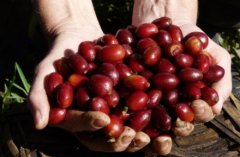
Can coffee with cream clear one's head?
Coffee with cream, some people think that although cream contains more fat, giving people a sense of fullness, it will also make people refreshed and full of energy. If coffee is mixed with cream, it will taste better, no worse than cream, but the cream block for coffee must be pure cream without salt, and some people also require that the cream must come from natural grass feed cattle, or pure coconut oil can also make