
"GHB"
156 article(s) found

The advantages of Costa Rica in developing coffee what are the well-known coffee producing areas of Costa Rica?
Costa Rica, located in Central America, is bordered by Nicaragua to the north, Panama to the south, the North Pacific Ocean to the west and the Caribbean Sea to the east. It is the most advanced and economically developed country in Central America, and is the first Central American country to introduce coffee in historical records. Costa Rica, located in the Central American Gorge, has a number of high-altitude

Washing coffee bean grade pb aa coffee bean semi-washing procedure
Coffee beans some people say that the size of beans will not affect the flavor of coffee, such as Yemeni coffee, beans have large and small particles, but it is still the top grade of coffee. However, there are many producing areas, [the size of coffee beans]

Grading of coffee beans-Brazilian coffee bean treatment
Grading of coffee beans-Brazilian coffee bean treatment harvest year: 2012-the year is for roasters' reference, so the year is usually not marked on the label of roasted cooked coffee beans on the market. In the coffee beans sold in the market, in order to reduce the trouble and identification burden of consumers, they generally do not make such complicated labels. Different small producing areas, no

How many coffee producing areas are there in Kenya? how big is its acreage? what is the export price?
How many coffee producing areas are there in Kenya? what is the export price of its acreage? Kenya's coffee producing areas are mainly concentrated in the mountains of Kenya (Mt. The plateau region represented by Kenya). Tropical climate, acid red volcanic soil provides a natural and suitable growth environment for coffee. Major producing areas such as Nyeri and Ruiru in central China and other coffee production areas

Introduction to Costa Rican Yerzaro coffee with light and pure flavor and taste
All the coffee trees planted in Costa Rica are Arabica coffee trees. through improvement, the quality of coffee beans is better and more stable. in order to facilitate picking, coffee trees are kept at a height of about 2 meters through continuous pruning. The coffee that people eat is the taste of the seeds in the fruit that are brewed in water. After picking raw coffee beans, the peel, pulp, seed film and sun exposure must be removed.

Is there no grading standard for Yunnan coffee beans?-Yunnan Coffee saipincoffee
Is there no grading standard for Yunnan coffee beans at all? generally speaking, in high mountain areas, due to the cold climate, slow growth rate of coffee, higher density of raw beans and harder texture, the more mellow aroma and supple sour taste of coffee; on the contrary, the density of raw beans is lower, the texture is less hard, the quality of coffee is worse, so some people divide it by hardness.

Introduction to the characteristics of coffee flavor description and grinding scale in Las Haas Manor, Costa Rica
Costa Rica Las Haas Manor Coffee Flavor description characteristics Grinding scale Taste introduces that coffee has an important impact on all aspects of CR's economic and social life, including the construction of the first railway line, the first university, the first national theater and so on. In 2007, COE events began to be held. The weakly acidic fertile soil nurtured by the volcano of coffee planting is obviously dry and wet for two seasons, high temperature and sufficient drop.

Introduction to the method of flavor description and taste treatment of coffee raw bean grade G1 growing environment
Coffee raw bean grade G1 growing environment flavor description taste treatment method introduces the representative countries: Brazil, Indonesia, Ethiopia, Cuba, Peru and so on. The method is to randomly take 300 grams of samples and put them on black paper, and different defects correspond to different points, such as 1 point for 1 pebble, 5 points for 1 big pebble, 1 point for 5 broken beans, and 1 point for 5 pest beans.

Description of different flavors of coffee beans from Ethiopia and Indonesia
The different flavors of coffee beans from Ethiopia and Indonesia describe the taste of coffee beans. Varieties represent countries: Guatemala, Costa Rica, Savaldo and other Central American countries. The higher the altitude of the origin, the better the quality of coffee. Because of the low altitude and hot climate, coffee trees grow faster and absorb less soil nutrients, so the taste of coffee is poor. Growth 1375 years 1

Tanzania AA Coffee Bean Sieve size characteristics Flavor Description Taste Estate Introduction
Tanzania AA Coffee Bean Sieve size Features Flavor Description Manor Introduction Tanzania's main coffee growing area is located at the foot of Mount Kilimanjaro, which has rich volcanic soil. Coffee trees planted here are more than 100 years old. The earliest coffee was first introduced from Kenya by Christians. Coffee trees must be carefully cared for, weeded and fertilized.

Introduction to the History of Costa Rican Coffee producing area what are the characteristics of Costa Rican coffee beans
Costa Rica does not forget to set up purification areas while producing coffee, pay attention to the name of the country for environmental protection: the land area of the Republic of Costa Rica: about 51000 square kilometers the country population: about 4.7 million people climate: along the coast is a tropical climate, the alpine zone belongs to the habitable temperate climate, climate difference big goth

The difference between Ethiopian and Indonesian coffee beans
The difference between Ethiopian and Indonesian coffee beans represents countries: Guatemala, Costa Rica, Sawaldo and other Central American countries. The higher the altitude of the origin, the better the quality of coffee. Because of the low altitude and hot climate, coffee trees grow faster and absorb less soil nutrients, so the taste of coffee is poor. Extremely hard beans (SHB) grow from 1375m to 1524m.
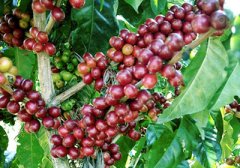
How do you make Costa Rican coffee? Costa Rican coffee bean grading standard tells you
For professional baristas, please follow the coffee workshop (Wechat official account cafe_style) Costa Rican coffee was introduced from Cuba in 1779. Almost all the high-quality coffee in Costa Rica comes from around the high-altitude San Jose Mountains. This large area is divided into four main producing areas, Tarrazu,Tres Rios,Heredia and Alajuela. It is necessary to cultivate high quality coffee.

Introduction of grindability varieties by description of characteristic grade flavor in seven major producing areas of coffee beans in Kenya
Generally speaking, due to the cold climate and slow growth rate of coffee in alpine areas, the density of raw beans is higher and the texture is harder, and the more mellow and aromatic coffee is, and it has a supple sour taste; on the other hand, the density of raw beans is smaller and the texture is less hard, so the quality of coffee is worse, so some people grade it by hardness. This grading method can be divided into the following categories: pole

The difference between Ethiopian and Indonesian coffee beans p introduction to the taste of varieties
The difference between Ethiopian and Indonesian coffee beans p varieties taste representative countries: Guatemala, Costa Rica, Savaldo and other Central American countries. The higher the altitude of the origin, the better the quality of coffee. Because of the low altitude and hot climate, coffee trees grow faster and absorb less soil nutrients, so the taste of coffee is poor. Growth 1375-1524

Full-bodied taste of the seven major coffee bean producing areas in Kenya AA characteristics graded treatment manor introduction
Generally speaking, due to the cold climate and slow growth rate of coffee in alpine areas, the density of raw beans is higher and the texture is harder, and the more mellow and aromatic the coffee is, and it has a supple sour taste; on the contrary, the density of raw beans is smaller and the texture is less hard. the quality of coffee is poor, so some people grade it by hardness. This classification method can be divided into the following categories: very hard beans, height about 4500

Kenyan coffee beans graded by the number of defective beans Introduction to fine coffee
This is the earliest grading method and is still in use in many parts of Brazil. The method of identification is to take a random sample of 300 grams and put it on black paper, because black paper can best avoid reflection. Then, professional appraisers carefully inspect the samples to find defective beans and accumulate different scores according to the types of defects. For example, one black bean counts as one.

High altitude coffee beans are quality assurance? Is it bad for coffee beans at low altitude?
Professional coffee knowledge exchange more information about coffee beans Please pay attention to the influence of coffee bean location on coffee bean flavor in coffee workshop (Wechat official account cafe_style). All coffee grows in the tropics, in fact, altitude has no direct effect on coffee, but altitude can be redistributed to meteorological elements (temperature, light, heat, wind speed, rainfall, etc.).

What are the characteristics of coffee beans at high altitude? Is the coffee at high altitude good?
Professional coffee knowledge exchange more information on coffee beans Please pay attention to the coffee workshop (Wechat official account cafe_style) Coffee beans grown in high altitude areas are hard, dense and have the potential to give play to a special flavor. The really amazing coffee growing areas are at high elevations, and these beans are only picked carefully during the mature season. Generally speaking, with the elevation

Guatemala Coffee Bean grading Guatemala altitude Flavor characteristics Guatemalan Coffee Story
Guatemala coffee beans graded altitude method Flavor description Grinding scale varieties Antigua Island is a famous producing area of coffee. Antigua coffee is produced in Hacienda Carmona, where the best quality coffee is EL Pulcal, which is not only of good quality, but also has a stronger flavor, richer taste and tobacco flavor than other Guatemalan coffee.