
"GHB"
156 article(s) found

A brief History of Guanacaster Coffee, Costa Rica Guanacaster Coffee producing area
Professional coffee knowledge exchange more coffee bean information please follow the coffee workshop (Wechat official account cafe_style) Costa Rica, Spanish La Republic de Costa Rica, English the Republic of Costa Rica, full name Costa Rica. San Jose, the capital, San Jose. The official language is Spanish. The administration is divided into 7 provinces, 81 counties and cities, 42

How to buy coffee beans Costa Rica Coffee Introduction Tara Pearl Diamond Hill Manor washed SHB Kadu
Costa Rica, Spanish La Republic de Costa Rica, English the Republic of Costa Rica, full name Costa Rica The capital city of San Jose. Official language Spanish. It is divided into 7 provinces, 81 counties and 421 districts. Columbus made his first voyage in 1502.

The relationship between altitude and coffee flavor, why the coffee flavor in high-altitude coffee producing areas
The tropical region between the Tropic of Cancer and Tropic of Cancer produces the world's truly high-quality Arabica coffee in Central and South America, South Asia and some Pacific islands, central and southern Africa is also the most important coffee growing area in the world. 3000-6000 feet (2000 meters) high altitude provides ideal conditions for coffee growth: an average frost-free climate of 60-70 degrees Fahrenheit (15-21) throughout the year.

Common sense of coffee beans: the relationship between the altitude of coffee growth and coffee flavor
We should all understand that raw coffee beans are generally classified according to raw bean size, defect rate and altitude. Many people do not quite understand why some producing areas should take the growth altitude of coffee beans as the basis for grading. Many coffee sellers also advertise their coffee as high-altitude coffee and sell it at a high price, which is the most frequently encountered when telling students about grading.
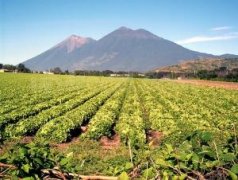
The effect of altitude on the Flavor and quality of Coffee beans
Coffee beans are generally graded according to their size, defect rate and altitude. The size and defect rate of raw beans are easy to understand, but many people don't quite understand. Why do some producing areas use the altitude of coffee beans as the basis for classification, and many coffee sellers also sell their coffee at high prices because of their high altitude coffee? why? First of all, we should realize that the geographical location of coffee beans

Kenyan Kenya AA Coffee Kenyan Coffee beans mocha Coffee
This classification method is based on a variety of perforated screen classification, the screen has a variety of specifications, identified by the number, the number is associated with the mesh. The size of the mesh-1 stroke 64 inches is the unit of calculation. If the diameter of the mesh is 18 stroke 64 inches, the number of the screen is 18; if the diameter of the mesh is 17 inch 64 inches, the number of the screen is 17. And so on, there are 19, 16, 15, 1
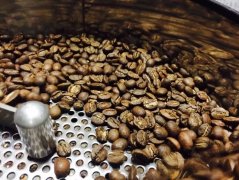
How is the coffee graded? who is in charge of grading? How is it graded?
Select coffee is usually the top coffee, but what does the top coffee represent? Who is in charge of grading? How is it graded? Although grade is not the only criterion for distinguishing flavor, it is still a quite objective index. First, why there are different ways of managing the origin of graded coffee, some are composed of large and small farmers, and some are dominated by specialized enterprises. Even if the coffee in the same place

The effect of altitude on Coffee Why coffee beans growing at high altitude are better?
Professional coffee knowledge exchange more coffee bean information Please pay attention to the coffee workshop (Wechat official account cafe_style) Coffee raw beans are generally graded according to raw bean size, defect rate and altitude. The size and defect rate of raw beans are easy to understand. But why do some producing areas use the altitude of coffee beans as the basis for grading? many coffee sellers also boast that their coffee is at a high altitude.

Ideal acidity in Costa Rica Sijas Manor Fine Coffee Bean cultivation, Geographic location and Climate
Coffee producing areas are currently divided into 8 major producing areas, Brunca,Turrialba,Tres Rios,Orosi,Tarrazu,Central Valley,Western Valley,Guanacaste. Tarrazu and Tres Rios are the most famous. It is called the Costa Ricas Bordeaux of Costa Rica. Tarrazu, commonly translated as Tarasu, is located in San Jose, where the capital is located.

What is the relationship between the altitude of coffee growth and the flavor of coffee?
Professional coffee knowledge exchange more information about coffee beans Please follow the coffee workshop (Wechat official account cafe_style) what is the relationship between the altitude of coffee growth and the flavor of coffee? Coffee beans are generally graded according to their size, defect rate and altitude. The size and defect rate of raw beans are easy to understand, but many people don't quite understand. Why do some producing areas grow with coffee beans?

Varieties and producing area characteristics of Costa Rican coffee beans price list of Costa Rican coffee
For more information on coffee beans, please follow the coffee workshop (official Wechat account cafe_style) A brief introduction to Costa Rica coffee bean producing areas Tarrazu in Costa Rica is one of the major coffee producers in the world. The volcanic soil of Costa Rica is very fertile and has good drainage. It is Central America.
Teach you the entry-level barista how to choose coffee beans: first look at raw beans, then look at cooked beans
A customer went to drink coffee and just wanted to take a sip when he found a fly in the cup. Hey, waiter, the client called for flies in the coffee? That's absolutely impossible! The waiter said to be honest with you, the coffee has been ground to powder, you can't see it. Although it is a joke, it can be seen that it is important to learn how to pick coffee beans. Many well-known foreign coffee manufacturers, in order to provide

Why the higher the altitude, the better the coffee?
Professional coffee knowledge exchange more coffee bean information Please pay attention to the coffee workshop (Wechat official account cafe_style) Coffee raw beans are generally graded according to raw bean size, defect rate and altitude. The size and defect rate of raw beans are easy to understand, but many people don't quite understand. Why do some producing areas use the altitude of coffee beans as the basis for grading? many coffee sellers also boast of their own.

Summary of coffee bean grade classification in various countries formulation and grade classification of coffee producing countries
In the Qianjie coffee factory, each batch of new beans received, there will be information about these beans, coffee producing country, altitude, manor, treatment, and the grading of coffee to be mentioned today, such as Kenya PB, Yega G1, so what does these grading letters mean? in fact, coffee grading standards vary from country to country and from region to region.

Brief introduction of planting Market Price of Fine Coffee Bean varieties with ideal acidity in Sijas Manor of Costa Rica
Tres Rios, English three rivers, also known as Sanshui River, has the fertile soil created by the Irazu volcano, located north of the capital San Jose, about 12km away. Costa Rican coffee has full particles, ideal acidity and unique strong flavor. The coffee industry in Costa Rica was originally owned by the Costa Rican Coffee Industry Company (InstitutodelCafdeCostaRica, I.

The relationship between the growth altitude of Coffee planting and the Flavor of Coffee
Professional coffee knowledge exchange more coffee bean information please follow the coffee workshop (Wechat official account cafe_style) A coffee tree bears fruit several times a year. Raw beans are generally graded according to their size, defect rate, and altitude. The size and defect rate of raw beans are easy to understand, and many people do not quite understand why some producing areas are graded according to the altitude at which coffee beans grow.

Description of Flavor and Flavor of Fine Coffee beans in Sijas Manor of Costa Rica with ideal acidity
Other kinds of Brazilian coffee, such as Rio and Parana, can be produced in large quantities because they do not need too much care. Although the taste is rough, it is a kind of good and cheap coffee. It has its own standard because it is distributed all over the country and its solid quality varies. It has its own standard (NO.2~NO.8 according to the number of sundries, NO.13~NO.19 according to the size of beans, and six grades according to taste).

A brief introduction to the History and Culture of the Origin and Development of Fine Coffee beans in Sijas Manor of Costa Rica with ideal acidity
This coffee producer, with all grades and types of coffee, accounts for 1/3 of the world's coffee consumption and occupies a place in the global coffee market, although Costa Rica faces several times more natural disasters than other regions. but it has enough acreage to make up for it. There are many kinds of coffee here, but its industrial policy is large and cheap, so excellent coffee and

How do you drink Kenyan coffee? What is the best coffee in Kenya? Kenyan coffee grades.
Professional coffee knowledge exchange more coffee bean information Please pay attention to coffee workshop (Wechat official account cafe_style) Coffee quality unfortunately there is no international standard, only by a few coffee characteristics unique to each country of origin. Take a sample of coffee beans from a bag, evaluate them according to the standards of that country, and then label the whole bag of coffee beans with a grade label.

The relationship between the growth altitude of coffee and the flavor of coffee
Professional coffee knowledge exchange more coffee bean information Please pay attention to the relationship between coffee growth altitude and coffee flavor in coffee workshop (Wechat official account cafe_style) Coffee raw beans are generally graded according to raw bean size, defect rate and altitude. The size and defect rate of raw beans are easy to understand, and many people do not quite understand why some producing areas should be graded according to the altitude at which coffee beans grow.