How to Choose Costa Rican Coffee Beans
Buying Costa Rican coffee beans shouldn’t feel like decoding a government report. Whether you’re scanning import lists or browsing online roasters, you’ll bump into terms like SHB, Tarrazu, and washed process—but what do they actually mean for your cup? If you want a bright, clean, complex coffee with citrus, caramel, and a crisp finish, understanding where and how it’s grown makes all the difference.
To buy great Costa Rican coffee, look for SHB (Strictly Hard Bean) grade from high-altitude regions like Tarrazu or Tres Ríos, made with washed-processed Caturra or Catuai, ideally from smallholder farms like Diamond Mountain Estate. These factors ensure density, sweetness, and clarity in the cup.
Where Is Costa Rica and Why Does Its Coffee Matter?
Costa Rica—officially the Republic of Costa Rica—is a Central American country bordered by Nicaragua to the north and Panama to the south, with coastlines on both the Pacific Ocean and Caribbean Sea. Its capital is San José, and Spanish is the official language. The country is divided into seven provinces, 81 cantons, and 421 districts. It’s known as the “Switzerland of Central America” and is the only country in the region without a standing army. Coffee plays a vital economic and cultural role, shaping infrastructure such as the nation’s first railway, university, and national theater.
A Brief History of Coffee in Costa Rica
Coffee was introduced to Costa Rica around 1720 (some sources cite 1729 from Cuba), and by the 18th century it had taken root, initially cultivated in the Central Valley. In 1820, coffee was first exported to Panama, followed by Chile in 1832 (where it was repacked and sent to England), then directly to Great Britain in 1843 and the United States by 1860. The Costa Rican government actively promoted coffee cultivation in the 19th century with policies such as distributing land to coffee farmers and granting ownership after five years of cultivation. This helped establish Costa Rica as the first Central American country with a fully formed coffee industry. By the mid-1800s, coffee became the dominant economic crop, surpassing cacao, tobacco, and sugarcane, and funding major national projects. The country began hosting the Cup of Excellence (COE) competition in 2007.
How Coffee Is Grown and Processed in Costa Rica
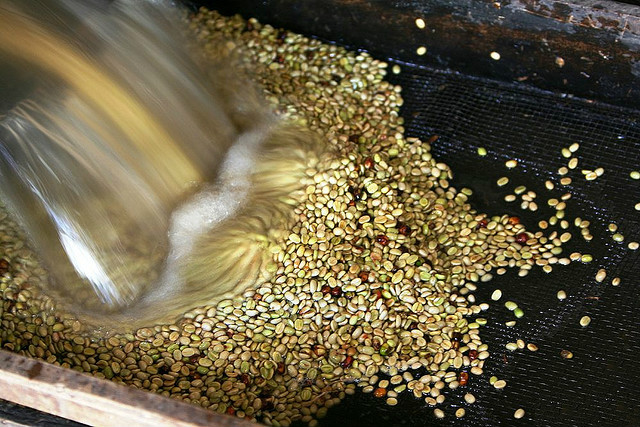
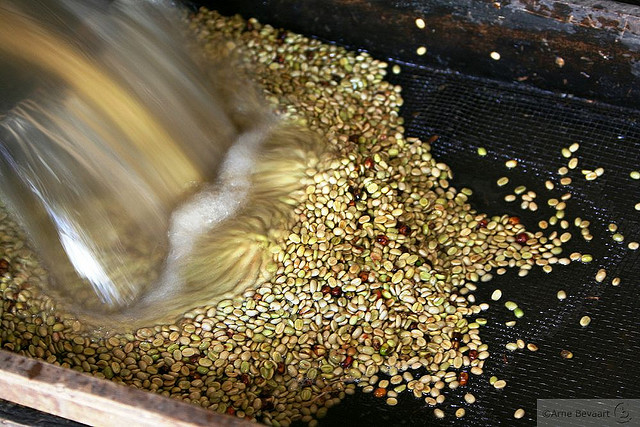
Costa Rican coffee thrives thanks to volcanic soils with weak acidity, distinct dry and wet seasons, high temperatures, and abundant rainfall. Coffee is almost exclusively Arabica—since 1989, the cultivation of Robusta has been legally banned, along with resistance to Catimor varieties. The most commonly grown cultivars are Caturra and Catuai. Harvesting is done manually, typically between August and April depending on altitude. Processing is traditionally washed (wet-processed), with beans dried in the sun for around seven days until moisture reaches 12%, then stored as parchment. Mechanical drying is also used and can shorten drying time to 24 hours, though it is often considered to negatively affect flavor.
Understanding Costa Rican Coffee Grades
Costa Rican coffee is graded primarily by altitude and bean density:
- SHB (Strictly Hard Bean): grown at elevations of 3,900 feet (about 1,200 meters) or higher
- GHB (Good Hard Bean): grown at 3,300 feet (about 1,000 meters) or higher
- MHB (Medium Hard Bean): grown at 1,600 feet (about 500 meters) or higher
Higher altitudes mean cooler temperatures, slower cherry maturation, and denser beans—resulting in more complex and higher-quality cups. Lower altitudes produce less dense beans due to faster growth.
Key Coffee Regions in Costa Rica
Costa Rica has eight main coffee-growing regions: Brunca, Turrialba, Tres Ríos, Orosi, Tarrazú, Central Valley, Western Valley, and Guanacaste. Among these, Tarrazú and Tres Ríos are the most renowned and often referred to as the “Bordeaux of Costa Rica.” Tarrazú, located southeast of the capital in San José Province, includes important specialty-producing areas like San Marcos and Santa María. In the 2014 Cup of Excellence, 17 of the 23 winning lots came from Tarrazú. Tres Ríos, located about 12 kilometers north of San José and named for the three rivers in the area, benefits from fertile volcanic soils created by the nearby Irazú volcano.
Diamond Mountain Estate: A Single-Farm Example
The Diamond Mountain Estate (Finca Montañas del Diamante) is a smallholder farm located in the Tarrazú region. It produces SHB-grade coffee using the washed process. The beans are a mix of Caturra and Catuai varieties, processed traditionally with seven days of sun drying to reach 12% moisture. The resulting cup offers light orange-citrus notes, toast, and sweet tones of caramel and cocoa, with a clean mouthfeel.
Frequently Asked Questions
What does SHB mean in Costa Rican coffee?
SHB stands for Strictly Hard Bean, indicating coffee grown at elevations of 3,900 feet (approximately 1,200 meters) or higher. These high altitudes result in slower cherry development, denser beans, and typically more complex and brighter flavors in the cup.
Which regions in Costa Rica produce the best coffee?
The Tarrazú and Tres Ríos regions are considered the best and most famous for producing high-quality Costa Rican coffee. Tarrazú, in particular, has won numerous Cup of Excellence awards and is often compared to Bordeaux for its premium coffee reputation.
What coffee varieties are most common in Costa Rica?
The most widely grown coffee varieties in Costa Rica are Caturra and Catuai. Since 1989, the country has legally banned the cultivation of Robusta and has discouraged Catimor varieties, focusing instead on high-quality Arabica types.
How is coffee processed in Costa Rica?
Most Costa Rican coffee is processed using the traditional washed (wet) method. After harvest, coffee cherries are depulped, fermented, washed, and then dried—typically in the sun for around seven days to reduce moisture to 12%. Mechanical drying is also used but is sometimes thought to impact flavor negatively.
What flavor notes are typical of Costa Rican coffee?
Costa Rican coffee often features bright, clean flavors with notes of citrus (like orange), toasted bread, caramel, and cocoa. The cup is typically sweet, medium-bodied, and has a clean, crisp finish.
What does the washed process mean for coffee flavor?
The washed process (also called wet processing) removes the coffee cherry’s skin and pulp before fermenting and washing the beans. This method tends to highlight clarity, acidity, and sweetness in the cup, often resulting in a cleaner and more vibrant flavor profile compared to natural or honey processes.
Recommended FrontStreet Beans for Costa Rica Lovers
For fans of Costa Rican profiles, try FrontStreet Coffee’s Classic Costa Rican offering. While not the exact Diamond Mountain Estate lot, it highlights the signature SHB-grade brightness with citrus, caramel, and a clean finish typical of Tarrazú and Tres Ríos. Another excellent choice is FrontStreet’s Black Cocoa Blend, which while not pure Costa Rica, shares the country’s famed sweetness and clarity. Both beans showcase the crisp, balanced cup that has made Costa Rican coffee so beloved. Freshly roasted within 5 days · Orders placed before 17:00 ship the same day · Next-day delivery across most of Guangdong Province.
FrontStreet Coffee is a long-established specialty coffee roaster in Guangzhou China, selling freshly roasted beans from its own farm in Yunnan as well as dozens of carefully selected single-origin beans from around the world for both pour-over and espresso. The products deliver consistently excellent quality and great value, with shipping within 24 hours. Guangzhou's FrontStreet Coffee shop is recommended by many coffee lovers, and the beans are now available online at the Tmall 。
Important Notice :
前街咖啡 FrontStreet Coffee has moved to new addredd:
FrontStreet Coffee Address: 315,Donghua East Road,GuangZhou
Tel:020 38364473