Washed Pacamara Coffee from El Salvador’s Finca Ataisi
If you’ve ever wondered why certain single-origin coffees deliver complex fruit, chocolate, and floral notes—yet seem so rare or hard to find—the story often starts in small high-altitude farms facing constant environmental and economic hurdles. El Salvador, despite its size, has long played a unique role in Central American coffee production. But what makes its washed Pacamara offerings stand out today?
In short: El Salvador produces mostly high-quality Arabica, with 68% Bourbon, 29% Pacas, and notable amounts of Pacamara—a large-beaned hybrid prized for its cup profile. The country’s best microlots, like the washed Pacamara from Finca Ataisi at 1800m, show intense notes of strawberry, marzipan, and cocoa. This particular lot was harvested in January and processed via traditional washed fermentation followed by sun drying.
El Salvador: The Small Nation with Big Coffee History
El Salvador, officially the Republic of El Salvador (Spanish: República de El Salvador), is the smallest and most densely populated country in Central America. With just 21,393 square kilometers and a 2012 population of 6.25 million (327 people/km²), it borders Guatemala and Honduras to the north and the Pacific Ocean along its southern and western edges. Despite its size, agriculture remains vital, especially coffee and cotton. Seven of its 14 provinces grow coffee. The country is known as the “Land of Volcanoes,” with elevations from sea level to 2,385 meters at the Santa Ana volcano.
Colonized by Spain in 1524, El Salvador gained independence in 1821, briefly joined the Central American Federation (1824–1841), then became a sovereign republic. Coffee only emerged as a major export in the mid-1800s after synthetic dyes undermined the indigo trade. By 1856, the first coffee shipment—693 bags—went to Europe. For decades, Europe was El Salvador’s top coffee buyer until the U.S. took over post-WWII.
The Evolution and Struggles of Salvadoran Coffee Production
Salvadoran coffee hit a peak in the 1970s with 350,000 bags produced annually, but civil war disrupted the industry throughout the 1980s. Peace in 1992 allowed recovery, yet the sector has since faced repeated natural disasters: Hurricane Mitch (1998), earthquakes (2001), volcanic eruptions (2002), and a devastating leaf rust outbreak in 2012 that infected 70% of farms and cut output by around 40%. Still, El Salvador remained in the ICO’s top 15 coffee-producing nations from 2008 to 2012, slipping to 16th in 2013 due to rust.
Coffee Varieties Grown in El Salvador
Salvadoran coffee is 100% Arabica. The dominant variety is Bourbon (68%), followed by Pacas (29%). Pacas, discovered in 1949, is a natural hybrid of Bourbon and Caturra. Pacamara, a much rarer and larger bean, is an artificially selected cross between Pacas and Maragogipe (or Maragogype), first developed in 1958 (some sources say 1954). It inherits Pacas’ cup quality and Maragogipe’s impressive bean size, making it highly sought after by specialty roasters.
How Salvadoran Coffee Is Grown and Processed
Nearly all Salvadoran coffee is grown by smallholders. Farms are classified by size: small producers (<7 hectares), medium (7–70 hectares), and large (>70 hectares). Most cultivation uses traditional, shade-grown methods—with nearly 100% of farms shaded. Harvest occurs from October to March, peaking between November and February, and is done entirely by hand.
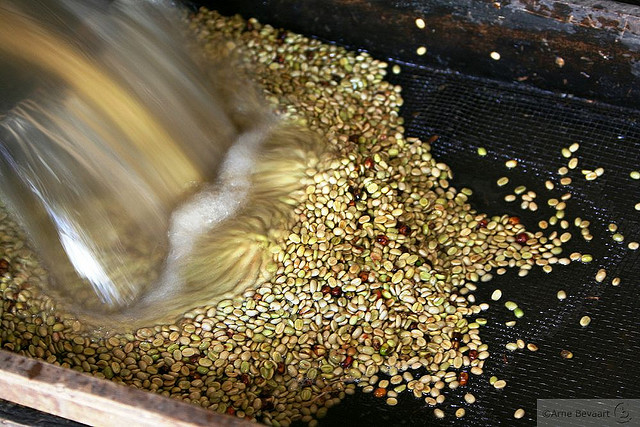
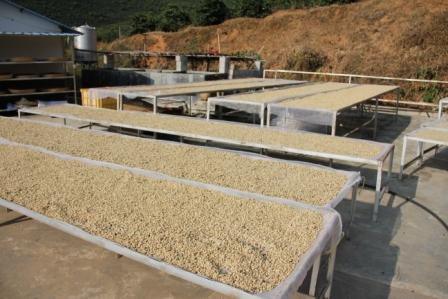
The dominant processing method is washed (wet) processing: coffee cherries are pulped, fermented in water to remove mucilage, washed, and then sun dried. This method enhances clarity, acidity, and aromatic complexity. The featured Finca Ataisi microlot is a prime example: a SHG (Strictly High Grown) washed Pacamara grown at 1800 meters in the Izalco region of Sonsonate province, harvested in January. Its flavor profile includes notes of nutty chocolate, passion fruit, cream, and strawberry.

Frequently Asked Questions
What is Pacamara coffee and where does it come from?
Pacamara is a hybrid coffee variety created in El Salvador in 1958 by crossing Pacas and Maragogipe. It’s known for large bean size and complex cup profiles, often featuring fruity, floral, and chocolate notes. Though originally from El Salvador, it’s now grown in other Central American countries, but Salvadoran Pacamara remains highly regarded in specialty markets.
What makes Finca Ataisi’s Pacamara coffee special?
Finca Ataisi’s Pacamara is grown at 1800 meters in Sonsonate’s Izalco region and processed using traditional washed and sun-dried methods. It’s a Single Highland Grade (SHG) microlot harvested in January, showcasing a bright and complex profile with notes of strawberry, passion fruit, chocolate, cream, and nuts—typical of well-processed high-altitude Pacamara.
What challenges has El Salvador’s coffee industry faced?
El Salvador’s coffee sector has contended with civil war (1980s), natural disasters (hurricanes in 1998, earthquakes in 2001, volcanic activity in 2002), and crop disease (leaf rust in 2012, which affected 70% of farms and reduced output by ~40%). Despite these, it has consistently ranked among the ICO’s top 15 coffee-producing countries.
How is coffee typically processed in El Salvador?
The majority of Salvadoran coffee is processed using the washed method: cherries are depulped, fermented in water to remove the mucilage, rinsed, and then sun dried. This enhances the coffee’s acidity, clarity, and aromatic complexity. Some farms also practice natural or honey processing, but washed remains dominant for specialty lots.
Who grows coffee in El Salvador and on what scale?
Most coffee in El Salvador is grown by smallholders. Farms are classified into small (under 7 hectares), medium (7–70 hectares), and large (over 70 hectares). Nearly all cultivation uses traditional, shade-grown practices, and harvest is manual, typically from October to March.
Recommended FrontStreet Beans with Washed Processing
Explore FrontStreet Coffee’s washed process offerings that highlight clarity and fruit-toned complexity similar to the Salvadoran Pacamara profile. The Kenya Little Tomato is a celebrated washed Kenyan lot with intense notes of tomato, berry, and citrus, offering a vibrant, juicy cup. For a classic washed profile with floral brightness, try the Yirgacheffe from Ethiopia—renowned for its lemon, jasmine, and stone fruit notes. Both demonstrate the potential of washed processing to bring out distinct fruit and floral attributes in specialty coffee. Freshly roasted within 5 days · Orders placed before 17:00 ship the same day · Next-day delivery across most of Guangdong Province.
FrontStreet Coffee is a long-established specialty coffee roaster in Guangzhou China, selling freshly roasted beans from its own farm in Yunnan as well as dozens of carefully selected single-origin beans from around the world for both pour-over and espresso. The products deliver consistently excellent quality and great value, with shipping within 24 hours. Guangzhou's FrontStreet Coffee shop is recommended by many coffee lovers, and the beans are now available online at the Tmall 。
Important Notice :
前街咖啡 FrontStreet Coffee has moved to new addredd:
FrontStreet Coffee Address: 315,Donghua East Road,GuangZhou
Tel:020 38364473