
"Government"
16757 article(s) found

Mild Nicaragua Lakadura Coffee Bean Origin and Development History and Culture Brief Introduction
In many countries coffee production is severely affected for political reasons. The coffee industry in Nicaragua is no exception. The revolution of 1979 forced coffee growers to flee to Miami. A period of uncertainty ensued as the government considered whether to reallocate land (including many plantations), resulting in coffee shortages and declining yields from the early 1970s.

Introduction of Kilimanjaro Coffee varieties, Flavor and Taste in Tanzania
In early 2010, there was a new trend of political reconciliation in Sangdao, and the Revolutionary Party and the Public RUF reached an agreement on the formation of a Sangdao unity government. In July of the same year, the Sang referendum passed a resolution on establishing a government system of national unity. In November, the general election of Sang was held smoothly, and the government of national unity was established on Sangdao. President Sang, the second vice president and 11 ministers came from the Revolutionary Party. Sang's first vice president and 8.

Angora coffee beans
Angola's Angola, which has been growing coffee for more than 100 years, ranked first in Africa until 1960 and reached 225000 tons in 1979, ranking second in Africa and fourth in the world. The output in 1992 was 5000 tons. Sisal production is second only to coffee, and the level of per unit yield is higher. In 1986, the output reached 20,000 tons, sisal ranked second in Africa both in terms of output and export volume. Luo'an, Xinhuanet

Costa Rican coffee growing area Central Valley/Central Valley Coffee growing area
Professional coffee knowledge exchange More coffee bean information Please pay attention to Coffee Workshop (Weixin Official Accounts cafe_style) The earliest coffee growing country in Central America; government support promoted development In 1729, coffee began to appear in Costa Rica, when it was introduced from Cuba. This made Costa Rica the first country in Central America to grow coffee and the first to grow coffee for commercial value.

Coffee beans of moderate particle size. Flavor, taste, aroma. Description
In many countries coffee production is severely affected for political reasons. The coffee industry in Nicaragua is no exception. The revolution of 1979 forced coffee growers to flee to Miami. A period of uncertainty ensued as the government considered whether to reallocate land (including many plantations), resulting in coffee shortages and declining yields from the early 1970s.
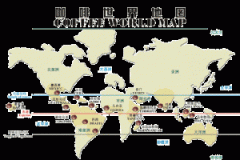
African coffee Angora coffee beans
Angolan coffee Angola Angola has been growing coffee for more than 100 years, and its output has been the first in Africa until 1960, reaching 225000 tons in 1979, ranking second in Africa and fourth in the world. The output in 1992 was 5000 tons. Sisal production is second only to coffee, and the level of per unit yield is higher. In 1986, the output reached 20,000 tons, sisal ranked second in Africa both in terms of output and export volume.

A brief introduction to the cultivation of high-acidity Angolan boutique coffee beans, geographical location, climate and altitude
The origin of coffee in Angola: 98% of the coffee in Angola (Angola) is Roberts coffee. The best brands in Angola used to be Ambriz, Amborm and NovoRedondo, all of which are known for their consistent quality. Angola was once one of the largest coffee producers in the world, with coffee production reaching a record 22.5 in 1974
Price of Angolan coffee beans
Angolan coffee Angola Angola has been growing coffee for more than 100 years, and its output has been the first in Africa until 1960, reaching 225000 tons in 1979, ranking second in Africa and fourth in the world. The output in 1992 was 5000 tons. Sisal production is second only to coffee, and the level of per unit yield is higher. In 1986, the output reached 20,000 tons, sisal ranked second in Africa both in terms of output and export volume.

The origin and development history and culture of fine coffee beans
In many countries coffee production is severely affected for political reasons. The coffee industry in Nicaragua is no exception. The revolution of 1979 forced coffee growers to flee to Miami. A period of uncertainty ensued as the government considered whether to reallocate land (including many plantations), resulting in coffee shortages and declining yields from the early 1970s.

Good news for coffee lovers! China and El Salvador establish diplomatic relations! Learn about Salvadoran coffee.
For more information on coffee beans, please follow the coffee workshop (official Wechat account cafe_style). According to Reuters, State Councilor and Foreign Minister Wang Yi held talks with Salvadoran Foreign Minister Castaneda in Beijing on Aug. 21. After the talks, the foreign ministers of the two countries signed a joint agreement between the people's Republic of China and the Republic of El Salvador on the establishment of diplomatic relations.

Introduction to the planting characteristics, flavor and taste of Salvadoran coffee beans
El Salvador coffee beans are characterized by planting characteristics, flavor and taste. In the 19th century, coffee in El Salvador was an important cash crop, and the government legislated to collect taxes and encourage planting and export. although coffee farmers in the country cannot get technical or financial assistance, they are excellent among many coffee-producing countries in terms of the growth of production per hectare. The output value of coffee is like fire

Dry and fragrant blueberry flavor of yejia sherffi Woka coffee flavor taste Manor characteristics Introduction
In July 1991, EPF hosted a national conference attended by more than 20 political and ethnic organizations. The meeting adopted the Transitional Charter and elected an 87-member House of Representatives, with EPF Chairman Meles Zenawi as President of the Transitional Government and President of the House of Representatives. A transitional government was established. On 24 May 1993, Eritrea (formerly Ethiopian Province of Eritrea) adopted a resolution at the International Conference on the Elimination of All Forms of Discrimination against Women (ICPD).

Silky and meticulous Tianci Manor Fine Coffee Bean Planting Location Climate Elevation Profile
In many countries coffee production is severely affected for political reasons. The coffee industry in Nicaragua is no exception. The revolution of 1979 forced coffee growers to flee to Miami. A period of uncertainty ensued as the government considered whether to reallocate land (including many plantations), resulting in coffee shortages and declining yields from the early 1970s.

Taste of Jamaican Coffee introduction to Cliff Manor Jamaica Blue Mountain Coffee
Jamaica is famous for producing Blue Mountain Coffee in the world. at the same time, it is located on the coast of the Caribbean and is often hit by hurricanes. The hurricanes in the 1940s and 1950s destroyed most of the Blue Mountain manors in Jamaica. Coffee trees, manor facilities, roads and other losses are beyond the capacity of the landowners. In order to boost the production capacity of Blue Mountain Coffee, the government has made support and sold the Blue Mountain Manor.
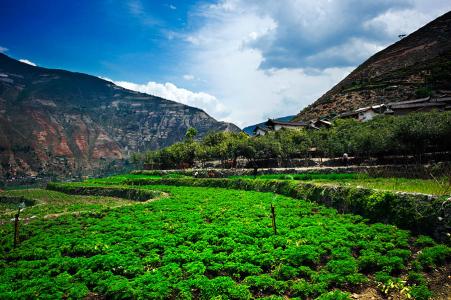
The total output value of coffee in Yunnan is expected to reach 35 billion yuan in 2020-the Yunnan provincial party committee and provincial government have always attached importance to it.
At present, coffee planting areas in the province are distributed in more than 40 counties (urban areas) in 10 cities. The main producing areas are Baoshan, Dehong, Pu'er and Lincang in southern and southwestern Yunnan. The acreage and output of the four cities account for more than 85% of the province. Coffee is also an important agricultural product for earning foreign exchange. In 2014, coffee exported 48429 tons and earned foreign exchange of 145.91 million US dollars, slightly more than the previous year.

Introduction to the production area of grinding scale for the quality characteristics of Uganda coffee beans by taste and flavor description treatment
After the first World War, Ugandan people's long-standing dissatisfaction with colonial rule finally broke out. A national general strike and rural riots broke out in 1918. In 1919 Buganda launched a democratic movement under the leadership of the Bataka Party and the African Farmers' Union of Uganda. In 1921, Uganda's first national political party, the Ugandan National Congress Party, was established.

A brief introduction to the treatment method of grinding degree and baking degree of fine coffee beans in Angola, once a big coffee country.
According to officials, Angola's coffee production is expected to reach 4000 tons in 2006, an increase of 34 percent over 2005. Coffee production increased by 1000 tons between 2005 and 2006. The major coffee producing provinces are Kwanza Sul, Bengo, Kwanza North and Uige.

The price of G7 coffee, a historical brand growing coffee beans in Vietnam.
Nhan, a historic coffee brand that grows coffee beans in Vietnam, graduated in 1967 and then returned to Vietnam to start working at Nghe's PhuQuy Rainforest Agricultural Research Station (PhuQuayTropicalCropResearchStation). The Tropical Rainforest Agricultural Research Station is a research institution under the Department of Agriculture, and they then worked with the Vietnamese government to figure out how to rebuild the war-hit Vietnam.
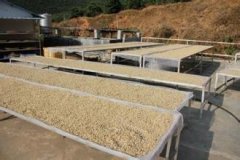
A brief introduction to the Market Price of High acidity Fine Coffee Bean varieties in Angola
Angolan Agriculture Minister Afonso Pedro Kanga revealed that Angolan coffee production this year is expected to double that of last year to 12000 tons. In 2008, in order to regain its status as a major coffee producer in the world, the Angolan government introduced a plan to receive a preferential micro-loan of US $5000 per farmer to grow coffee. Origin of coffee in Angola: 98% of coffee in Angola (Angola) is Luo
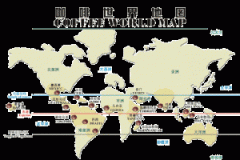
African specialty coffee Angola boutique coffee beans
Angolan coffee Angola Angola has been growing coffee for more than 100 years, and its output has been the first in Africa until 1960, reaching 225000 tons in 1979, ranking second in Africa and fourth in the world. The output in 1992 was 5000 tons. Sisal production is second only to coffee, and the level of per unit yield is higher. In 1986, the output reached 20,000 tons, sisal ranked second in Africa both in terms of output and export volume.