
"Haiti"
1582 article(s) found

Introduction to the characteristics of Dominican Santo Domingo Coffee Flavor Manor
In 1795, France and Spain signed the Basel Peace Treaty in Switzerland, agreeing to cede the Santo Domingo area in the eastern part of the island of Dominica to France, making the Spanish island a complete French colony. Six years later, Toussaint Lovidur, a black Haitian, led other black slaves to revolt against French rule and captured Santo Domingo in 1801.

Introduction of Dominica coffee with full grains and excellent acidity
Flavor and taste characteristics: fresh and elegant, full particles, excellent acidity, pleasant aroma. The Dominican Republic is located in the east of the island of Haiti in the West Indies, bordering the Republic of Haiti to the west, the Atlantic Ocean to the north and the Caribbean Sea to the south. With an area of about 49000 square kilometers and a population of 7.1 million, the Dominican Republic and the Republic of Haiti coexist on an island bordering Haiti. Like its neighbors.

Introduction of fresh, elegant and full-grained Dominican coffee
Flavor and taste characteristics: fresh and elegant, full particles, excellent acidity, pleasant aroma. The Dominican Republic is located in the east of the island of Haiti in the West Indies, bordering the Republic of Haiti to the west, the Atlantic Ocean to the north and the Caribbean Sea to the south. With an area of about 49000 square kilometers and a population of 7.1 million, the Dominican Republic and the Republic of Haiti coexist on an island bordering Haiti. Like its neighbors.
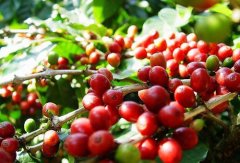
Haiti coffee particles full flavor coffee encyclopedia
Fine coffee is fresh coffee. Whether it's food or drink, the fresher the better, and so is specialty coffee. Coffee beans should be kept fresh before making fine coffee, including the preservation of roasted beans, and the coffee beans should be ground before making, which is also to retain its most original and best flavor. And hand brewed coffee making is such a way to make fine coffee

Characteristics of Dominica coffee beans in Dominica coffee producing areas
The Dominican Republic is located in the east of the island of Haiti in the West Indies, bordering the Republic of Haiti to the west, the Atlantic Ocean to the north and the Caribbean Sea to the south. With an area of about 49000 square kilometers and a population of 7.1 million, the Dominican Republic and the Republic of Haiti coexist on an island bordering Haiti. Like its neighbors, the Dominican Republic had a history of revolution and poverty, but now

Distribution and planting history of coffee bean planting information producing areas in Dominica
For the exchange of professional baristas, please follow the harvest in the western part of the island of Hispaniola in the coffee workshop (official Wechat account cafe_style), in the mountains above 1500 meters above sea level, the rich grained coffee Republic of Dominica (Dominican Republic) is bordered by Haiti, both of which own the island of Hispaniola (Hispaniola). The best place to produce is Baraho in the southwest.

Dominica Coffee Flavor with a faint fragrance introduction to the characteristics of the manor producing area
But nine weeks later, in February 1822, the president of Haiti, Jean-Pierre Bouyer, occupied Spain and Haiti, and once again completed the reunification of the island. After Boyer occupied the eastern Spanish state of Haiti and liberated all the local slaves, Bouyer ordered the confiscation of the land of the white landlords and the complete return of the agricultural land of the whole country. Boyer closed all the universities at the same time, putting 18-2

Dominican Coffee Flavor Description Region Features Fine Coffee Bean Taste Introduction
Dominican Republic is located in the West Indies in the eastern part of the island of Haiti, west of the Republic of Haiti, north of the Atlantic Ocean, south of the Caribbean Sea. With an area of about 49000 square kilometers and a population of 7.1 million, the Dominican Republic coexists with the Republic of Haiti on an island adjacent to Haiti. Like its neighbors, the Dominican Republic had a history of revolution and poverty, but now it was

Introduction of fresh, elegant, full-grained Dominica coffee beans
Flavor and taste characteristics: fresh and elegant, full particles, excellent acidity, pleasant aroma. The Dominican Republic is located in the east of the island of Haiti in the West Indies, bordering the Republic of Haiti to the west, the Atlantic Ocean to the north and the Caribbean Sea to the south. With an area of about 49000 square kilometers and a population of 7.1 million, the Dominican Republic and the Republic of Haiti coexist on an island bordering Haiti. Like its neighbors.

Full-grained Dominican Coffee Flavor and Taste introduction to boutique coffee beans in manor area
In 1677, about 4,000 French lived in 11 villages in the west of the island. In 1697, France and Spain ceded the western part of the island to France according to the Leswick Treaty of the Alliance War, formally recognizing French sovereignty over Haiti in the western part of the Spanish island, and the eastern part of the Spanish island was called East Santo Domingo. France continues to develop its agricultural economy on the island of Hispaniola.

Introduction to the flavor and taste characteristics of boutique coffee beans in Dominica coffee producing areas
After Santo Domingo returned to Spanish rule, the local people gradually formed a consensus on independent statehood. On November 30th, 1821, the former Governor of Santo Domingo, General Jos Nez de Cceres, proclaimed the founding of the country, named Haiti, Spain, and expected to merge under the Greater Colombian State led by President Bolivar of South America. [3] but in February 1822, nine weeks later, Haiti's

Introduction to the characteristics of boutique coffee beans in Dominica Santo Domingo coffee producing area
On July 16, 1838, Juan Pablo Duvat and his colleagues established Trinity one experience (La Trinitaria), a Dominican secret society, with the aim of gaining independence from the rule of Haiti. Soon after, Matthias Ramon Malia and Francesco del Rosario Sanchez joined the Trinity experience. All three of them were later called duo.

Coffee bean producing areas Caribbean Sea Haitian boutique coffee beans
Haiti, located in the north of the Caribbean Sea and west of Hispaniola Island, covers an area of about 27800 square kilometers. It is bordered by the Dominican Republic to the east, the Caribbean Sea to the south, the Atlantic Ocean to the north, and Cuba and Jamaica to the west across the Strait. It is an island country in the eastern Caribbean with a coastline of more than 1080 kilometers. The region where the country is located is on the circum-Pacific seismic belt. The whole territory is 3x4 for mountains.
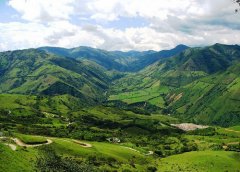
Haitian Coffee the main coffee growing area in Haiti is in the north of the country
Boutique coffee is fresh coffee. Whether it's food or drink, of course, the fresh the better, and so is boutique coffee. High-quality coffee should keep the coffee beans fresh before making, including the preservation of baked beans, and grind the coffee beans into powder before making, which is also to retain its original and best flavor. And the way of making hand-made coffee is such a way to make high-quality coffee.

Description of main taste and flavor of Santo Domingo coffee
Following Cafe Review (official Wechat account vdailycom) found that Beautiful Cafe opened a small shop of its own Dominica: Santo Domingo Coffee flavor and taste characteristics: fresh and elegant, full-bodied, excellent acidity and pleasant flavor. The Dominican Republic is located in the east of the island of Haiti in the West Indies, bordering the Republic of Haiti to the west, the Atlantic Ocean to the north and the Caribbean Sea to the south. The area is about 490.

Excellent acidity of Santo Domingo Coffee Flavor Manor introduces the characteristics of Santo Domingo Coffee
Flavor and taste characteristics: fresh and elegant, full particles, excellent acidity, pleasant aroma. The Dominican Republic is located in the east of the island of Haiti in the West Indies, bordering the Republic of Haiti to the west, the Atlantic Ocean to the north and the Caribbean Sea to the south. With an area of about 49000 square kilometers and a population of 7.1 million, the Dominican Republic and the Republic of Haiti coexist on an island bordering Haiti. Like its neighbors.

Flavor and taste of Dominican coffee beans the characteristics of the manor producing area introduce Dominican coffee
The Dominican Republic is located in the east of the island of Haiti in the West Indies, bordering the Republic of Haiti to the west, the Atlantic Ocean to the north and the Caribbean Sea to the south. With an area of about 49000 square kilometers and a population of 7.1 million, the Dominican Republic and the Republic of Haiti coexist on an island bordering Haiti. Like its neighbors, the Dominican Republic had a history of revolution and poverty, but now

Dominica coffee beans single bean flavor description characteristics planting information
Professional baristas please pay attention to the coffee workshop (Wechat official account cafe_style) Dominica coffee has two main characteristics, depending on the region and variety of production. Tibica coffee produced in Baraona, the main producing area, has the soft taste and light aroma peculiar to the Caribbean, while the highland coffee in Siwao in the central mountain area has a strong taste in each of the two producing areas.

Introduction to the description of Flavor of Fine Coffee Bean Manor in Dominica Coffee Variety producing area
In 1677, about 4,000 French lived in 11 villages in the west of the island. In 1697, France and Spain ceded the western part of the island to France according to the Leswick Treaty of the Alliance War, formally recognizing French sovereignty over Haiti in the western part of the Spanish island, and the eastern part of the Spanish island was called East Santo Domingo. France continues to develop its agricultural economy on the island of Hispaniola.

Introduction to the variety and flavor of the fresh, elegant and full-grained coffee manor in Dominica
After Santo Domingo returned to Spanish rule, the local people gradually formed a consensus on independent statehood. On November 30th, 1821, the former Governor of Santo Domingo, General Jos Nez de Cceres, proclaimed the founding of the country, named Haiti, Spain, and expected to merge under the Greater Colombian State led by President Bolivar of South America. [3] but in February 1822, nine weeks later, Haiti's