
"Hassanda"
87 article(s) found

Introduction to the characteristics of coffee flavor and taste manor of Hassanda Coffee Garden in Ecuador with balanced acidity
In addition, creative coffee made from Ecuadorian coffee beans with unique flavor is also popular with consumers. Mr. Veniso, the champion of the 2014 Ecuador Coffee Competition, won the Ecuador Coffee Competition with his creative formula. One espresso has a fresh and unique taste with mint grass from the Amazon, while the other has a rose-like Rolls-Roy.

Fragrant Ecuadorian Coffee Manor Flavor and Taste characteristics of Hassanda Coffee Garden
In the mid-15th century, there were legends about enchanted mysterious islands among fishermen fishing in the western Pacific Ocean of South America. It is said that the islands can sometimes be seen clearly from a distance, but when the ship approaches, it disappears again; sometimes it looks like a galleon, sometimes it shows the shape of a witch. The fishermen called these islands Magic Island and thought it was there.

Introduction to the characteristics of Flavor description and Grinding degree of Hassanda Coffee Garden in Ecuador
In 1875, 340 years after Freitoma de Belanga discovered the island, an indigenous man named Kovos came to St. Cristobal Island, where he established the Hasunda Coffee Garden and planted about 100 hectares of Arabian bourbon coffee trees. Since the plantation is located between 140m and 275m above sea level, the climate is equivalent to that of 915m ~ 1830 m in the interior.

Characteristics of sour Ecuadorian coffee beans Hassanda Coffee Garden Ecuadorian coffee bean flavor
Ghana Pagos coffee is produced at an average altitude of 300 meters above sea level. It has different tastes, it is not so sour and bitter, it tastes very good, it is mild, it tastes slightly sweet and floral, and it is very easy to taste. It is a very good choice for guests who are just starting to drink coffee. For drip-filtered coffee that wants to make and taste pure aroma and taste, I recommend you try Ghana

Fragrant Ecuadorian Coffee Flavor Manor area introduction to Hassanda Coffee Garden
Flavor: balanced acidity, aromatic fragrance recommended roasting methods: medium to deep roasting, can be made into high-quality mixed coffee, suitable for multi-use evaluation: general Ecuadorian giant turtle island coffee beans from the hometown of giant turtles coffee treasures the best Ecuadorian coffee is grown on St. Cristobal Island in the Galapagos Islands, where it has the best quality coffee in the world.

Fragrant Hassanda Coffee Garden in Ecuador Origin and Development of Fine Coffee History and Culture
In the mid-15th century, there were legends about enchanted mysterious islands among fishermen fishing in the western Pacific Ocean of South America. It is said that the islands can sometimes be seen clearly from a distance, but when the ship approaches, it disappears again; sometimes it looks like a galleon, sometimes it shows the shape of a witch. The fishermen called these islands Magic Island and thought it was there.

Fragrant coffee flavor description of Hassanda Coffee Garden in Ecuador
The coffee beans produced in Ecuador's Galapagos Islands are organic coffee beans, thanks to the unique ecological environment such as volcanic soil and microclimate, coupled with the fact that they do not use any chemical fertilizers or pesticides, they are recognized as natural green boutique coffee. this naturally grown coffee has a mild taste with a hint of flowers and fruit and caramel. It is understood that the Galapagos Islands are far from Eritrea.

Introduction to the characteristics of coffee flavor varieties in Hassanda Coffee Garden of Ecuador with balanced acidity
Between Colombia and Peru, Ecuador, which passes through the equator, is one of the few countries in South America that produces both Arabica and robastian coffee. In fact, Ecuador means the Spanish equator. Due to the use of old-fashioned traditional harvesting and handling methods, Ecuadorian coffee is not listed as a boutique coffee, so it is generally rarely seen.

Ecuadorian Coffee Manor introduces Hassanda Coffee Garden, an Ecuadorian coffee producing area
When Thomas and the crew landed on the island, they were frantically looking for water and were so thirsty that they squeezed juice from the fat leaves of the cactus to drink. At last a source of water was found in a rocky gully. Thomas attributed it to the gift of God, because it was good Friday, and they had piously celebrated mass before they set out in search of water. But Thomas will never

Introduction to the flavor and taste of Ecuadorian coffee farm Hassanda coffee garden Ecuadorian coffee beans
Because of the unique role of the Galapagos Islands in the course of history, the Government of Ecuador has designated the Galapagos Islands as a national park, the land is no longer allowed to be reclaimed as new agricultural land, and the introduction and use of chemical fertilizers, pesticides, herbicides and other chemicals are strictly prohibited, so coffee produced in the Galapagos Islands is recognized as a natural product. Ecuador ES Coffee South Ecuador

Introduction to Hassanda Coffee Garden in Ecuadorian Coffee producing area
Ecuador uses a decimal metric unit of measurement and the temperature is measured in Celsius. But the weight is measured in pounds, and liquids (such as gasoline and diesel) are measured in gallons. Catholicism. Catholicism has been the main traditional religion in Ecuador since colonial times. Many churches have become famous tourist attractions because of their historical, architectural and artistic value. [national flag and national emblem] the national flag is yellow, blue and red.

Flavor description of Hassanda Coffee Garden in Ecuador introduction to the characteristics of grinding degree and taste
When Thomas and the crew landed on the island, they were frantically looking for water and were so thirsty that they squeezed juice from the fat leaves of the cactus to drink. At last a source of water was found in a rocky gully. Thomas attributed it to the gift of God, because it was good Friday, and they had piously celebrated mass before they set out in search of water. But Thomas will never
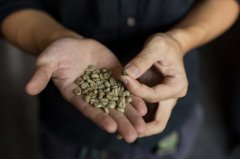
A brief introduction to the description characteristics of flavor, taste and aroma in the producing area of Hassanda Coffee Manor in Ecuador
St. Cristobal is a larger island in the Galapagos archipelago. At 410m above sea level, there is a small lake called El.Junco, which forms streams along the rocks and volcanic rocks on the southern slope of the island. Mineral-rich fresh water moistens the land of St. Cristobal, keeping the soil moist and fertile. For here.

An introduction to the coffee flavor and taste producing area of Hassanda Coffee Garden in Ecuador from the hometown of the tortoise.
As coffee is consumed by people all over the world, the world coffee industry is also moving towards mass production, while St. Cristobal, a small and unreliable coffee industry, is in trouble and is likely to be forced to give up without profit. It wasn't until the early 1990s that the Gonzalez family bought Hasunda Coffee Park. Humboldt current (HumboldtC

Ecuadorian Coffee Manor introduces Hassanda Coffee Garden, an Ecuadorian coffee producing area
Yaocote, a gourmet coffee from Puerto Rico, is grown only on three farms in the southwest of the island. It has a strong flavor and a long aftertaste. This kind of coffee is very expensive and its flavor is comparable to that of any other coffee variety in the world. In the Yauco area, the coffee is owned and operated by local planters. The mountain climate here is mild and the plants are long.

Introduction to the characteristics of varieties and taste of the flavor description treatment method of Hassanda coffee garden in Ecuador
Central mountain: after entering Ecuador from Colombia, the Andes is divided into the eastern and western Cordillera mountains, with a plateau high in the north and low in the south, averaging between 2500 and 3000 meters above sea level. The Andes run through the middle of the border. The ridges crisscross, dividing the plateau into more than ten intermountain basins. The most important are the Quito basin and the Cuenca basin in the south. Volcanic crowds in the territory

Description of Flavor of Hassanda Coffee Garden in Ecuador; characteristics of varieties in producing areas; introduction of fine coffee
Coffee began to flourish in Central America in the 18th century, and this important economic product originated in Costa Rica around 1840. Since Central America became independent from Spain in 1821, there has been a lot of war. Because Costa Rica was far away from Guatemala City, the capital of the Spanish colony at that time, it was not affected by the civil war. Instead, it was Guatemala and El Salvador that delayed coffee because of the civil war.

Flavor description of Ecuador Hassanda Coffee Garden with balanced Flavor introduction to the characteristics of taste varieties
Between Colombia and Peru, Ecuador, which passes through the equator, is one of the few countries in South America that produces both Arabica and robastian coffee. In fact, Ecuador means the Spanish equator. Due to the use of old-fashioned traditional harvesting and handling methods, Ecuadorian coffee is not listed as a boutique coffee, so it is generally rarely seen.

Introduction to the characteristic Variety producing areas of the Flavor description treatment method of Hassanda Coffee Garden in Ecuador
Ecuador is the highest Arabian coffee plantation in the world. The Arabian Coffee Tree was first introduced to Ecuador in 1952 and its coffee is of good quality, especially the coffee harvested in early June. Ecuadorian coffee beans can be divided into two varieties: Galapagos and Gigante, both of which have the characteristics of large particles, heavy weight, balanced acidity and rich aroma. Er

Introduction to the characteristics of Flavor Flavor Coffee beans in the Coffee Variety producing area of Hassanda Coffee Garden in Ecuador
Ecuador is divided into the western coast, the central mountains, the eastern Amazon River basin and the four central regions of the Galapagos Islands, with diverse climatic conditions. The western coastal plain belongs to the tropical rain forest climate, with an average temperature of 23-25 ℃. The central Andes. The intermountain basin in this area belongs to the savanna climate, and the mountain belongs to the subtropical forest climate, with perennial snow above 4000 meters above sea level. Annual average decline