
"Hasunda"
510 article(s) found

Introduction to Hasunda Coffee Garden in Ecuador Coffee Flavor Manor
At that time, there were only two days of fresh water left on the ship, and the sailors landed in lifeboats and found a large number of seals, sea turtles, giant tortoises that could carry people, and iguanas that looked like venomous snakes, but they did not find fresh water, so they sailed to another larger island more than 20 kilometers away. As there was still no wind, it took them several days to get there

Introduction to Hasunda Coffee Garden in Ecuador Coffee Flavor Manor
At that time, there were only two days of fresh water left on the ship, and the sailors landed in lifeboats and found a large number of seals, sea turtles, giant tortoises that could carry people, and iguanas that looked like venomous snakes, but they did not find fresh water, so they sailed to another larger island more than 20 kilometers away. As there was still no wind, it took them several days to get there

Galapagos Coffee introduction
In 1875, ManuelJ.Cobos, an indigenous Ecuadorian, began to grow Arabic bourbon coffee trees in the Hasunda Coffee Garden (HaciendaElCafetal) in San Cristobal. Coffee production in the Galapagos Islands: coffee is grown in San Cristobal (SaintCristobal). Inner species of Hasunda Coffee Garden (HaciendaElCafetal) in San Cristobal

Ecuadorian Coffee Flavor and Taste Manor introduction to the characteristics of Ecuadorian coffee beans in Hasunda Coffee Garden
In the mid-15th century, there were legends about enchanted mysterious islands among fishermen fishing in the western Pacific Ocean of South America. It is said that the islands can sometimes be seen clearly from a distance, but when the ship approaches, it disappears again; sometimes it looks like a galleon, sometimes it shows the shape of a witch. The fishermen called these islands Magic Island and thought it was there.

Introduction to the characteristics of coffee flavor and taste varieties in Hassanda Coffee Garden with the best quality
However, in the early 1990s, the Gonzalez family bought the Hasunda Coffee Garden. The local microclimate caused by the Humboldt current (Humboldt Current), strong equatorial sunlight and sharp temperature changes (43 ℃ at sea level and 10: 16 ℃ at 275m above sea level) provide a unique advantage, prompting the Gonzalez family

Introduction to the characteristics of the coffee producing area of the balanced Hasunda Coffee Garden in Ecuador
Ecuadorian coffee has distinctive South American coffee characteristics. The fragrance is soft, as if you can go back to the ancient and mysterious Inca empire. Coffee is a good history, you need to savor it carefully in order to understand the vicissitudes of life. Balanced with low acidity and rich aroma. The bitter taste is not obvious, the taste is clear, but there is a lingering aftertaste for a long time. Excellent

Description of Coffee Flavor in Hasunda Coffee Garden in Ecuador
Between Colombia and Peru, Ecuador, which passes through the equator, is one of the few countries in South America that produces both Arabica and robastian coffee. In fact, Ecuador means the Spanish equator. Due to the use of old-fashioned traditional harvesting and handling methods, Ecuadorian coffee is not listed as a boutique coffee, so it is generally rarely seen.

Galapagos Coffee introduction
In 1875, ManuelJ.Cobos, an indigenous Ecuadorian, began to grow Arabic bourbon coffee trees in the Hasunda Coffee Garden (HaciendaElCafetal) in San Cristobal. Coffee production in the Galapagos Islands: coffee is grown in San Cristobal (SaintCristobal). Inner species of Hasunda Coffee Garden (HaciendaElCafetal) in San Cristobal

Galapagos coffee producing area Galapagos coffee flavor Galapagos coffee characteristics
In 1875, ManuelJ.Cobos, an indigenous Ecuadorian, began to grow Arabic bourbon coffee trees in the Hasunda Coffee Garden (HaciendaElCafetal) in San Cristobal. Coffee production in the Galapagos Islands: coffee is grown in San Cristobal (SaintCristobal). Inner species of Hasunda Coffee Garden (HaciendaElCafetal) in San Cristobal
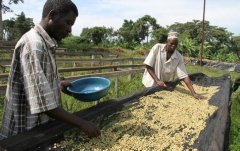
Ecuador Coffee Manor introduction to coffee producing area Hasunda Coffee Garden
Yaocote, a gourmet coffee from Puerto Rico, is grown only on three farms in the southwest of the island. It has a strong flavor and a long aftertaste. This kind of coffee is very expensive and its flavor is comparable to that of any other coffee variety in the world. In the Yauco area, the coffee is owned and operated by local planters. The mountain climate here is mild and the plants are long.

Unique flavor of Ecuadorian coffee manor flavor and taste characteristics of Hasunda Coffee Garden
Quito (Quito), with a population of 2.325 million (2011). 2818 meters above sea level. The annual temperature is between 10 ℃ and 23 ℃. The annual average temperature is 13.5 ℃. [3] Guayaquil (Guayaquil) is Ecuador's largest city and the main port along the Pacific coast, located in the waters of the Galapagos Islands where pelicans swim in the waters of the Galapagos Islands.

Global Coffee producer-Galapagos
In 1875, ManuelJ.Cobos, an indigenous Ecuadorian, began to grow Arabic bourbon coffee trees in the Hasunda Coffee Garden (HaciendaElCafetal) in San Cristobal. Coffee production in the Galapagos Islands: coffee is grown in San Cristobal (SaintCristobal). Inner species of Hasunda Coffee Garden (HaciendaElCafetal) in San Cristobal

Introduction to the flavor and taste of Ecuadorian coffee manor the characteristics of Ecuadorian coffee Hasunda Coffee Garden
The best Ecuadorian coffee is grown on St. Cristobal Island in the Galapagos Islands, which has the unique natural geographical conditions for giving birth to the best quality coffee in the world. A cup of Galapagos coffee, like the beautiful scenery of the Galapagos Islands, is sure to impress you. In the mid-15th century, fishermen fishing in the western Pacific Ocean of South America were in the middle stream.

Introduction to Hasunda Coffee Garden in Ecuador Coffee Flavor Manor
Mr. Veniso, winner of the 2014 Ecuador Coffee Competition, told reporters that some of the Ecuadorian coffee is espresso made from Ecuadorian alpine coffee beans. This coffee comes from a mountain area about 1000 to 2000 meters above sea level and has a mellow taste with aromas and sweetness of fruit, grass and chocolate. Some add thin coffee from the Amazon region to this espresso.

Hasenda Cafe is a manor in the Galapagos country.
Tovar's land keeps the soil moist and fertile forever. In 1875, the Ecuadorian native Ma Covos planted about 100 hectares of Arabian bourbon coffee trees at the Hasunda Coffee Garden (Hacienda El Cafetal) in San Cristobal. The elevation of the plantation is between 140m and 275m, and the climate in this area is equivalent to that of 910m to 1830 m inland.

Galapagos coffee producing area Galapagos coffee flavor
In 1875, ManuelJ.Cobos, an indigenous Ecuadorian, began to grow Arabic bourbon coffee trees in the Hasunda Coffee Garden (HaciendaElCafetal) in San Cristobal. Coffee production in the Galapagos Islands: coffee is grown in San Cristobal (SaintCristobal). Inner species of Hasunda Coffee Garden (HaciendaElCafetal) in San Cristobal

Introduction to Hasunda Coffee Garden in Ecuador
According to Ms. Malena, Consul General of the Consulate General of Ecuador in Guangzhou, Ecuador is located in South America, and the equatorial line runs through the country, so it is also known as the country of the equator. its superior geographical location, fertile soil and special climatic conditions create a superior natural environment for coffee bean cultivation, while most countries in the world are rich in only one kind of coffee beans, while Ecuador is less in the world.

The coffee producing area of the Galapagos Islands.
In 1875, ManuelJ.Cobos, an indigenous Ecuadorian, began to grow Arabic bourbon coffee trees in the Hasunda Coffee Garden (HaciendaElCafetal) in San Cristobal. Coffee production in the Galapagos Islands: coffee is grown in San Cristobal (SaintCristobal). Inner species of Hasunda Coffee Garden (HaciendaElCafetal) in San Cristobal

Galapagos Islands Coffee characteristics of Galapagos Islands Coffee
In 1875, ManuelJ.Cobos, an indigenous Ecuadorian, began to grow Arabic bourbon coffee trees in the Hasunda Coffee Garden (HaciendaElCafetal) in San Cristobal. Coffee production in the Galapagos Islands: coffee is grown in San Cristobal (SaintCristobal). Inner species of Hasunda Coffee Garden (HaciendaElCafetal) in San Cristobal

Global coffee producer Galapagos Galapagos Islands Coffee Market
In 1875, ManuelJ.Cobos, an indigenous Ecuadorian, began to grow Arabic bourbon coffee trees in the Hasunda Coffee Garden (HaciendaElCafetal) in San Cristobal. Coffee production in the Galapagos Islands: coffee is grown in San Cristobal (SaintCristobal). Inner species of Hasunda Coffee Garden (HaciendaElCafetal) in San Cristobal