
"Paraguay."
130 article(s) found

Two methods for processing fresh coffee beans: wet treatment and drying
Wet treatment requires the use of specific equipment and a large amount of water. When properly operated, it can ensure that the original quality of coffee beans is better preserved, producing homogeneous coffee beans with few bad beans. As a result, coffee beans produced in this way are generally considered to be of better quality and charge higher prices. Even after careful harvest, a certain amount of underdried and undercooked coffee

Detailed explanation of two methods in the processing of Coffee fresh beans
Wet treatment requires the use of specific equipment and a large amount of water. When properly operated, it can ensure that the original quality of coffee beans is better preserved, producing homogeneous coffee beans with few bad beans. As a result, coffee beans produced in this way are generally considered to be of better quality and charge higher prices. Even after careful harvest, a certain amount of underdried and undercooked coffee
Detailed explanation of two methods in the processing of fresh coffee beans
Wet treatment requires the use of specific equipment and a large amount of water. When properly operated, it can ensure that the original quality of coffee beans is better preserved, producing homogeneous coffee beans with few bad beans. As a result, coffee beans produced in this way are generally considered to be of better quality and charge higher prices. Even after careful harvest, a certain amount of underdried and undercooked coffee
Detailed explanation of two methods in the processing of raw coffee beans
Wet treatment requires the use of specific equipment and a large amount of water. When properly operated, it can ensure that the original quality of coffee beans is better preserved, producing homogeneous coffee beans with few bad beans. As a result, coffee beans produced in this way are generally considered to be of better quality and charge higher prices. Even after careful harvest, a certain amount of underdried and undercooked coffee

A brief introduction to the cultivation of rich and unique boutique coffee beans in Bolivia, geographical location, climate and altitude
We know that Arabica coffee cannot be grown in cold places above 2000 meters above sea level. if the altitude is too high, coffee trees will frost because the temperature is too low. So Bolivian coffee is mainly grown in the Yungas region northeast of La Paz. It borders the Amazon basin and is about 1500-2500 meters above sea level with an average annual temperature of about 10-15 ℃. Therefore, guarantee
Does the growing environment of Daquan coffee affect the quality and flavor of coffee beans growing countries and producing areas in the world?
The ideal conditions for the growth of coffee trees all over the world are located in the equatorial zone between 25 degrees north latitude and 30 degrees south latitude, known as the bean belt. Fussy Arabica coffee grows best in high-altitude fertile soil, while healthier robusta coffee prefers higher temperatures and thrives on lower ground. What affects coffee?

Brazilian Bolivian coffee bean flavor characteristics taste different Brazilian coffee planting history story
For more information on coffee beans, please follow the coffee workshop (Wechat official account cafe_style) Coffee from Brazil is compared with coffee from other places < 1 > Coffee in Taiwan is a very suitable place for coffee growth because of its mild climate, abundant rainfall and many high mountains on the Tropic of Cancer. In 1884, the British were introduced into the three Gorges in Taipei for trial planting, during the Japanese occupation era, Japan.

The list of the top ten tea brands in the world, which brand of tea is the best to drink tea? the historical evolution process.
Green tea the first real tea is well known. Tea is produced from tea trees (Camellia sinensis, Tea). Green tea, black tea, white tea and oolong tea are produced from here. The difference between each kind of tea is made in the factory. There, the leaves are treated in a unique way. According to legend, their history can be traced back to more than 5000 years ago, when Shennong in ancient China discovered
Harvest, processing and storage of coffee beans
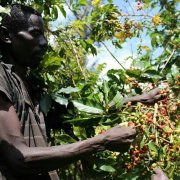
The harvest of coffee beans in winter every year, that is, the dry season, is the harvest period of coffee beans. After three to four years of growth, coffee trees are maturing and begin to bear fruit. The fruits are arranged in strings or clumps next to the branches. The coffee beans are wrapped in a red coat and can be picked as soon as they turn red. Most Arabica coffee beans mature in June and August, and Robasta coffee beans

Factors affecting the quality of coffee beans in terms of harvest, processing, treatment and storage
The annual winter, that is, the dry season is the harvest time for coffee beans. After three to four years of growth, the coffee trees gradually mature and begin to bear fruit. The fruits are arranged in strings or clumps next to the branches. The coffee beans are wrapped in a red coat and can be picked as soon as they turn red. Most Arabica coffee beans mature in June and August, while Robasta coffee beans mature in September and October, so although