
"Poas"
1014 article(s) found
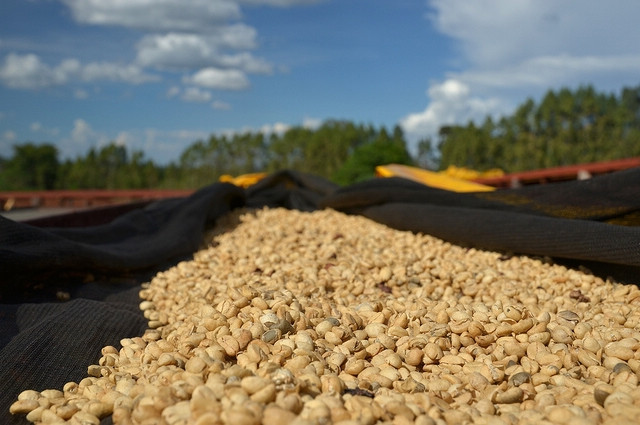
Royal Coffee processing Plant in St. Roman, a country grown in Central America, Tarazu, Costa Rica.
Costa Rican coffee cultivation was introduced by Cuba in 1779 and exported for the first time in 1820. There are about 32000 coffee farmers, with an average planting area of less than one hectare (10000 hectares) per farmer. Costa Rica has a population of 41 billion (2006), with a coffee planting area of 82500 hectares and an annual production of 1.7 million bags (60kgs per bag). The annual domestic consumption is 380000 bags.

The treatment of Costa Rican coffee
Costa Rican coffee is called extra hard beans, and this kind of coffee can grow at an altitude of more than 1500 meters. Altitude has always been a problem for coffee growers. The higher the altitude, the better the coffee beans, not only because the higher altitude can increase the acidity of the coffee beans and thus increase the flavor, but also because the night temperature at the higher altitude is lower, which makes the trees grow slowly, thus making the coffee.

Introduction to Costa Rican Coffee Grinding characteristics, Variety and Flavor description
Excellent Costa Rican coffee is called extra hard beans, and this kind of coffee can grow at an altitude of more than 1500 meters. Altitude has always been a problem for coffee growers. The higher the altitude, the better the coffee beans, not only because the higher altitude can increase the acidity of the coffee beans and thus increase the flavor, but also because the night temperature at the higher altitude is lower, which can make the trees grow slowly.

Costa Rica coffee beans Las Lajas estate black honey processing coffee beans how to drink
Professional barista exchanges, please pay attention to coffee workshop (Weixin Official Accounts cafe_style) Costa Rica SHB Las Lajas Estate Black Honey Las Lajas Estate Black Honey is one of the earliest estates to carry out systematic research and treatment, and has been a global buyer for many years.

Costa Rican coffee has always been considered to be the perfect type of classic flavor, balanced and clean.
Professional coffee knowledge exchange more coffee bean information Please follow Coffee Workshop (Wechat official account cafe_style) Costa Rican coffee has always been considered to be the perfect type of classic flavor. Balanced, clean and mild is its tone. It is famous for its well-balanced, clean, clear and berry-flavored fruit. One of the most famous and largest growing areas is Tarazhu.

Introduction of Costa Rican Coffee Flavor characteristics
High-quality Costa Rican coffee is called extra hard beans, and this kind of coffee can grow at an altitude of more than 1500 meters. Altitude has always been a problem for coffee growers. The higher the altitude, the better the coffee beans, not only because the higher altitude can increase the acidity of the coffee beans and thus increase the flavor, but also because the night temperature at the higher altitude is lower, which can make the trees grow slowly.

Costa Rican boutique coffee producing area introduces Costa Rican coffee flavor and characteristic Tarazhu coffee
Costa Rican coffee cultivation was introduced by Cuba in 1779 and exported for the first time in 1820. There are about 32000 coffee farmers, with an average planting area of less than one hectare (10000 hectares) per farmer. Costa Rica has a population of 41 billion (2006), with a coffee planting area of 82500 hectares and an annual production of 1.7 million bags (60kgs per bag). The annual domestic consumption is 380000 bags.

The origin of Costa Rican coffee culture
Costa Rican coffee is called extra hard beans, and this kind of coffee can grow at an altitude of more than 1500 meters. Altitude has always been a problem for coffee growers. The higher the altitude, the better the coffee beans, not only because the higher altitude can increase the acidity of the coffee beans and thus increase the flavor, but also because the night temperature at the higher altitude is lower, which makes the trees grow slowly, thus making the coffee.

Introduction to the flavor and taste of Costa Rican Coffee Manor Costa Rican Coffee Manor
Lajas is also the first manor in Central America to start honey treatment and natural sun treatment. Tanning is a very traditional practice, which uses the least resources, but because there are too many uncontrollable factors, it is very difficult to do well. Francesca added many innovations, such as using the sugar meter (Brix meter), which is often equipped in the wine industry, to measure the sugar content of fruits and roots.

Costa Rican Tang Oscar processing Plant washed Coffee beans introduced to Costa Rica Tang Oscar Office
Professional coffee knowledge exchange more coffee bean information please pay attention to the coffee workshop (Wechat official account cafe_style) Costa Rica Tang Oscar processing plant washing English name Don Oscar Volfa Lot#18 Fully Washed national Costa Rica production area Tarazhu (Tarrazu) graded SHB producer Beneficio Don Oscar Volfa treatment water washing

Introduction to the Goddess Manor, one of the eight famous coffee producing areas in Costa Rica
Lajas is also the first manor in Central America to start honey treatment and natural sun treatment. Tanning is a very traditional practice, which uses the least resources, but because there are too many uncontrollable factors, it is very difficult to do well. Francesca added many innovations, such as using the sugar meter (Brix meter), which is often equipped in the wine industry, to measure the sugar content of fruits and roots.

Introduction to Black Honey of Ras Lajas Manor-Black Honey treatment in Las Lajas, Costa Rica
For the exchange of professional baristas, please follow the coffee workshop (Wechat official account cafe_style) brief introduction of Costa Rica: among the exquisite sun and honey treatments that are quite popular in Costa Rica, La Lajas Manor is one of the earliest farms to start systematic research and treatment, and has been a favorite coffee farm for global buyers for many years.

Costa Rican boutique coffee beans Costa Rica Tarazu Diamond Villa washing SHB Kaddura
Costa Rican coffee plants were imported from Cuba in 1779 and exported for the first time in 1820. There are now about 32000 coffee farmers, with an average of less than 10000 yuan per farmer. Costa Rica has a population of 410 million (2006), an active coffee planting area of 82500 square meters, an annual output of 1.7 million bags (60kgs per bag), and an annual consumption of 38 million bags in China.

How does Costa Rica rapidly develop the quality of Costa Rican coffee in the boutique coffee industry
Costa Rican coffee is handled the Costa Rican coffee industry has adopted new technologies to increase efficiency, including the use of electric eyes to select beans and identify coffee beans of irregular size. Located in the south of the country's capital, San Jos, Tarasu is one of the most valued coffee growers in the country. Tarasu Latin America (La Minita Tarrazu) coffee is when

Flavor description of Nicaraguan Coffee beans introduction of varieties produced in Manor
Flavor description of Nicaraguan coffee beans grind scale taste the variety of the manor is delicious and sweet, the full-grained coffee Republic of Dominica (Dominican Republic) is adjacent to Haiti, both have the island of Hispaniola (Hispaniola). Like its neighbors, the Dominican Republic had a history of revolution and poverty, but now it has adopted democracy.

How many coffee producing areas are there in Costa Rica? fire Phoenix Manor Lajas Manor Raminita Farm
Lajas is also the first manor in Central America to start honey treatment and natural sun treatment. Tanning is a very traditional practice, which uses the least resources, but because there are too many uncontrollable factors, it is very difficult to do well. Francesca added many innovations, such as using the sugar meter (Brix meter), which is often equipped in the wine industry, to measure the sugar content of fruits and roots.

Costa Rican coffee producing area Costa Rica coffee growth pattern
High-quality Costa Rican coffee is called extra hard beans, and this kind of coffee can grow at an altitude of more than 1500 meters. Altitude has always been a problem for coffee growers. The higher the altitude, the better the coffee beans, not only because the higher altitude can increase the acidity of the coffee beans and thus increase the flavor, but also because the night temperature at the higher altitude is lower, which can make the trees grow slowly.
What are the national characteristics of coffee production in Latin America
What are the characteristics of coffee-producing countries in Latin America in 1721 French naval officer Gabriel Mathieu de Clieu went through difficulties and obstacles to bring the first coffee sapling from Africa to the Latin American island of Martinique, which was the origin of coffee cultivation in Latin America. Because at that time, France was under the reign of the Bourbon dynasty.

Introduction of Tarazhu Coffee Bean in Costa Rica
Introduction of Costa Rican Tarazu coffee beans taste and flavor Costa Rican coffee is definitely a boutique that grew up in a superior environment. There are no fluctuations in the economic environment brought about by the war, with the strong support of the government, and there is a climate and altitude suitable for the growth of boutique coffee. Costa Rican SHB grows in boutique coffee with an altitude of about 1500 meters above sea level.

Costa Rica Tara Pearl Diamond Mountain Manor imported boutique coffee beans with balanced flavor
Costa Rican coffee plants were imported from Cuba in 1779 and exported for the first time in 1820. There are now about 32000 coffee farmers, with an average of less than 10000 yuan per farmer. Costa Rica has a population of 410 million (2006), an active coffee planting area of 82500 square meters, an annual output of 1.7 million bags (60kgs per bag), and an annual consumption of 38 million bags in China.