
"SEED"
7640 article(s) found

A brief discussion on the perennial evergreen shrubs of the genus Coffee
1. Summary: coffee is a perennial evergreen shrub or small tree of Rubiaceae. It is native to tropical Africa and has been cultivated for more than 2000 years. The Arabs began to grow coffee in 525 BC, and it was popular for Arabs to stir-fry coffee beans. They began to grow coffee beans on a large scale after the 15th century, and were widely distributed in the tropics and subtropics of Europe, Asia, Africa and Latin America after the 18th century.

Botanical characteristics of small seed Coffee
1. Root coffee is a shallow root crop, and the plant propagated with seeds is a cone root system. From the point of view of varieties, the roots of small and medium grain species are shallow, while those of large grain species are deeper. Yunnan small grain coffee is a 3-year-old 4-year-old fruit tree with a deep main root of about 70cm. The lateral root that grows horizontally from the main root is called the horizontal lateral root, the vertical lateral root grows downward, and the root extracted from the lateral root is called the secondary lateral root.

Environmental requirements for planting small seed Coffee in Yunnan
Based on the natural conditions of Yunnan, coffee planting areas should be selected where the annual average temperature is more than 18 degrees, the coldest monthly average temperature is more than 11.5 degrees, the monthly average temperature is less than 13 degrees within two months, and the extreme lowest temperature is above zero in general.
Characteristics of small seed Coffee in Yunnan
[scientific name] the small seed is Coffea arabica L., the medium seed is Coffea canephora, and the large seed is Coffea liberica family: Rubiaceae Coffee is also called Arabian species, medium grain species is also called Gaffra species, and large grain species are also called Liberian species, there are two common species: Arabica and Robusta. Coffee is rich in protein and fat.
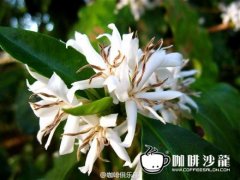
Flowering period of small seed Coffee in Yunnan
The florescence of small seed coffee in Yunnan is from February to July, and the flowering period is from March to May. The flowering of coffee is greatly affected by rainfall and temperature. Coffee flowers have a short life span of only 2-3 days. Small seed coffee usually opens at 3: 5 in the morning and blooms from 5 to 7 o'clock. The development time of coffee fruit is longer. It takes 8 to 10 months for the fruit of small seed coffee to mature, usually from October to December of the year.

Coffee Seed, an award-winning cafe in Korea
The boss, Youngmin Lee, won a prize in the International Coffee draw Competition in 2009. The 2015 Philharmonic Champion also belongs to Coffee Seed. Coffee shop is on the first floor, and professional coffee consultation and international CBSC training are provided on the second floor. Because of the difficulty of communication, although we saw the champion medal of the Philharmonic pressure, there were only two brewing methods on the menu: hand brewing and siphon, so I and

Botanical characteristics of small seed Coffee Coffee shallow Root crops
1. Root coffee is a shallow root crop, and the plant propagated with seeds is a cone root system. From the point of view of varieties, the roots of small and medium grain species are shallow, while those of large grain species are deeper. Yunnan small grain coffee is a 3-year-old 4-year-old fruit tree with a deep main root of about 70cm. The lateral root that grows horizontally from the main root is called the horizontal lateral root, the vertical lateral root grows downward, and the root extracted from the lateral root is called the secondary lateral root.

Botanical characteristics of small seed Coffee characteristics of Coffee in Yunnan
1. Root coffee is a shallow root crop, and the plant propagated with seeds is a cone root system. From the point of view of varieties, the roots of small and medium grain species are shallow, while those of large grain species are deeper. Yunnan small grain coffee is a 3-year-old 4-year-old fruit tree with a deep main root of about 70cm. The lateral root that grows horizontally from the main root is called the horizontal lateral root, the vertical lateral root grows downward, and the root extracted from the lateral root is called the secondary lateral root.
Boutique Coffee Science talk about Coffee Fruit
The fruit is a berry, also known as comb fruit. Oval, 9-14 mm long, young fruit green, red at maturity, purplish red. Each fruit generally has two seeds, but also one or three, showing a semi-oval, there is a longitudinal groove, called grooves. The structure of a fruit in which the exocarp consists of a thin layer of hardwood human cells with stomata; the mesocarp (that is, pulp) is large and Lignified by several layers of polygons.

What is the truth of Yunnan coffee? The difference between Yunnan coffee and Yunnan small seed coffee beans
We often meet boastful people in coffee growing areas in Yunnan: our Yunnan coffee is delicious, our Yunnan coffee has won awards in the world, and our Yunnan coffee is very famous and delicious in the world. I asked them if they had had a drink. Where is it good? I can't answer. Many curry farmers mix 15% to 20% green fruit in red fruit. Can this kind of coffee taste good? This kind of coffee is only roasted.

Introduction to the flavor and taste of Arabica seed manor of small seed coffee
Arabica is deeply loved by Chinese people with a short history of coffee contact because of its strong fruity aroma. it was introduced to China by missionaries in the 19th century and was widely planted in Panzhihua, Sichuan, and the dry-hot valley of the Jinsha River in western Yunnan, where the sunshine was long and there was a big temperature difference between day and night. The local people solved the problem of insufficient seasonal rainfall by diverting water up the mountain.

General knowledge of Frozen Storage of small Fruit Coffee seed
The French Development Institute has recently successfully invented a method of long-term frozen storage of small fruit coffee seeds, which provides a reliable means for establishing a small fruit coffee seed bank and protecting biodiversity. Coffee belongs to Rubiaceae evergreen shrubs or small trees, mainly produced in tropical areas, there are small fruit coffee, medium fruit coffee and large fruit coffee and so on. Small fruit coffee is native to the Arab region and is currently grown in the world.

How to identify the varieties of coffee beans? What is the basis for the differences between coffee varieties?
Every day, producers, traders, roasters and consumers are looking for different varieties of coffee. Each variety has its own unique cup profile, as well as many other personality traits. Farmers seek different varieties, not just quality, for many different reasons. They can also consider, for example, disease resistance or yield. In addition, different varieties will be suitable for different producers

What is the structure of coffee cherries from inside to outside? hero Cherry seed American Coffee Machine
What is the structure of coffee cherries from the inside to the outside? hero cherry seeds American coffee machine coffee fruit is wrapped in a hard outer skin (cut skin), the inside is a gelatinous pulp (pulp), and the inside is an endocarp (parchament), and the inside is tightly wrapped in the seed called silver skin, and the inside is wrapped in green seeds, namely coffee beans.
About the coffee fruit.
The fruit is a berry, also known as comb fruit. Oval, 9-14 mm long, young fruit green, red at maturity, purplish red. Each fruit generally has two seeds, but also one or three, showing a semi-oval, there is a longitudinal groove, called grooves. The structure of a fruit in which the exocarp consists of a thin layer of hardwood human cells with stomata; the mesocarp (that is, pulp) is large and Lignified by several layers of polygons.

Coffee is the seed of a fruit rich in healthy ingredients.
At present, thousands of scientists around the world are studying coffee from this perspective-coffee is the seed of a fruit rich in healthy ingredients. However, just as there is a difference between bad cholesterol and good cholesterol, there is junk coffee in coffee, mainly because coffee beans are overroasted and become too black and too bitter. On the other hand, scientists are testing such a hypothesis.
Boutique coffee basic knowledge coffee fruit
The fruit is a berry, also known as comb fruit. Oval, 9-14 mm long, young fruit green, red at maturity, purplish red. Each fruit generally has two seeds, but also one or three, showing a semi-oval, there is a longitudinal groove, called grooves. The structure of a fruit in which the exocarp consists of a thin layer of hardwood human cells with stomata; the mesocarp (that is, pulp) is large and Lignified by several layers of polygons.
The first seed of Coffee Spirit: treat the World as your hometown
In 330 BC, Alexander realized the great integration of the East and the West for the first time by virtue of the Macedonian phalanx and the pride of taking the world as his hometown. At that time, coffee had not yet been born, but the spirit of coffee had planted the first seed. Two hundred years later, Caesar and his successor Octavian brought Rome from the era of the Republic to the age of the Empire. After iron blood and flowers, Wenzhi and crusade, Pang Dadi at the end of the 2nd century

The first seed of coffee spirit regards the world as its hometown
In 330 BC, Alexander realized the great integration of the East and the West for the first time by virtue of the Macedonian phalanx and the pride of taking the world as his hometown. At that time, coffee had not yet been born, but the spirit of coffee had planted the first seed. Two hundred years later, Caesar and his successor Octavian brought Rome from the era of the Republic to the age of the Empire. After iron blood and flowers, Wenzhi and crusade, Pang Dadi at the end of the 2nd century