
"Shade"
9669 article(s) found

Coffee common sense how organic coffee is different from traditional coffee
Coffee factories have traditionally been accompanied by shade trees and other food and commodity crops. This approach is done for healthier soil and prevented water pollution. Unfortunately, many coffee growers have abandoned this approach in favor of larger crops and greater profits. However, integrated pesticides, herbicides and fertilizers have become necessary to maintain these crops and make coffee with them.

Coffee production in Brazil and coffee bean production in coffee farms
Coffee plantations in Brazil range from large farms mechanized on flat land to small farms harvested artificially in mountain areas. There are no shade trees for shade in Brazilian agricultural gardens. The production of coffee is mainly taken into account, ① production, ② diseases and insect pests ③ quality as far as the stability pursued by agriculture is concerned, the first priority is production. In addition, 80% of Brazilian coffee is dried coffee.

Coffee growing conditions Fine coffee Learn coffee basics
Coffee belt: coffee can not be grown in any environment, because it is originally a tropical rainforest environment of plants, in the development of the system, the need for calm wind, warm, shade or semi-shade and humid environment habits. Therefore, coffee has strict requirements for planting conditions. We call the strip of area on both sides of the equator, between 25 degrees north and south latitude, suitable for coffee growth, coffee belt. 1、

Carmen Manor Caducadura Fine Coffee cooked Coffee Cherry Fine Coffee
The BOQUETE region of Panama, located in the province of CHIRIQUI on the border with Costa Rica, is the home of Panama's famous GEISHA coffee and is famous for producing high-quality Arabica coffee. Tedman & TEDMAN&MACINTYRE ESTATE Manor in the mountains 4000 feet above sea level in Poggett, originated in Panama
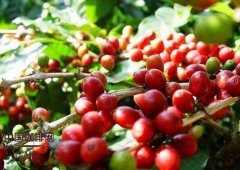
What is the flavor of Nicaraguan coffee beans? Nicaraguan boutique coffee beans
Cloth volcanic ash and tree shade are planted to produce high-quality Nicaraguan coffee with a mediocre, soft and sour flavor. Nicaraguan coffee is the largest of all coffee beans, while MADRIZ (Madriz) is located in the mountains of northern Nicaragua, adjacent to Nueva Segovia, Jinotega and Esteli, a quiet and elegant area with the famous Somoto Gorge
Basic knowledge of boutique coffee conditions for planting coffee trees
Coffee belt: coffee can not be grown in any environment, because it is originally a plant growing in a tropical rain forest, and in phylogeny, it forms the habit of requiring calm wind, cool, shaded or semi-shaded and humid environment. We call the strips on both sides of the equator between latitudes 25 degrees south and north suitable for the growth of coffee trees as coffee belts. Temperature: the requirement for temperature varies with the species of cultivation, small

Starbucks Guatemala Antigua Coffee Bean Type Story Characteristics and Flavors Description
Professional coffee knowledge exchange More coffee bean information Please pay attention to coffee workshop (Weixin Official Accounts cafe_style) Starbucks coffee classroom, every month will arrange wonderful coffee tasting courses to share with you, each Starbucks store will occasionally send coffee tasting courses to customers. Starbucks has carefully prepared dozens of coffee classrooms with different themes for star fans. Each issue

A brief introduction to the cultivation of high-quality organic Peruvian boutique coffee, climate and altitude
Peruvian coffee beans are best known for their coffee beans from Chimacha Mayou in the middle and Cusco in the south. In addition, some areas in northern Peru also produce characteristic organic coffee. Organic coffee is made of beans grown in the shade of trees. Although the yield of coffee beans is not high because of the method of planting in the shade, its quality can reach the level of gourmet coffee. This is due to

Coffee common sense what is the difference between organic coffee and traditional coffee
Coffee factories have traditionally been accompanied by shade trees and other food and commodity crops. This approach is done for healthier soil and prevented water pollution. Unfortunately, many coffee growers have abandoned this approach in favor of larger crops and greater profits. However, integrated pesticides, herbicides and fertilizers have become necessary to maintain these crops and make coffee with them.
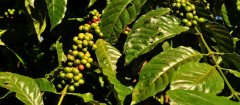
Coffee cultivation in the gayo Mountains of Sumatra Coffee producing area
The Gayo region is located in Aceh and Gayo, north of Sumatra. Coffee is grown on the slopes around the town of Takegon and Lake Tawar. The average planting height in the production area is between 1110 and 1300 meters. Coffee is planted by shade farmers under shade trees, showing a peculiar flavor, low depth and lively alcohol by wet processing.
Starbucks' finest coffee supply estate, Antigua Medina Manor, Guatemala
English name: Guatemala Antigua Finca Medina country: Guatemala production area: Antigua rating: SHB, Strictly Hard Bean) producer: Medina Manor treatment: washed varieties: bourbon (Bourbon), Kaddura (Caturra) altitude: 1520 to 1700 m GPS: 14 degrees north latitude 32 minutes 15 seconds west longitude 90 degrees 45 minutes 26 seconds (treatment plant)

Introduction to the Flavor description of Rosa Coffee beans in Panamanian Jadeite Manor by Grinding scale treatment
The Flavor description of Rosa Coffee beans in Panamanian Emerald Manor Flavor description introduces three ways of plantation: sunshine plantation, full shade plantation and semi-shade plantation. Plantations with more than 50 plants per hectare are fully shaded plantations, 25-50 plants are semi-shaded plantations, and less than 25 plants are called sunshine plantations. The plantations of two neighbors with the same planting conditions are covered.

Introduction of Tanzania Coffee Manor
Kilimanjaro Coffee Manor: Total =? 90% small Farmers 10% Plantation Harvest season: October to February of the following year Coffee Practitioners: 270000 people, treatment: AA (14%) A (24%) the lowest grade is HP, produced at low elevations, with many defective beans. Shade planting: mixed planting of coffee and banana to grow in the shade of a banana tree.

The coffee producing countries of Puerto Rico are mostly concentrated in the mountains of the island.
In Utuado, the heart of the coffee producing area, the University of Puerto Rico also offers courses for farmers to teach them how to optimize production, and soil experts guide people in the fields to cultivate quality coffee to increase product value and increase income. In the university laboratory, they have also set up a coffee tasting room to give growers a better understanding of their products. Professor's Cup

Introduction to planting treatment of Coffee Manor in Antigua area
Located in the isthmus of Central America and with young geology, Guatemala has many high-altitude mountains such as mountains and plateaus formed by active volcanoes. Due to its cold climate and fertile volcanic ash soil often covered by volcanic eruptions, Guatemala is very suitable for producing high-quality coffee. As the ninth largest producer of coffee beans in the world, Guatemala coffee is mainly produced in Antigua and Weitenan.

│ Mexican Coffee Manor-Triumph Manor & Native Forest Coffee in Chiapas Coffee, Mexico
Professional baristas please pay attention to the Coffee Workshop (official Wechat account cafe_style). Not only in Mexico, where the Triumph Cooperative is located, but also in terms of species ecological diversity, it is among the best in the world. Coffee trees planted in shade (Shade Grown) are not only one of the characteristics of triumphant farmers' cooperatives, but also fair.

Central American Coffee producing area-introduction of SL28 raisin Solar in Ras Lajas Manor, Costa Rica
Professional coffee knowledge exchange more coffee bean information please follow the coffee workshop (Wechat official account cafe_style) front street-Costa Rica La La Haas estate SL28 raisin sun introduction Francisca and Oscar Chacn couple, is the third generation operator of Las Lajas, Las Lajas is located in the foothills of Sabanilla de Alajuela Pos Volcano in the Central Valley
Introduction to SL28 dried grapes in Central American Coffee producing area-Galaclajas Manor in Costa Rica
Professional coffee knowledge exchange more coffee bean information please follow the coffee workshop (Wechat official account cafe_style) front street-Costa Rica La La Haas estate SL28 dried grapes sun introduction Francisca and Oscar Chacn couple, is the third generation operator of Las Lajas, Las Lajas is located in the foothills of Sabanilla de Alajuela Pos Volcano in the Central Valley

Peruvian coffee flavor Peruvian coffee characteristics Peruvian coffee taste
Peruvian coffee beans are best known for their coffee beans from Chimacha Mayou in the middle and Cusco in the south. In addition, some areas in northern Peru also produce characteristic organic coffee. Organic coffee is made of beans grown in the shade of trees. Although the yield of coffee beans is not high because of the method of planting in the shade, its quality can reach the level of gourmet coffee. This is due to

Description of flavor characteristics of Peruvian coffee beans and planting conditions of Peruvian coffee producing area
Peruvian coffee, famous for its organic coffee. Peru (Spanish: Per; Quechua, Aymara: Piruw), the full name of the Republic of Peru (Spanish: Repblica del Per), is a country in western South America. Flavor and taste characteristics: high quality and balanced, palatable acidity, can be used to blend coffee Peru is a coffee-rich country with only 10% of Arabica