
"Uganda"
3062 article(s) found

A brief introduction to the flavor, taste and aroma characteristics of high-quality and pollution-free Ugandan boutique coffee beans
Later, when the ship replaced the sailboat, due to the shortened delivery time, people drank relatively fresh coffee beans. But people who are used to drinking Chen beans are not used to the fresh taste, so they desperately pursue old Java coffee, so that the Indonesian government and some businessmen deliberately store fresh beans in warehouses for one or two years and then sell them to consumers. In fact, compared with fresh beans, aged beans

Brewing scheme of coffee beans treated by anaerobic fermentation in the Ruwenzori Mountains, Uganda, Africa
Professional coffee knowledge exchange more coffee bean information please pay attention to the coffee workshop (Wechat official account cafe_style) the front street has mentioned Uganda, a small shy coffee producing country, learned about the coffee beans in Uganda's Egang Mountain area, the front street of this article continues to talk about Uganda's boutique coffee producing area of the Ruwenzori Mountains. Uganda lies on the Nile

Coffee producing area-Uganda
In Uganda (Uganda), Arabica coffee beans account for only 10 per cent of the country's total coffee production, but it is enough to attract attention. Uganda's best coffee is mainly produced in the mountains of Elgon and Bugisu along the Kenyan border in the north and Ruwensori in the west, and is available for export in January or February of each year.

Uganda Luwenzori Coffee Farmers Cooperative introduces Uganda Luwenzo Coffee
Weixin Official Accounts cafe_style Rwenzori Farmers Cooperative Union (RFCU) is an umbrella cooperative that produces Fairtrade vanilla, Fairtrade cocoa and naturally processed Fairtrade Arabica coffee in the Rwenzori Mountains of western Uganda.

Uganda Coffee A brief introduction to the Environment of Ugandan Coffee characteristics of Ugandan Coffee
Professional coffee knowledge exchange more information about coffee beans please follow the coffee workshop (Wechat official account cafe_style) Uganda is a landlocked country in eastern Africa. Just as Ethiopia is the origin of Arabica coffee, Uganda is one of the few major countries in Africa dedicated to the production of organic coffee. The most famous coffee producing area in Uganda is the buckyasu area in the north near the Kenyan border.

Introduction to the boutique coffee estate with a very unique taste of Ugandan coffee
The people of all parts of Uganda resisted the British aggression tenaciously. In 1893, Britain sent troops to occupy the Kingdom of Bunioro, and King Kabarega led some of the people to wage guerrilla warfare for six years. In 1897, King Mwaanga of Buganda raised his army against Britain and later joined Kabarega in the Rango region. In April 1899, the two kings were captured and the uprising failed. To make it easier to rule

How do Ugandan coffee beans taste? Flavor characteristics of AA Coffee in Yunbao Farm, Uganda
Professional coffee knowledge exchange more information about coffee beans Please follow the coffee workshop (Wechat official account cafe_style) how to describe the taste of Ugandan coffee beans? What are the flavor characteristics and taste of the AA grade of Coffee Cloud Waterfall Farm in Uganda? Coffee in ancient times is regarded as something that Ugandan soldiers must chew before entering the battlefield, because soldiers believe it will bring them courage and victory.
Introduction to the processing environment of coffee beans in Xipi Waterfall, Uganda
History of the processing of coffee beans in Sippi Falls, Uganda: Entebbe is the most famous European's home international airport, which was first opened in 1929. Also from this airport, Queen Elizabeth II of England left Africa and returned to England in 1952 when she learned that her father had died and that she had become queen. Entebbe also hosted the final

Treatment of Starbucks Uganda Coffee beans
The way Starbucks treats Ugandan coffee beans Uganda produces one of the highest coffee production in Africa, accounting for more than 70% of its total exports. In the 1960s, Ugandan coffee production remained at 3.5 million bags a year. By the mid-1980s, coffee production had dropped to 2.5 million bags a year, mainly for political reasons. But now coffee production is on the rise again, currently about 3 million bags a year.

A brief introduction to the history and culture of the origin and development of high-quality and pollution-free Ugandan boutique coffee beans
Later, when the ship replaced the sailboat, due to the shortened delivery time, people drank relatively fresh coffee beans. But people who are used to drinking Chen beans are not used to the fresh taste, so they desperately pursue old Java coffee, so that the Indonesian government and some businessmen deliberately store fresh beans in warehouses for one or two years and then sell them to consumers. In fact, compared with fresh beans, aged beans

Introduction to the characteristics of Uganda Coffee Flavor Manor with mild and simple taste
In 1890, British troops invaded Buganda. Captain Frederick Frederick Lugard, the agent of the Royal British East Africa Company (later Governor of Hong Kong Luigi), forced King Mwaanga of Buganda to sign protection treaties with him twice. In June 1894, the British government signed the New Testament with Buganda, and Buganda officially became a British protectorate. Then, in 1896, Britain extended its protection to Ukraine

The flavor and taste of Ugandan coffee beans the characteristics of the manor producing area introduce the fine coffee beans of Uganda
The people of all parts of Uganda resisted the British aggression tenaciously. In 1893, Britain sent troops to occupy the Kingdom of Bunioro, and King Kabarega led some of the people to wage guerrilla warfare for six years. In 1897, King Mwaanga of Buganda raised his army against Britain and later joined Kabarega in the Rango region. In April 1899, the two kings were captured and the uprising failed. To make it easier to rule

Description characteristics of flavor and taste of Ugandan coffee brief introduction of manor planting varieties in producing area
The cultivation of coffee in Uganda is all small-scale family operation. The livelihood of 25% of the population is closely related to coffee production. About 500000 farms grow coffee, but mainly Robster. Robster accounts for 90% of coffee production, and the remaining 1 is Arabica coffee. Arabica and Live Buster are harvested from October to February of the following year. Ugandan coffee

Flavor and taste characteristics of coffee varieties in Uganda introduction of high-quality coffee beans
Uganda is the country of origin of coffee grown in Robusta, but commercial cultivation of Arabica species here did not begin until early 1900. Today, there are still a large number of wild robusta coffee trees in Uganda, which is rare in cities in the world. As a landlocked country, the large coffee cultivation in Uganda is often interplanted, where coffee trees are mixed with food crops and rubber trees.

Uganda Coffee Flavor description Taste characteristics Grinding scale Fine Coffee beans
Uganda coffee flavor description, grinding scale, fine coffee beans introduce Uganda's coffee production ranks first in Africa, accounting for more than 70% of its total exports, while Uganda is also the hometown and main producing area of Robes specialty coffee. In the 1960s, Ugandan coffee production remained at 3.5 million bags a year. By the mid-1980s, coffee production had fallen to

Unique flavor of Uganda coffee manor flavor and taste characteristics of boutique coffee beans
During the eight years of Amin's rule, the military dictatorship, political chaos, economic depression, and a large number of citizens fled abroad. Relations between Uganda and Tanzania are strained. In October 1978, Amin sent troops to occupy a piece of territory along the border of Tanzania. In January 1979, the Tanzanian army launched a counterattack. In March of the same year, more than 20 anti-Amin groups in exile met in Mohi, Tanzania, to form Uganda.

What are the flavor and taste characteristics of Ugandan coffee beans? grinding water temperature parameters of Ugandan coffee beans
Professional coffee knowledge exchange more coffee bean information please follow the coffee workshop (Wechat official account cafe_style) front street coffee-Uganda coffee taste features Uganda is located in the source of the Nile, has the same long history as other East African countries in coffee production, but due to ethnicity

Introduction to the characteristics of Ugandan boutique coffee bean flavor and taste manor with balanced acidity
After the first World War, the long-standing dissatisfaction of the Ugandan people with colonial rule finally broke out. A national general strike and rural riots broke out in 1918. In 1919 Buganda launched a democratic movement under the leadership of the Bataka Party and the African Farmers' Union of Uganda. In 1921, Uganda's first national political party, the Ugandan National Congress Party, was established and proposed the implementation of universal suffrage.
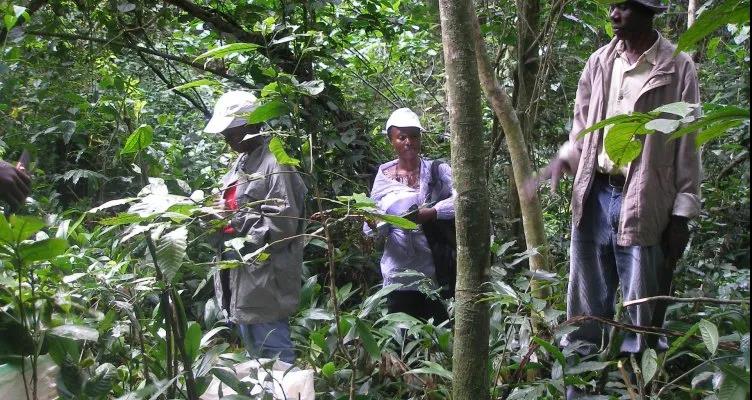
Drought-resistant wild Robsta has been found in Uganda, which is of great help to the cultivation of drought-tolerant coffee varieties.
For more information on coffee beans, please follow the Coffee Workshop (Wechat official account cafe_style) recently coffee variety researchers in Uganda, the Netherlands and France have discovered a previously unknown wild robusta coffee population with potential drought resistance in Uganda's endangered forests. This discovery will help to cultivate drought-resistant coffee varieties and coffee industry in the future.

Taste of Ugandan Coffee Flavor Manor area introduction to the origin of fine coffee in Uganda
There are many transportation problems, so there are often raw beans with low moisture content and not green appearance. However, Ugandan coffee is not a type of coffee that emphasizes rising aroma, as long as the raw beans are not and turn 100 or yellowed, they can generally have a good flavor in the producing area, with low ripe fruit aromas, such as the taste of red wine, and thick mellow thickness. with some Kenyan beans with low tonality