
"Understanding"
7357 article(s) found
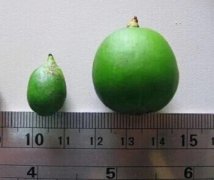
Introduction of Liberica Coffee beans Coffee beans Coffee varieties Coffee beans Coffee
Most coffee lovers already have a deep understanding and understanding of Arabica coffee and Robasta coffee varieties. Today, Chongqing Brista Coffee West Point training School is going to introduce to friends another variety of coffee. Although it is not common, it is also unique. It accounts for only about 5% of the Liberica of coffee in the world, translated into Chinese.

Mocha coffee has a comprehensive understanding of what mocha coffee is.
In 575 AD, the first coffee bean took root on the other side of the Red Sea in Yemen, far from its hometown of Ethiopia. It was transformed into mocha coffee, and it started the coffee business all over the world. What is a mocha? There are many kinds of answers. Some people say that mocha refers to the place of origin. Some people say that mocha refers to sweet chocolate coffee. In fact, both views are biased. Authentic

How does origin affect the chemical composition and traceability of coffee? Does coffee from different places have the same flavor?
Do you have a favorite coffee producing area? Brazil, Kenya, Ethiopia? Why do you need to care which country the coffee comes from? The most important reason is that even the same variety of coffee will produce different chemical composition due to different planting places. These differences in chemical composition will not only affect the flavor, but also help us to identify distinct flavor characteristics. This article gives way

Analysis of classic coffee varieties-to give you an in-depth understanding of the mysterious country of coffee
Coffee (Coffee) (the word comes from a small town in Ethiopia called kaffa, and in Greek Kaweh means strength and passion. Tea, coffee and cocoa are called the three major drinks in the world. Coffee tree is a small evergreen tree of Rubiaceae. Daily coffee is made of coffee beans combined with a variety of cooking utensils, and coffee beans refer to coffee fruit.

Coffee common sense understanding of various organizations of international boutique coffee
The International Coffee Organization is an intergovernmental organization founded in London in 1963. It is composed of coffee importers and exporters. The organization is responsible for implementing the International Coffee Convention and is committed to improving the situation of the world coffee industry through international cooperation. The establishment of the International Coffee Organization is based on the irreplaceable economic importance of coffee. Coffee is one of the most traded goods in the world.

How to quickly become a coffee party?
How to make yourself more in-depth, less bourgeois and more educated? Let's start with what we know about coffee! Through the degree of understanding of coffee, show that you are different! Coffee is an indispensable drink in modern life, whether it is a casual drink in the office or a date with friends, many will choose to meet in the coffee shop, how to show themselves
A new understanding of coffee beans
Small and round dark brown coffee beans, quietly emitting a fragrant fragrance in the grinder, injected into the cup showing the beautiful color of amber, these are the three very deep impressions of coffee. As you explore the history and beauty of coffee, you can also see the coffee trees that are caressed by the tropical sun and whose leaves twinkle. It has small white flowers similar to jasmine.

Hand punching: understanding of stirring method and segmented extraction
Professional coffee knowledge exchange more coffee bean information Please follow the coffee workshop (Wechat official account cafe_style) A knife flow means that after steaming, only one continuous filling is done, hence the name. After steaming, a continuous injection of water can make the coffee powder soak in water continuously, and the retention liquid can fully release the aromatic substances in the coffee powder, and the water can flow.

Understanding the unique African Coffee-- Rwanda Fine Coffee
Rwanda is like a friend with a distinct personality in life, at first contact will stay away because of the other person's too distinct personality, but after really getting to know each other, he will be attracted by his unique temperament. Rwanda is such a guy with great personality. Rwanda, located in the southern equator of central Africa, is a landlocked country, bordering Tanzania to the east, Burundi to the south and Burundi to the west.

The characteristics of Costa Rican honey treatment have an in-depth understanding of white honey, yellow honey, red honey and black honey
Coffee Honey Red Honey processing Costa Rican Honey? Coffee? What's the difference? We all know that all good Costa Rica have one thing in common: extremely pure, extremely soft, extremely balanced and even mellow, so neither high nor low! But this summer, this bean is really extraordinary! Pure and gentle, of course, but the mellow is three layers higher and rich.

The latest understanding of Costa Rican Coffee introduction to Costa Rican flavor of boutique coffee beans
Costa Rican coffee is produced in the Republic of Costa Rica (The Republic of Coffee) in the south of Central America. Its quality is similar to that of Colombian coffee and is suitable for blending mixed coffee. Costa Rican coffee has full particles, ideal acidity and unique strong flavor. High-quality Costa Rican coffee is called extra hard beans, and this kind of coffee can grow at an altitude of more than 1500 meters.

Understanding of the grinding size of hand-made coffee beans in order to be good at hand-made coffee grinding
Professional coffee knowledge exchange more coffee bean information Please follow the coffee workshop (Wechat official account cafe_style) more and more people like to drink coffee and like to brew their own coffee. The rise of hand-brewed coffee has led to a trend of making their own coffee. However, for some beginners, even if the enthusiasm is high, it is still impossible to accurately master the correct cooking skills, so that they are unable to show coffee.
Hand brewed coffee Cleanliness and aroma Chinese coffee trading network coffee adjectives
Cleanliness and miscellaneous smell generally believe that hand flushing cleanliness is higher than the French pressure, and I personally think this statement is not correct. To discuss this problem, we first need to have a correct understanding of cleanliness. We cannot just understand that small taste amplitude means high cleanliness. My understanding of cleanliness is that the flavor of the performance can be very good performance, at the same time can be very good control of impurities. Like a cup of produce.

What should we pay attention to when baking coffee?
The profession of coffee roaster is not only expressing coffee, but also expressing yourself. Usually we organize roasters to do coffee cup tests in the circle of Changsha, and we can tell which one comes from which roaster by the characteristics of coffee. As a baker, he often seems to realize his ideas in coffee through baking skills. And usually experienced bakers

improve| Creative coffee making concept
From bean selection, roasting, mixing, grinding, extraction, every step becomes the key to affecting the taste of coffee. In the production process, focus, calm, careful, coherent, methodical. A good cup of coffee is more about the barista's understanding of coffee, including the growing environment, planting conditions, picking and processing methods of coffee, etc., which will affect the taste of coffee.

Understanding the extraction rate is the basis of making a cup of espresso
What I want to tell you in the article is that the concept of extraction rate is not difficult, and there is little relationship between extraction rate and concentration, and extraction rate is very important, which you need to know as a barista. The article will mention several questions: (1) the concept of gold cup criterion; (2) the relationship between extraction rate and concentration; (3) knowing the extraction rate, it is meaningful for us to adjust the grinding degree and powder quantity every day, and then we can make it better.

The course of hand-brewing coffee-champion hand-brew barista's extraction understanding, hand-brew extraction coffee analysis.
It is believed that friends who have played hand-brewed coffee have heard of the four or six methods, which are the brewing method used by the 2016 WBrC champion Mr. Miyazawa in the competition. The concept of four or six brewing that he used was simple and clear, and became a very hot topic at that time. Today, let's talk in detail about what the concept of four or six brewing is. Meal valley
Understanding of Coffee Culture and individual Coffee
Individual coffee is made from a single coffee bean produced in the country of origin and is a pure coffee without milk or sugar when drinking. Have strong characteristics, special taste: or fresh and soft, or mellow smooth; the cost is higher, so the price is more expensive. For example, the famous Blue Mountain Coffee, Brazilian Coffee, Italian Coffee and Colombian Coffee are all named after the origin of coffee beans.
A brief talk on understanding coffee beans
1. Summary: coffee is a perennial evergreen shrub or small tree of Rubiaceae. It is native to tropical Africa and has been cultivated for more than 2000 years. The Arabs began to grow coffee in 525 BC, and it was popular for Arabs to stir-fry coffee beans. They began to grow coffee beans on a large scale after the 15th century, and were widely distributed in the tropics and subtropics of Europe, Asia, Africa and Latin America after the 18th century.