
"Xido"
71 article(s) found

Honduras San Juan Xido boutique coffee mellow nutty flavor
Boutique coffee (specialty coffee) is also called specialty coffee selection coffee. It refers to coffee made from a small number of raw beans with excellent taste grown in an ideal geographical environment. Depending on the special soil and climatic conditions in which they grow, they have outstanding flavor. After strict selection and classification, this kind of coffee is hard in texture, rich in taste and stylish.

Honduras San Juan Xido coffee beans which taste neither astringent nor sour, mellow and fragrant.
Honduras is located in the north of Central America, facing the Caribbean Sea to the north, the Gulf of Fonseca in the Pacific Ocean to the south, Nicaragua and El Salvador to the east and south, and Guatemala to the west, mostly mountains and plateaus. It has a tropical climate, mild temperature and abundant rainfall, so it is an ideal place for coffee growth. Two kinds of very good quality coffee are produced in Honduras, which are highly respected by coffee lovers.

The Honduran coffee producing area with mild acidity and slightly sweet taste introduces the San Juan Xido producing area.
The average planting height of Choluteca, Francisco Morazan, La Paz, Siguatepeque, Santa Barbara, Intibuca, Copan and Ocotepeque., is more than 1100 meters above sea level. Coffee varieties are 100% Arabica, 69% are HG, 12% are SHG,19% and CS.

Acer San Juan, Honduras, Xido bourbon, single baked nut milk chocolate flavor
Boutique coffee has a rich and beautiful taste. Even if the coffee made of boutique coffee beans is not all fine coffee, it depends on whether it gives full play to the characteristics of coffee beans, whether it has a good taste, if not, it can not be called boutique coffee. The term boutique coffee was first coined by Ms. Knudsen of the United States in Coffee and Tea magazine, when

Characteristics of coffee beans in Honduras introduction to San Juan Xido producing area
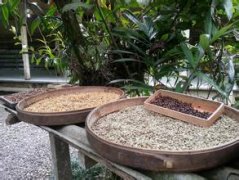
High-quality coffee in Honduras uses water washing to deal with coffee beans, usually after soaking, when the defective fruit will surface, it can be discarded first. Then put the good fruit into the fruit peeling machine and peel off the peel with the rotating force of the machine. Peeled fruits are screened by machines to select fruits of high quality. Usually the bigger the fruit.

Rich and mellow, suitable for mixed drinking Honduran coffee producing area manor introduces San Juan Xido producing area
Honduras produces two kinds of coffee of very good quality, which are highly respected by coffee lovers. One is the highland coffee growing at 1000-1500 meters above sea level, and the other is the selected highland coffee growing at 1500-2000 meters above sea level, which represents the highest level in Honduras. Most of the Honduran coffee is exported to the United States and Germany. The granules of coffee beans in Honduras are more shaped than those in Honduras.
A brief introduction to the history and culture of the origin and development of San Juan Xido bourbon species with deep-baked beans in Honduras
Although San Juan Theodore is historically famous for its mineral deposits, its importance today is highlighted by its location in the buffer zone of La Tigra National Park, a rainforest ecosystem and the first national park in Honduras. The park acts as a huge reservoir, providing domestic water for 500000 residents of the capital. Because Honduras is located in the tropics.

The delicious and mellow Honduran coffee beans are introduced to the San Juan Xido region.
Honduran coffee has a rich and mellow taste, taste is not astringent, not sour, mellow and aroma are very high, quite personality. Honduran coffee can lead to multiple levels of flavor depending on the degree of roasting. Moderate baking can maximize the sweetness of beans, while deep baking increases bitterness, but sweetness does not disappear. Generally speaking, medium baking tastes best

Introduction to the treatment of San Juan Xido coffee beans in Honduras with superior climatic conditions
The granules of coffee beans in Honduras are large in shape, uniform in size and glossy in color. In order to facilitate harvesting, farmers will prune the coffee trees to no more than 150 centimeters, because if they grow too high, they have to set up ladders to pick, which is not only time-consuming, but also may damage the trees by bending branches. As the ripening period of each fruit of the coffee bean is different, it is necessary to keep the coffee bean in good condition.

Introduction to the San Juan Xido region of Honduran coffee, which tastes mild and round, sour and slightly sweet.
Honduran coffee comes from El Salvador. At first coffee production was in a state of unavoidable heat until the frost in Brazil in 1975. At that time, Brazil was hard hit and coffee production plummeted, while Honduras took the opportunity to take advantage of the surge in coffee production from 500000 bags to 1.8 million bags and was ransacked. It was only after that that coffee production in Honduras really developed. Now, Honduran coffee.

Qianjiehong No.1 San Juan Xido, Honduras, washed bourbon single imported boutique coffee beans
Factory name: Qianjie Cafe address: No. 10 Baoqian Street, Yuexiu District, Guangzhou City, manufacturer contact: 020-38364473 ingredients Table: self-baking shelf life: 30 net content: 227g packaging: bulk taste: mellow coffee beans ripe degree: coffee cooked beans contain sugar: sugar-free origin: Honduran coffee types: other baking degree: moderate roasting Honduras San Juancit

Honduras San Juan Xido No. 1 ground washing bourbon boutique coffee beans planting market price is simple
Variety: bourbon handlers: COMISAJUL cooperative San Juan Ciudo is a small village in central Honduras located 40 kilometers northeast of Tegucigalpa, the capital of Honduras. The town is under the jurisdiction of Francisco Morazn. In addition, Francisco Morazn has jurisdiction over Nuevo Rosario, Guacamaya and Plan Grande, with a total population of about 1400.

The overall balanced taste of Honduran coffee San Juan Xido producing area
High-quality coffee in Honduras uses water washing to deal with coffee beans, usually after soaking, when the defective fruit will surface, it can be discarded first. Then put the good fruit into the fruit peeling machine and peel off the peel with the rotating force of the machine. Peeled fruits are screened by machines to select fruits of high quality. Usually the bigger the fruit.

Coffee producing countries in Africa-Honduras Coffee introduction to San Juan Xido region
According to a recent report released by the Africa Division, leaders of the Honduran Ministry of Agriculture plan to convert 8% of the country's coffee farms to cocoa. The news came from the country's Ministry of Economic Development and the National Coffee Association ihcafe told Reuters, the country's Minister of Economic Development Alden Rivera pointed out that because many coffee farms are affected by the particularly serious leaf rust disaster, if the planting is not converted.

Introduction to the flavor of washing bourbon hand-flushing parameters in the San Juan Xido area of Honduran coffee
For professional baristas, please follow the coffee workshop (Wechat official account cafe_style) flavor: clean, roasted nuts, milk chocolate in Honduras, coffee producing areas are divided into six major producing areas, throughout the west and south, namely Santa Barbara (Santa Barbara), Perry request (El Paraiso), Coban (Copan), La Paz (Bazi) and Gongmayagua (C).

A brief introduction to the planting market price of Xido boutique coffee beans in San Juan, Honduras.
High-quality coffee in Honduras uses water washing to deal with coffee beans, usually after soaking, when the defective fruit will surface, it can be discarded first. Then put the good fruit into the fruit peeling machine and peel off the peel with the rotating force of the machine. Peeled fruits are screened by machines to select fruits of high quality. Usually the bigger.

A brief introduction to the history and culture of the origin and development of San Juan Xido boutique coffee beans in Honduras
High-quality coffee in Honduras uses water washing to deal with coffee beans, usually after soaking, when the defective fruit will surface, it can be discarded first. Then put the good fruit into the fruit peeling machine and peel off the peel with the rotating force of the machine. Peeled fruits are screened by machines to select fruits of high quality. Usually the bigger.

A brief introduction to the history and culture of the origin and development of San Juan Xido boutique coffee beans in Honduras.
The term "fine coffee" was first put forward by Ms. Knudsen of the United States in Coffee and Tea magazine. At that time, Ms. Knudsen, as a coffee buyer at B.C. Ireland in San Francisco, was very dissatisfied with the neglect of the quality of raw coffee in the industry, and even some big roasters mixed a large amount of Robesda beans in the comprehensive beans, so she put forward the concept of boutique coffee.

An obvious description of the flavor, taste and aroma characteristics of Xido coffee beans in San Juan, Honduras
There are six main coffee producing areas in Honduras, including Santa Barbara, Copan, Ocotepeque, Lempira, La Paz and El Paraiso in the southeast. Honduran coffee tastes less acidic, while caramel is more sweet. The taste of coffee from these five different producing areas is also slightly different, some slightly sour.

A brief introduction to the origin, development, history and culture of the well-balanced San Juan Xido boutique coffee beans in Honduras
High-quality coffee in Honduras uses water washing to deal with coffee beans, usually after soaking, when the defective fruit will surface, it can be discarded first. Then put the good fruit into the fruit peeling machine and peel off the peel with the rotating force of the machine. Peeled fruits are screened by machines to select fruits of high quality. Usually the bigger the fruit.